
Mortadella di Prato
Prato, Tuscany, Italy
Rosy and boldly spiced, garlicky and warm, with the faint sweetness of alkermes.
Overview
Mortadella di Prato is a coarse Tuscan cooked sausage scented with garlic, warm spice and alkermes, the crimson aromatic liqueur more familiar from pastry. It is darker, more rustic and more assertive than Mortadella Bologna.
Where it's from
Climate. Prato in Tuscany.
Altitude. Tuscan plain
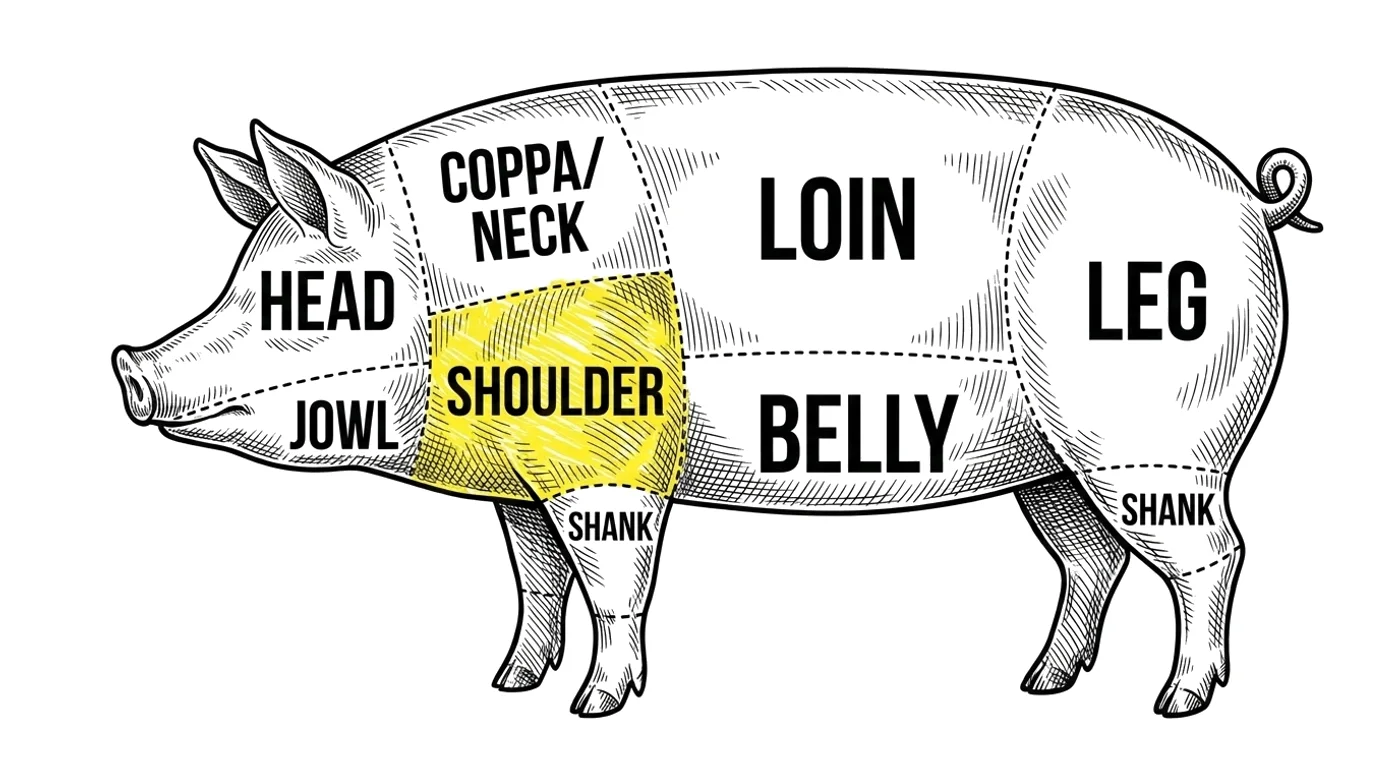
The cut
How to recognise it
The slice is rosy red rather than pale pink and shows a coarse mosaic of lean and fat. Garlic, coriander and warm spice should be evident, followed by a subtle aromatic sweetness from alkermes. The sausage must be fully cooked and cohesive. Grey raw centres, leaking fat, harsh alcohol or a rubbery emulsion are faults.
- Shape and size
- Cylinder, rosy pink from alkermes
- Lean colour
- Pink
- Fat and marbling
- White specks
- Casing
- Casing
- Surface bloom
- None
Origins and history
Prato's mortadella grew from thrift and skilled butchery. The city's network of medieval canals supported craft guilds, including the Arte dei Beccai, and pork trimmings left from salami production could be seasoned, stuffed and cooked rather than wasted. Documents identify Mortadella di Prato as a local speciality by 1733, when Dominican nuns served it during celebrations for the beatification of Caterina de' Ricci. Garlic, coriander, cinnamon, clove and other spices reflected the Tuscan pantry, while alkermes gave a rosy colour and a flavour that connected savoury butchery with the city's confectionery tradition. Production declined during the twentieth century but local butchers and Slow Food producers revived it, leading to PGI registration in 2016.
Name. Mortadella, from the Latin mortarium; Prato names the town.
- Production today
- Small Prato producers.
- Protection
- IGP.
- Tradition vs modern
- The alkermes is the local signature.
- Seasonality
- Year-round.
Compare with. Mortadella Bologna
Serving and cultural significance
Serve in slightly thicker slices than Bologna mortadella, with Tuscan bread, pickled vegetables or mild cheese. It can be eaten cold, gently warmed or used in fillings. Alkermes should remain a background aroma rather than making the sausage taste sweet.
Recipe and cure
This is not a finished recipe. It is a window into how this meat is traditionally cured. Before you follow any process, please run it through one of our curing calculators, so the salt, cure and timings are right and safe for your own batch.
Curesmith home adaptation — not designation-compliant
Make this — the measured Curesmith version →The cure below is the traditional reference. “Make this” opens the measured Curesmith home recipe, scaled to your batch.
Traditional or protected production
Mortadella di Prato uses a specified mixture of shoulder, lard, ham trim, capocollo, jowl and belly. Alkermes is mandatory at a controlled level, together with salt, pepper, garlic and warm spice. The mixture is ground more coarsely than Bologna mortadella, stuffed, heated and rapidly chilled.
- Meat
- pork
- Salt (%)
- 2
- Curing salt
- Cure #1 at 2.5 g/kg (0.25%)
- Fermented
- No
- Smoked
- No
- Target aW or weight loss
- cooked, not dried
- Temperature (°C)
- cooked through to a safe core temperature
- Humidity (%)
- n/a
- Maturation
- cooked; eaten fresh or briefly kept
- Basis
- per 1000 g green meat
- Style
- Traditional, cooked
Ingredients
- pork (base)100% · 1000 g/kg
- sea salt2% · 20 g/kg
- Cure #10.25% · 2.5 g/kg
- garlic0.3% · 3 g/kg
- spices (coriander, cinnamon, clove)0.3% · 3 g/kg
- alkermes liqueur2% · 20 g/kg
Method
- Mix the pork with salt, cure, garlic, spices and a little alkermes.
- Stuff into casing.
- Cook through to a safe core temperature.
- Cool and store cold.
Notes
- The official protected specification controls the named product. Any Curesmith EQ, starter-culture, curing-salt or home-scale adaptation is a separate method and must not be presented as designation-compliant.
- This is a cooked product. It must be cooked through before eating. Where a cure is used it is Cure #1 (nitrite), suited to the shorter, cooked process rather than long drying.
In the Codex
What this product teaches, and where to read more.
Temple. Pillar, Meat Quality