
Nevėžis Sausage
Also known as Nevezis Sausage, Nevėžio dešra
Lithuania
Overview
Nevėžis Sausage is an archive-derived Lithuanian-named cooked product built from equal parts beef and fatty pork jowl. Fresh onion, white pepper and allspice season a fine, moist matrix. Light smoke follows surface drying, while a complete heat treatment makes it a refrigerated ready-to-eat sausage rather than a fermented or air-dried Baltic salami.
Where it's from
The cut
Identity and terminology
Nevėžis is the correct Lithuanian spelling of the river name; the unaccented source title Nevezis is retained as an alias. The Lithuanian genitive form Nevėžio may appear when the sausage is described as belonging to or named after the river. The source does not establish one town, maker or legal specification, so the Atlas avoids turning the hydronym into an unsupported protected origin claim.
Composition and characteristics
The cut face is fine and grey-brown to lightly pink-brown, depending on smoke and raw materials, with no coarse fat cubes. Beef supplies colour and a firm protein bind, while jowl contributes enough soft fat and collagen for a rich, yielding bite. A relatively generous liquid addition lightens the texture. Onion and allspice distinguish it from a plain beef frankfurter.
Production and process
Beef is mixed first with chilled liquid to develop the binding phase, then finely ground jowl, cooked-cooled onion and spices are incorporated. The mixture is stuffed into medium natural casings. In a controlled home process, light smoking occurs before the final cook, followed by rapid chilling. This ordering preserves smoke character while reducing the post-lethality exposure created by smoking an already cooked sausage.
History and regional forms
The product survives in an English-language technical recipe rather than a located Lithuanian protected-food specification. Its name links it to the Nevėžis, a major river flowing entirely within Lithuania; the national environment ministry describes its course and restoration work. That geographical reference supports the spelling and cultural setting, but not a claim that the formula originated at a particular settlement on the river.
Use, storage and related products
Serve the sausage cold in thin slices, gently reheated, or with dark bread, mustard and pickled vegetables. The substantial jowl content makes it richer than an everyday lean cooked sausage. Lithuanian rules classify cooked, cooked-smoked and hot-smoked sausages as heat-treated meat products. A home version therefore stays chilled and is not treated as shelf stable merely because it has been smoked.
Recipe and cure
This is not a finished recipe. It is a window into how this meat is traditionally cured. Before you follow any process, run it through one of our curing calculators so the salt, cure and timings are right and safe for your own batch.
Make this — the measured Curesmith version →“Make this” opens the same cure as a measured recipe, scaled to your batch.
- Meat
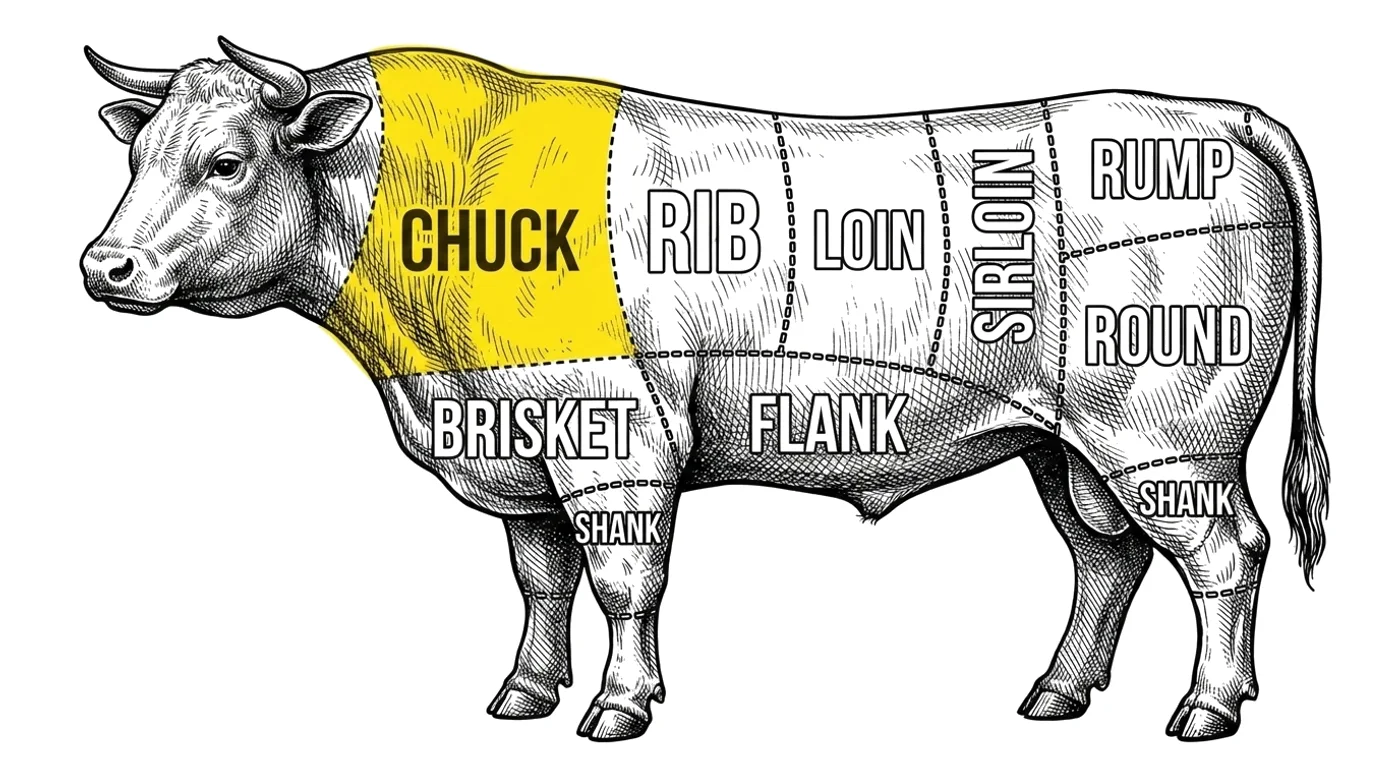
- Beef chuck
- Cut
- Beef chuck
- Salt (%)
- 2
- Curing salt
- None
- Fermented
- No
- Starter or mould
- None; this product is not fermented
- Smoked
- Yes
- Maturation
- Refrigerate at 0–4°C; use within 4 days or freeze promptly
- Basis
- per 1,000 g beef chuck
- Style
- Lithuanian-named fine beef-and-pork cooked-smoked sausage
Ingredients
- Beef chuck100% · 1000 g
- Skinless pork jowl100% · 1000 g
- Crushed ice15% · 300 g
- Fine salt2% · 40 g
- Ground white pepper0.2% · 4 g
- Ground allspice0.1% · 2 g
- Fresh onion, finely minced5% · 100 g
Method
- Chill animal materials to 0–2°C and grind beef and jowl separately through 3 mm.
- Mix beef with salt and crushed ice until sticky and moisture is absorbed.
- Add jowl, onion, white pepper and allspice and mix to an even fine matrix.
- Fill hog casings and link at about 15 cm.
- Dry the casing, then apply light warm smoke for up to two hours.
- Poach at 78–80°C until the cold point reaches 72°C.
Safety. Use inspected meat, cool cooked onion before mixing, move smoke before the final lethality step, chill rapidly and keep the finished sausage refrigerated.