
Pfälzer Saumagen
Also known as Saumagen, Palatinate stuffed pig stomach
Palatinate, Germany
Overview
Pfälzer Saumagen is a Palatinate speciality made by filling a cleaned pig stomach with pork, pork fat, potato, onion and a broad mixture of herbs and warm spices. Commercial producers may use a broad artificial casing, but the stomach form explains the name and the large rounded shape. The filling combines visible cubes of cured meat and potato with a fine pork binder, producing a firm mosaic that can be sliced cleanly when cold.
Where it's from
The cut
Identity and terminology
Saumagen literally denotes a sow's or pig's stomach, and German dictionaries define the food as a filled pig stomach. Pfälzer identifies the Palatinate. The name describes both container and dish, not an offal filling: the stomach is normally the casing, while the centre is pork and potato. Comparisons with Scottish haggis help explain the broad filled-organ form but can mislead because classic haggis uses sheep offal and oats. The two are not aliases or recipe variants.
Composition and characteristics
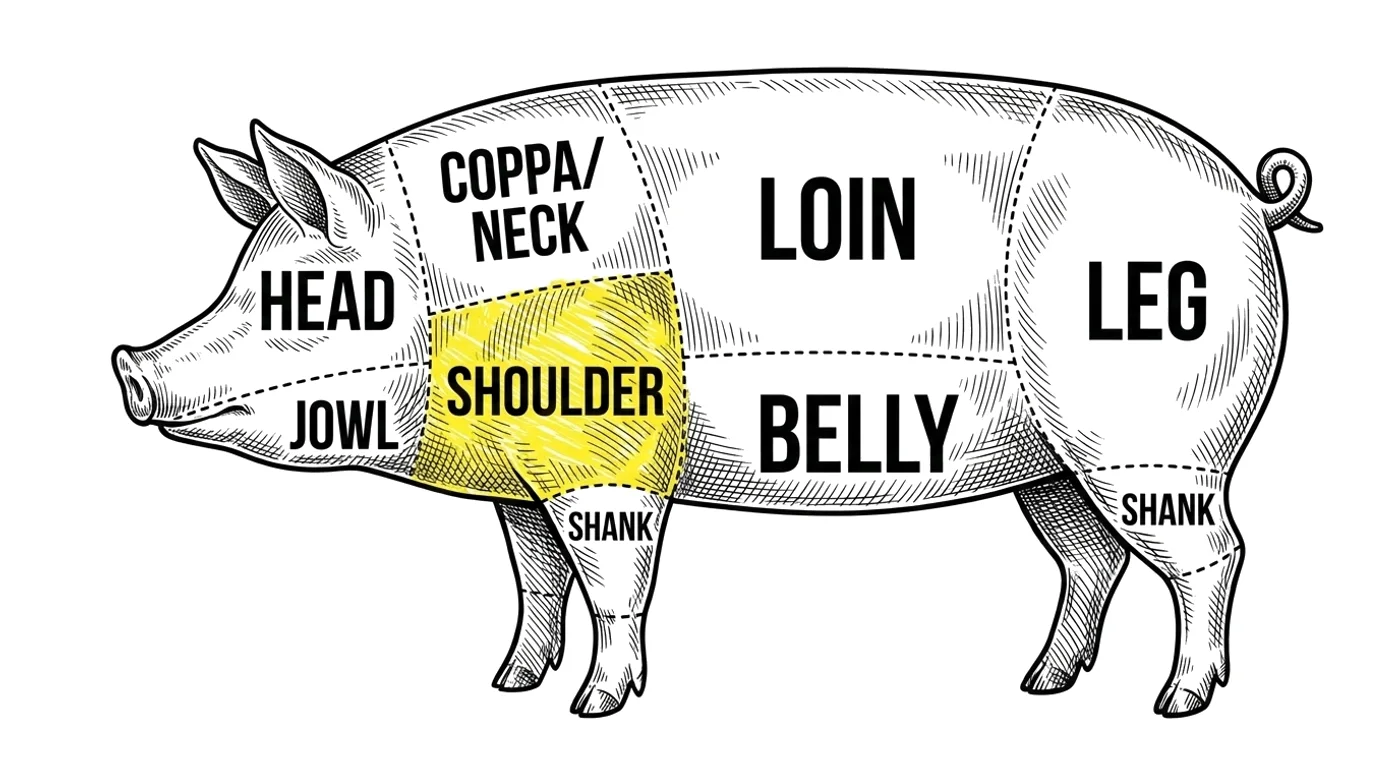
Lean shoulder and neck give distinct meat cubes, belly supplies fat, and a finely ground connective-pork fraction binds them to diced potato. Onion, pepper, marjoram, thyme, basil, allspice, nutmeg, cardamom and ginger create a more elaborate seasoning than most boiled sausages. The cut face should hold together without becoming homogeneous. Potato pieces remain visible beside rose-coloured cured pork, while the broad exterior follows the irregular outline of a natural stomach or the cylinder of a cook-in casing.
Production and process
Selected show meat is diced and cured under refrigeration. A fine binder is made from connective pork, then combined gently with dry potato cubes and the cured pieces. The stomach is filled loosely because the potato and trapped moisture expand during heating. Slow poaching must reach the geometric centre of the large unit. After cooking, the sausage is chilled flat and evenly so the filling sets without a warm centre or compressed edge.
History and regional forms
The dish belongs to Palatinate household and inn cookery, where potatoes and pork could be combined in a substantial butchery product. Its national profile expanded markedly through Helmut Kohl, the Palatinate-born German chancellor. Municipal material from Deidesheim records his practice of serving Palatinate specialities to international state guests. That political association made Saumagen widely recognisable, but it did not create the dish or convert it into an EU geographical indication.
Use, storage and related products
Saumagen can be served hot after cooking, but it is often chilled, sliced thickly and browned in a pan. Sauerkraut, mashed potato and Palatinate wine are established accompaniments. The cooked product remains refrigerated. It differs from stomach sausages containing blood or offal, from Saucisse de Pommes de Terre through its broad stomach form and meat mosaic, and from haggis through animal species, cereal content and regional identity.
The recipe for this product is in preparation and will be published once it has been verified.
Safety. Fill loosely, probe the geometric centre of the broad unit, chill the whole mass rapidly and keep refrigerated.