
Polnische
Also known as Austrian Polnische, Polnische Bratwurst
Austria
Overview
Polnische is a named Austrian sausage recognised in the current Austrian Food Codex. The Austrian Codex places it among Bratwürste of quality class 2b and describes a mixture of selected pork, sometimes beef, shank meat, head meat, bacon and a fine batter component. The source record represents a leaner beef-and-pork cooked-smoked interpretation, which is valuable as a documented branch but does not replace the official composition.
Where it's from
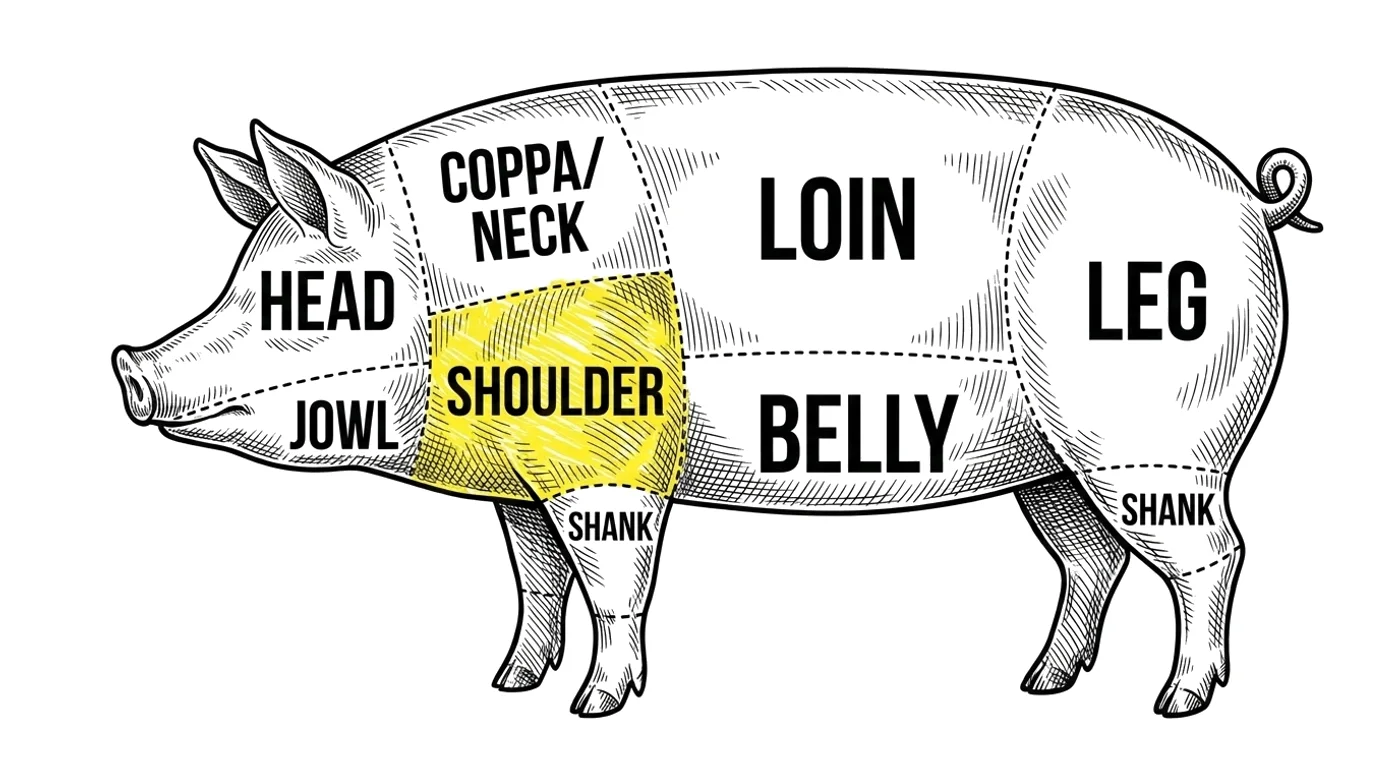
The cut
Identity and terminology
The German adjective polnische means Polish or Polish-style, but the name in an Austrian meat code denotes an Austrian-established sausage category rather than proof of manufacture in Poland. A similarly spelled name also appears in German guidance among raw sausages. Process and national context therefore matter. This entry is the Austrian product. Sausages carrying a matching name elsewhere are not the same thing.
Composition and characteristics
Codex Polnische has visible meat and bacon structure supported by a fine binding batter and is normally associated with frying. The source branch instead combines medium-ground pork and back fat with a finely worked beef phase, garlic, coriander, caraway, mustard seed and pepper, then smokes and cooks the link. Both share a substantial, savoury profile, but their raw-material architecture and intended service differ.
Production and process
For the source-specific branch, cold beef is fine-cut with ice and cure while pork and fat retain a medium grain. The mixture is stuffed into hog casings, cured under refrigeration, surface-dried, smoked and heated to a measured centre temperature. The source's short warm drying is not used to claim a semi-dry release. The finished home sausage remains chilled and is explicitly identified as an interpretation rather than Codex-certified production.
History and regional forms
Food names routinely cross borders and change technical meaning. Polnische illustrates that problem particularly well: an Austrian Codex Bratwurst, a German raw-sausage name and an English-language cooked-smoked recipe can coexist. No single use is the correct one. Each is anchored to its own jurisdiction, process and evidence. No EU geographical protection is claimed for the generic Austrian name.
Use, storage and related products
Codex-style Polnische is suited to frying or grilling, while the cooked-smoked branch may be sliced cold or reheated gently. Mustard seed is declared as an allergen in the developed formula. Readers should not assume that a smoked home link meets the Austrian Codex composition, and they should not use a brief drying period as evidence of shelf stability. Refrigerate the finished branch and protect its ready-to-eat surface.
Recipe and cure
This is not a finished recipe. It is a window into how this meat is traditionally cured. Before you follow any process, run it through one of our curing calculators so the salt, cure and timings are right and safe for your own batch.
Make this — the measured Curesmith version →“Make this” opens the same cure as a measured recipe, scaled to your batch.
- Meat
- Pork shoulder
- Cut
- Pork shoulder
- Salt (%)
- 1.8
- Curing salt
- Cure #1 as specified in the recipe
- Fermented
- No
- Starter or mould
- None; this product is not fermented
- Smoked
- Yes
- Maturation
- Refrigerate at 0–4°C; use within 4 days or freeze promptly
- Basis
- per 1,000 g pork shoulder
- Style
- source-specific Austrian-labelled cooked-smoked sausage, not the complete Codex formula
Ingredients
- Pork shoulder100% · 1000 g
- Pork back fat50% · 500 g
- Beef chuck40% · 400 g
- Crushed ice6.3% · 120 g
- Fine salt1.8% · 34 g
- Cure #1, 6.25% sodium nitrite0.25% · 4.5 g
- Ground black pepper0.21% · 4 g
- Ground coriander0.11% · 2 g
- Ground caraway0.05% · 1 g
- Mustard seed, lightly crushed0.05% · 1 g
- Fresh garlic, crushed0.32% · 6 g
Method
- Trim, weigh and chill all animal materials and equipment to 0–2°C.
- Grind pork and back fat separately through 5 mm; grind beef through 3 mm.
- Fine-cut beef with ice, salt, Cure #1 and spices; fold in pork and fat until cohesive.
- Stuff firmly into 36–38 mm hog casing, remove air pockets and refrigerate 8–12 hours.
- Surface-dry and apply moderate smoke at 55–65°C before the final cook.
- Poach, steam or finish in the smokehouse until the cold point reaches 71°C.
Safety. Keep national definitions separate, declare mustard, validate the cooked branch by temperature and refrigerate rather than relying on short drying.