
Porchetta di Ariccia
Ariccia, Lazio, Italy
Herb-scented roast pork with crisp crackling, savoury and aromatic, best in a plain bread roll.
Overview
Porchetta di Ariccia is seasoned pork rolled or prepared as a whole carcass and roasted until the rind becomes brittle and crisp. Rosemary, garlic and black pepper perfume the meat, but it is cooking, not curing, that makes the product safe and defines its texture.
Where it's from
Climate. Ariccia in the Castelli Romani hills near Rome.
Altitude. Alban hills
The cut
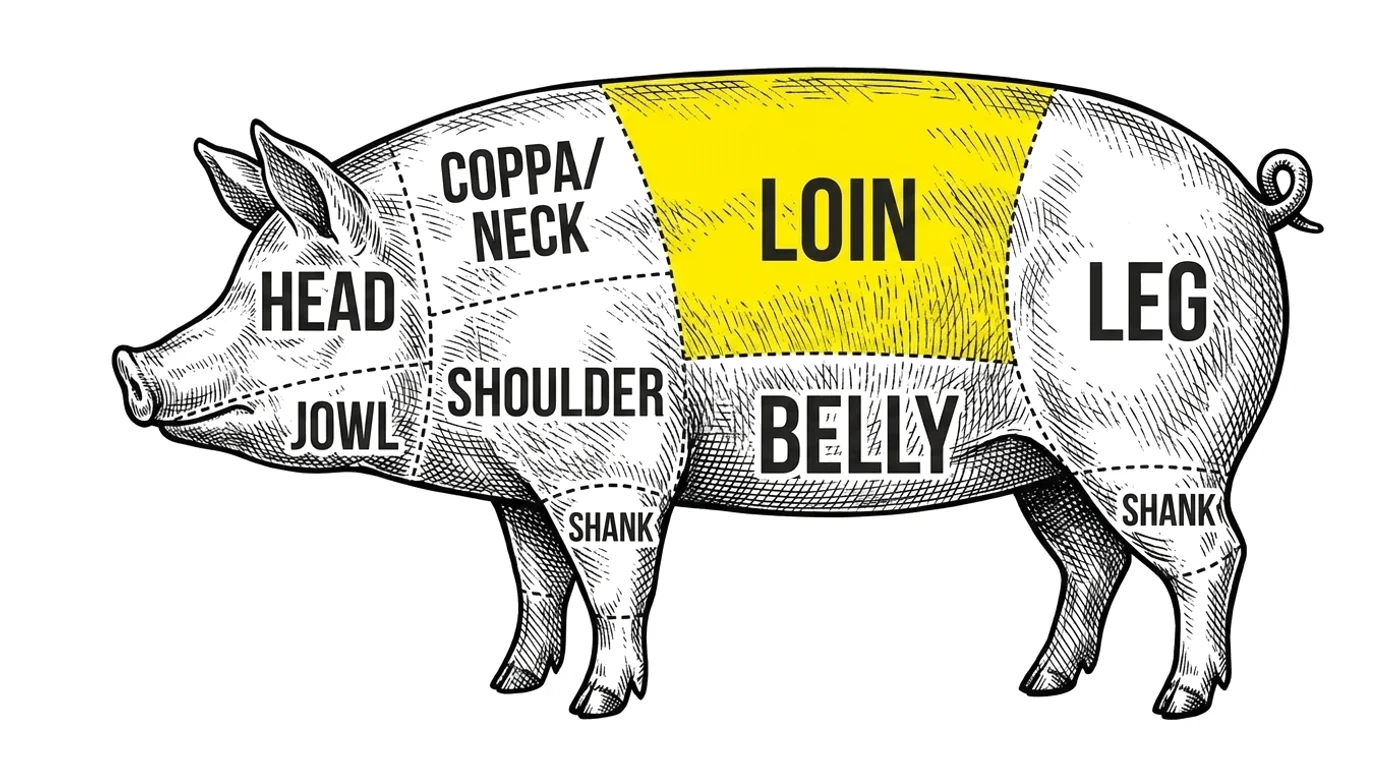
How to recognise it
The roast is tightly rolled or presented in the protected whole form, with brittle brown crackling and moist pale pork inside. Rosemary, garlic and pepper should be clear. The rind must be crisp rather than leathery, and the centre fully cooked. Grey raw meat, soft rubbery skin, rancid fat or stale holding aromas are faults.
- Shape and size
- Large rolled roast with crackling
- Lean colour
- Roasted pork
- Fat and marbling
- Rendered, crisp skin
- Casing
- Own skin
- Surface bloom
- None
Origins and history
Ariccia lies in the Alban Hills south of Rome, an area associated with Latin settlements, religious feasting and the summer estates of Roman nobility. Local tradition connects porchetta with ancient pig sacrifices and banquets, though the continuous modern craft is better understood through generations of Ariccian pork butchers who boned, seasoned, rolled and roasted pigs for markets and festivals. The product was portable, easy to carve and ideal for roadside sale in bread. Ariccia organised its first dedicated porchetta festival in 1950, turning an old trade into a public emblem of the town. PGI registration in 2011 protects the crisp rind, aromatic seasoning, preparation and production relationship with Ariccia.
Name. Porchetta, a diminutive of porco, 'pig'.
- Production today
- Producers around Ariccia.
- Protection
- IGP.
- Tradition vs modern
- A roasted, not cured, tradition.
- Seasonality
- Festivals and sagre.
Serving and cultural significance
The classic service is thick slices in plain crusty bread from a market stall or fraschetta. It can also be served warm or cool with roast potatoes, bitter greens or white wine from the Castelli Romani. Keep the crackling exposed to dry air so it remains crisp.
Recipe and cure
This is not a finished recipe. It is a window into how this meat is traditionally cured. Before you follow any process, please run it through one of our curing calculators, so the salt, cure and timings are right and safe for your own batch.
Curesmith home adaptation — not designation-compliant
Make this — the measured Curesmith version →The cure below is the traditional reference. “Make this” opens the measured Curesmith home recipe, scaled to your batch.
Traditional or protected production
Porchetta di Ariccia is produced from a whole female pig or prepared trunk, boned, seasoned with salt, pepper, garlic and rosemary, tied, roasted and cooled in Ariccia. Crisp brown rind and tender white-to-pink meat are defining features.
- Meat
- pork
- Salt (%)
- 2
- Curing salt
- None; a fresh roasted product
- Fermented
- No
- Smoked
- No
- Target aW or weight loss
- cooked, not dried
- Temperature (°C)
- cooked through to a safe core temperature
- Humidity (%)
- n/a
- Maturation
- roasted, eaten warm or cold
- Basis
- per 1000 g green meat
- Style
- Traditional roasted
Ingredients
- whole boned pig / pork loin and belly (base)100% · 1000 g/kg
- sea salt2% · 20 g/kg
- black pepper0.4% · 4 g/kg
- rosemary0.4% · 4 g/kg
- garlic0.4% · 4 g/kg
- wild fennel0.3% · 3 g/kg
Method
- Bone and butterfly the pig, season heavily with salt, pepper, rosemary, garlic and fennel.
- Roll and tie tightly.
- Roast slowly until the skin crackles and the core is safely cooked.
- Rest, then slice warm or cold.
Notes
- The official protected specification controls the named product. Any Curesmith EQ, starter-culture, curing-salt or home-scale adaptation is a separate method and must not be presented as designation-compliant.
- This is a cooked product. It must be cooked through before eating. Where a cure is used it is Cure #1 (nitrite), suited to the shorter, cooked process rather than long drying.
In the Codex
What this product teaches, and where to read more.
Temple. Pillar, Meat Quality