
Pumpkin and Pork Sausage
Also known as Pumpkin Sausage
International
Overview
Pumpkin and Pork Sausage is a cooked link in which pumpkin puree replaces a substantial part of the conventional meat-and-fat mixture. The vegetable lowers the density of the filling, adds an orange cast and gives a gentle earthy sweetness. Pork remains the flavour anchor, while starch absorbs free moisture so the cut face stays cohesive. It is a modern formulation category rather than a named regional speciality.
Where it's from
The cut
Identity and terminology
The title is descriptive. Pumpkin identifies the vegetable component and pork identifies the animal base; neither word establishes a traditional specification or geographical claim. Similar formulas may be sold as autumn sausage, squash sausage or reduced-meat sausage, but those marketing names do not create one historic canon. It is treated here as a generic family with one declared composition.
Composition and characteristics
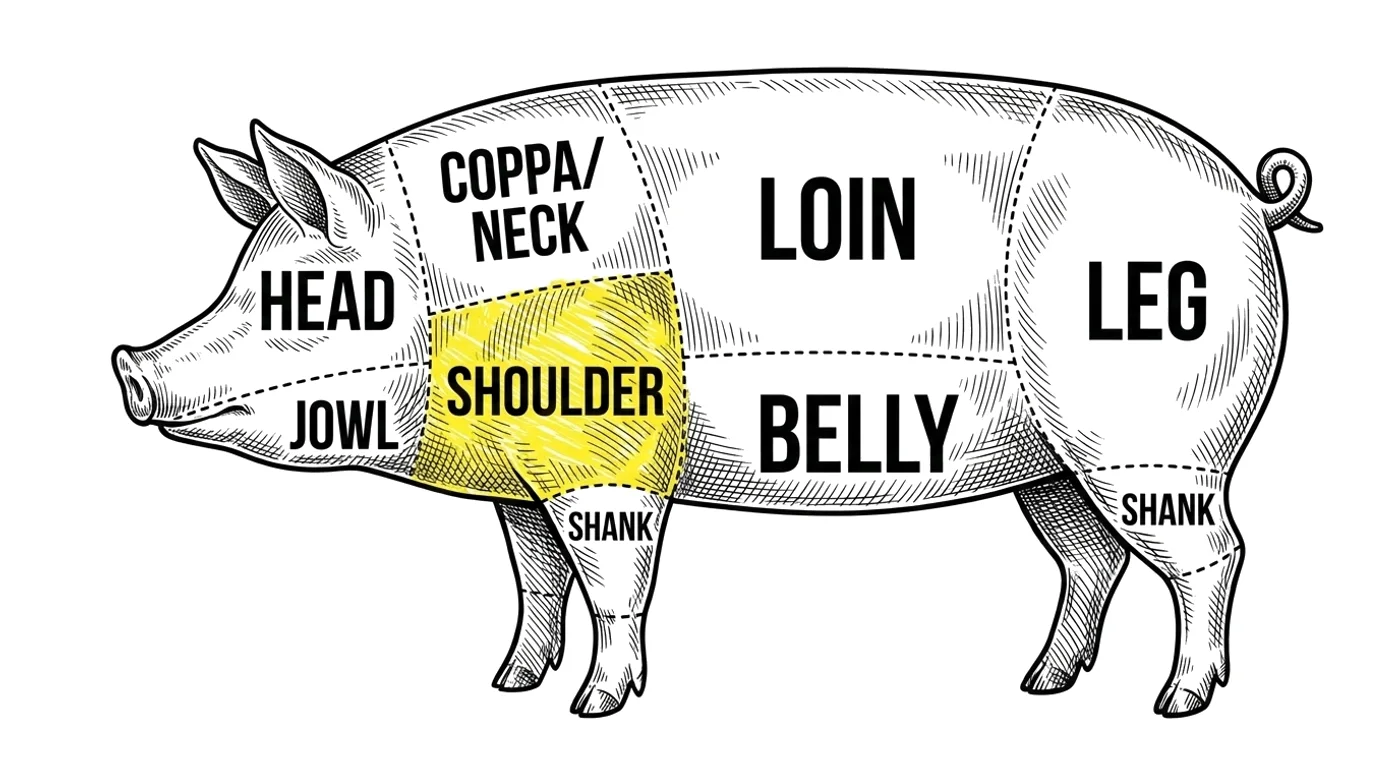
Lean pork supplies myofibrillar protein for binding, belly supplies fat and pumpkin contributes water, fibre, colour and a soft vegetable matrix. Too much puree can dilute meat flavour and weaken the gel, while too little fails to change the character. Potato starch gives a clean neutral bind. Sweet paprika, cumin, nutmeg and a restrained touch of cayenne reinforce the warm savoury profile without making the sausage taste like pie filling.
Production and process
The pork fractions are chilled and ground separately. Lean meat is mixed with salt until tacky before pumpkin, starch and seasoning are introduced; the fatty fraction enters last to limit smear. The uncured filling is stuffed promptly and cooked gently until the centre reaches 71°C. Rapid chilling matters because pumpkin does not preserve the sausage and its water remains available to microorganisms.
History and regional forms
Vegetable-extended sausages belong to a long practice of combining meat with seasonal crops, cereals or roots, but this particular pumpkin formula is not assigned an invented birthplace. Its significance is technical: it shows how a high-moisture puree changes bind, colour, yield and flavour. It should not be confused with Spanish chorizo de calabaza, which is a different cured regional product.
Use, storage and related products
Serve the sausage warm with mustard, roasted roots, cabbage or a sharp apple relish, or slice it cold once fully chilled. The orange interior should be moist yet clean-cutting, with visible meat character and no purge. It remains a refrigerated ready-to-eat product after cooking. Pumpkin content, a natural casing and gentle seasoning do not make it shelf stable.
Recipe and cure
This is not a finished recipe. It is a window into how this meat is traditionally cured. Before you follow any process, run it through one of our curing calculators so the salt, cure and timings are right and safe for your own batch.
Make this — the measured Curesmith version →“Make this” opens the same cure as a measured recipe, scaled to your batch.
- Meat
- Pork shoulder
- Cut
- Pork shoulder
- Salt (%)
- 1.3
- Curing salt
- None
- Fermented
- No
- Starter or mould
- None; this product is not fermented
- Smoked
- No
- Maturation
- Refrigerate at 0–4°C; use within 4 days or freeze promptly
- Basis
- per 1,000 g pork shoulder
- Style
- uncured pork sausage extended with pumpkin puree
Ingredients
- Pork shoulder100% · 1000 g
- Fat pork belly75% · 750 g
- Unsweetened pumpkin puree75% · 750 g
- Fine salt0.9% · 22.5 g
- Sugar0.2% · 5 g
- Ground black pepper0.1% · 2.5 g
- Sweet paprika0.1% · 2.5 g
- Ground nutmeg0.05% · 1.5 g
- Ground cumin0.05% · 1.5 g
- Ground cayenne0.02% · 0.6 g
- Potato starch1% · 25 g
Method
- Weigh and chill all animal materials, other ingredients and equipment to 0–2°C.
- Grind lean pork and belly separately through 6 mm.
- Mix lean pork with salt until tacky; incorporate pumpkin, starch, sugar and spices, then fold in the fatty pork evenly.
- Fill 36 mm hog casing firmly, remove air pockets and close securely.
- Poach or steam gently until the cold point reaches 71°C.
- Shower briefly, then complete controlled chilling.
Safety. Keep the puree and meat cold, develop the pork bind before adding pumpkin, verify the cook and chill rapidly.