
Reiswurst
Also known as Rice Sausage, German Rice Sausage
Germany
Overview
Reiswurst is a cooked German-style sausage combining finely ground beef and fatty pork with whole cooked rice. The grains remain visible in the slice and lighten the otherwise dense meat matrix. Pepper and allspice provide savoury warmth, while a trace of cinnamon gives a recognisable aromatic lift. This branch is uncured, unsmoked and intended for refrigeration rather than drying.
Where it's from
The cut
Identity and terminology
The German name is literal: Reis means rice and Wurst means sausage. It describes composition more reliably than origin, because unrelated products have carried the same name in other places and periods. Some Barossa Valley usage refers to a rice blood sausage, while modern commercial searches can also find animal-feed products. Curesmith limits this article to the documented cooked beef-and-pork, blood-free branch.
Composition and characteristics
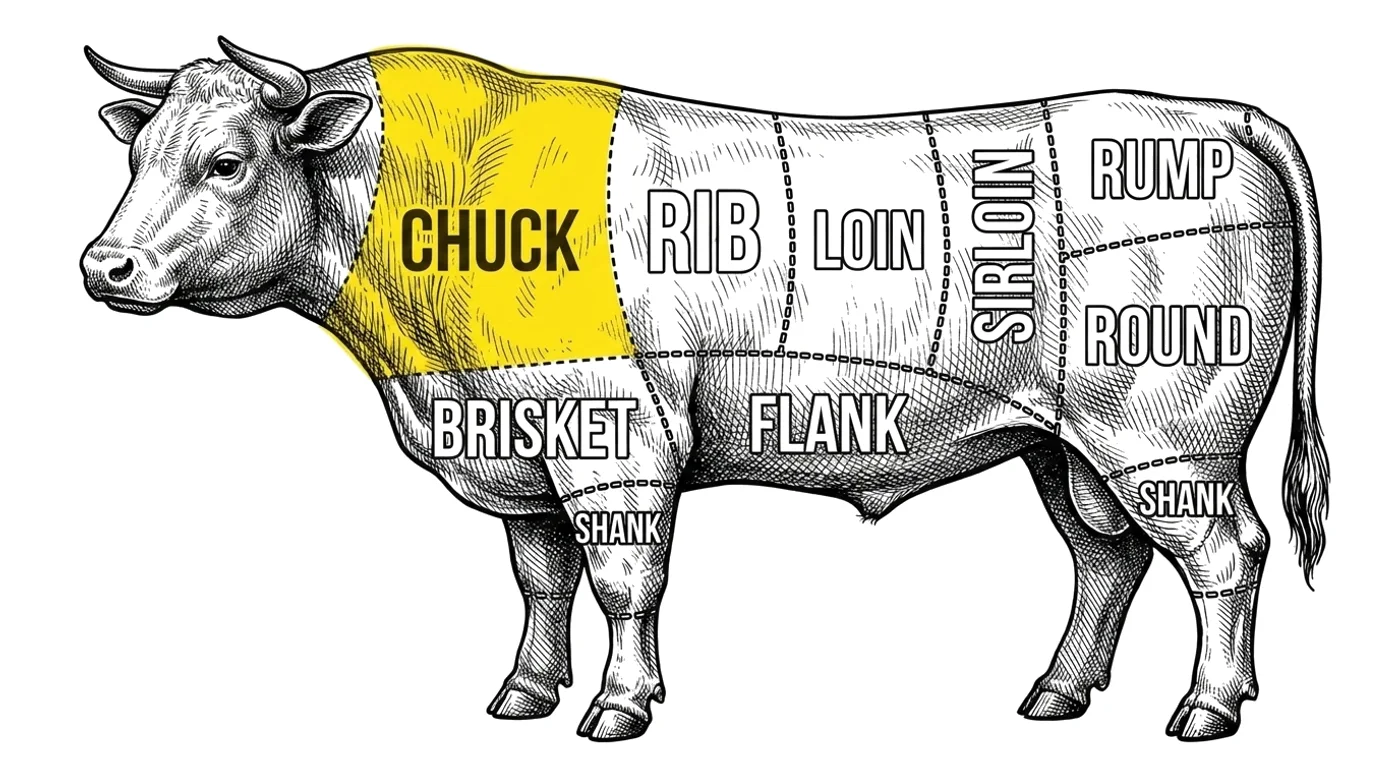
Beef gives the sausage a firm savoury base, belly provides fat and gelatin, and cooked rice supplies a tender grain that absorbs meat juices. Rice must be fully cooked but not broken into paste; overcooking produces a gummy filling and weakens the visual contrast. The seasoning is deliberately short. A finished slice should show separate pale grains in a cohesive grey-brown matrix rather than a smooth emulsion.
Production and process
Beef is cooked until tender and pork is preheated until partly tender, then both are chilled before grinding. Rice is cooked separately and also chilled quickly. The cold meats are mixed with seasoning before the grains are folded in gently. After stuffing, the sausage receives a final verified poach and rapid cooling. This two-stage heat history makes cooling discipline especially important.
History and regional forms
Rice and other cereals historically stretched meat, captured broth and changed the texture of cooked sausages across central and northern Europe. Reiswurst belongs to that economical cooked-sausage logic, but it is not listed as a distinct current name in the German meat guidelines. That absence supports cautious treatment as a documented formula family rather than a legally fixed German market identity or protected tradition.
Use, storage and related products
Serve Reiswurst hot with cabbage, potatoes or mustard, or chill it thoroughly and fry thick slices until the edges crisp. It is related in technique to cereal sausages but differs from blood-based rice sausage and from liver sausage with rice. The cooked grains remain a food-safety consideration: cool the batch rapidly, refrigerate it consistently and discard any link subjected to uncertain warm holding.
Recipe and cure
This is not a finished recipe. It is a window into how this meat is traditionally cured. Before you follow any process, run it through one of our curing calculators so the salt, cure and timings are right and safe for your own batch.
Make this — the measured Curesmith version →“Make this” opens the same cure as a measured recipe, scaled to your batch.
- Meat
- Beef chuck
- Cut
- Beef chuck
- Salt (%)
- 2.3
- Curing salt
- None
- Fermented
- No
- Starter or mould
- None; this product is not fermented
- Smoked
- No
- Maturation
- Refrigerate at 0–4°C; use within 4 days or freeze promptly
- Basis
- per 1,000 g beef chuck
- Style
- uncured German-style rice sausage
Ingredients
- Beef chuck100% · 1000 g
- Pork belly100% · 1000 g
- Cooked long-grain rice, cooled25% · 500 g
- Fine salt2.3% · 45 g
- Ground black pepper0.25% · 5 g
- Ground allspice0.13% · 2.5 g
- Ground cinnamon0.07% · 1.5 g
Method
- Poach beef until tender, poach pork belly until semi-tender, and cook rice until just done.
- Grind the cold beef and pork through 3 mm.
- Mix meats with salt and spices, then fold in the cold rice without crushing the grains.
- Fill 40 mm beef rounds firmly and tie securely.
- Poach gently until the cold point reaches 72°C.
- Shower briefly, then complete controlled chilling.
Safety. Cool cooked rice and pre-cooked meat rapidly before mixing, verify the final poach and maintain refrigeration.