
Russian Tourist Sausage (Cooked-Smoked)
Also known as Tourist Sausage-Russian, Russian Turist cooked-smoked sausage
Russia
Overview
Russian Tourist Sausage in this entry is a narrow cooked-smoked link made from beef, pork and pork belly. Beef dominates the lean fraction, belly provides a fine fatty phase and pork softens the bite. Pepper, caraway and garlic give a compact savoury profile. The link is smoked and heated through, then chilled for refrigerated service. Its portable name describes form and intended convenience; it does not make the product safe to carry warm or store without a cold chain.
Where it's from
The cut
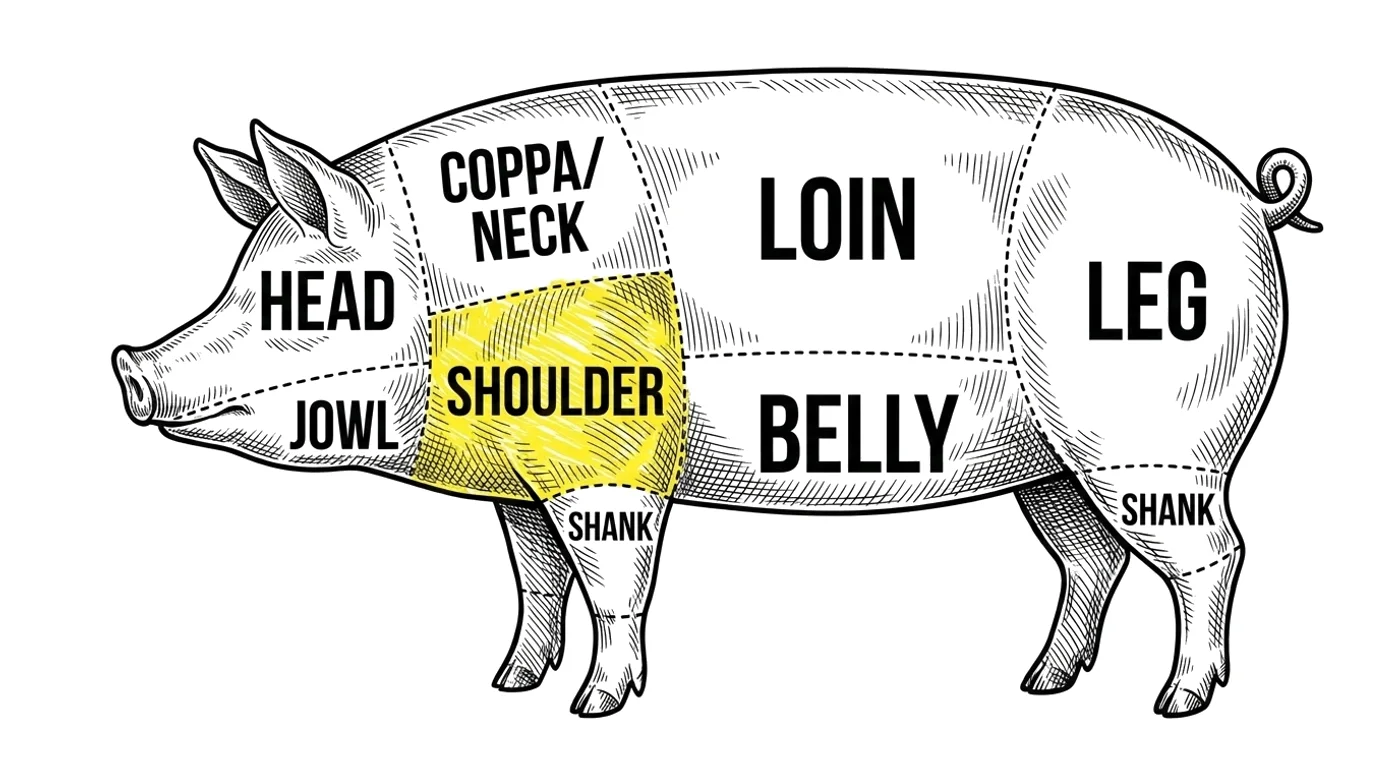
Identity and terminology
Tourist and traveller names occur in several sausage cultures. The Russian cooked-smoked branch must remain separate from Polish Kiełbasa Turystyczna Pieczona, Spanish Salchicha de Turista and German Touristenwürstchen, all of which have different meat structures and processes. A further Russian dry Tourist sausage also exists in the source corpus. That later fermented-dried form cannot share the present safety design merely because the translated name is the same.
Composition and characteristics
Lean beef and pork form a coarse red-pink base, while finely reduced pork belly spreads succulence through the slice. The intended result is a slender, cohesive link with a light smoke-brown casing and recognisable caraway-garlic aroma. It should not resemble a smooth frankfurter or a dry salami. Clean fat definition, even cured colour and the absence of grey centres, purge, rancid fat or loose air pockets are important identification and quality signs.
Production and process
Cold meat is ground by fraction, mixed with measured ice, salt, nitrite cure and seasoning, and stuffed into sheep casing. Controlled cool-air drying replaces an ambient hold. Hot smoke develops colour, after which chamber heat raises the cold point to the verified cooked endpoint. Rapid chilling follows. The sausage receives no fermentation culture and no measured water-activity release, so the processing sequence ends as a moist refrigerated product rather than a semi-dry travel ration.
History and regional forms
Portable smoked sausages fitted twentieth-century rail, factory, military and outdoor food habits across Eastern Europe. Russian standards also distinguish cooked-smoked, semi-smoked and dry sausage categories by process, not simply by flavour name. The evidence reviewed does not establish this precise formula as a current protected designation. The Atlas therefore preserves its attributable Russian branch while avoiding a fabricated claim of universal national standardisation or continuity from one Soviet specification.
Use, storage and related products
Serve chilled in narrow slices or warm gently with bread, mustard, pickled vegetables or cheese. Transport only in an insulated cold pack. The product differs from Kabanosy through its beef-belly composition and cooked character, from Tambov sausage through spice and link size, and from Russian dry Tourist through the absence of controlled fermentation and long drying. Refrigerate the whole batch and freeze portions that will not be eaten promptly.
The recipe for this product is in preparation and will be published once it has been verified.
Safety. Correct cure to the house 2.5 g/kg dose, verify 71°C at the cold point, chill completely and never treat the traveller name as evidence of shelf stability.