
Overview
Ryynimakkara is a Finnish cooked sausage whose defining ingredient is cereal groat, most commonly barley. The developed branch combines cooked pork heart, tongue, shoulder and fat with tender groats, potato flour, stock, garlic and restrained warm spices. It is soft, moist and visibly grainy rather than elastic. Barley gives a pale brown flecked slice and a porridge-like body that distinguishes it immediately from an all-meat grill sausage.
Where it's from
The cut
Identity and terminology
The name joins ryyni, meaning groat, with makkara, sausage. Finnish food guidance uses such qualifiers when a substantial non-meat ingredient changes the expected sausage composition. Ryynimakkara is therefore a meaningful established name, not merely a recipe description invented in translation. Regional and commercial examples vary, and some contain blood while others do not. The Curesmith article covers the non-blood family branch and keeps verimakkara and Tampere mustamakkara separate.
Composition and characteristics
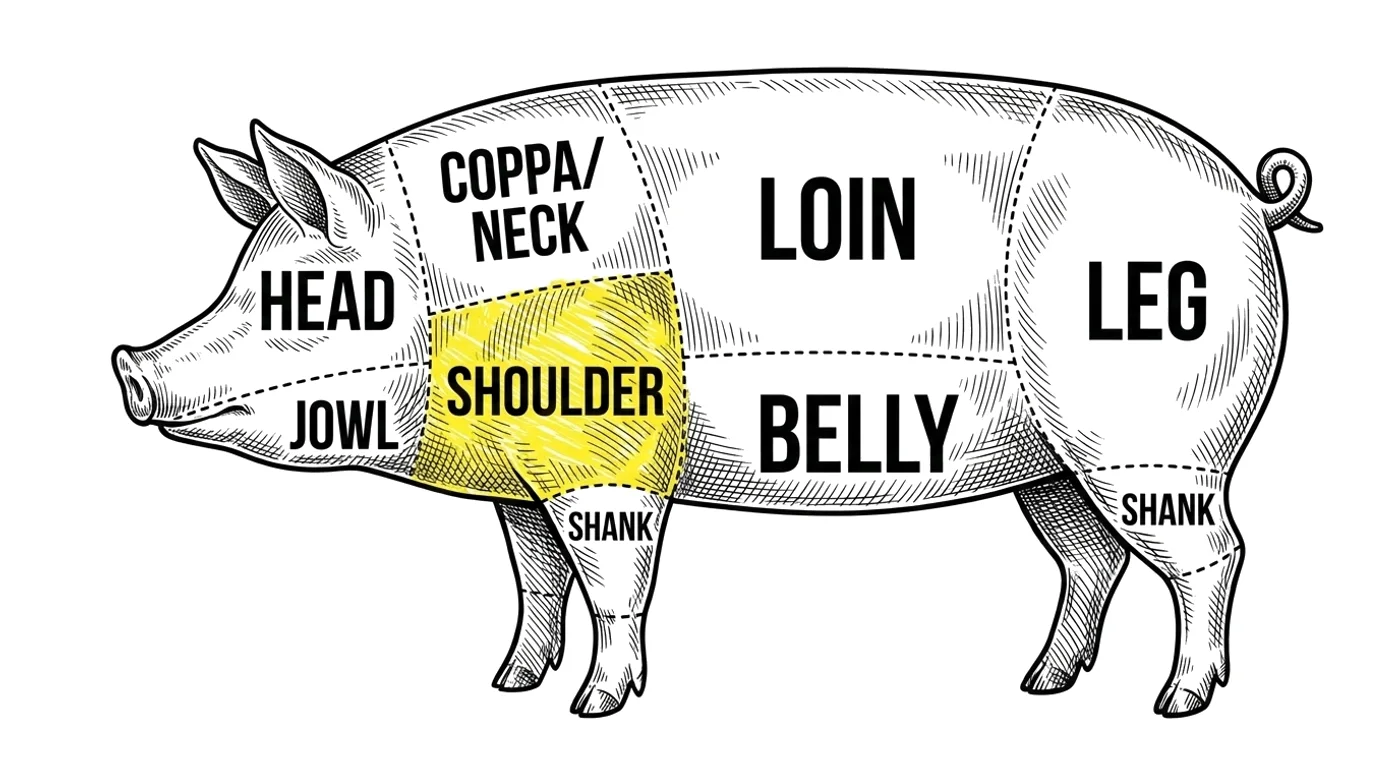
Barley groats provide starch, texture and much of the bulk. Pork organs contribute deep savoury flavour and efficient whole-animal use, while back fat and stock prevent the cereal mass from becoming dry. Potato flour strengthens the bind. Pepper and coriander sit behind garlic, with mustard and celery providing quiet aromatic detail. Contemporary commercial products may use ordinary pork and beef rather than organ meat, illustrating that the groat is more identity-defining than one fixed meat balance.
Production and process
Heart, tongue and pork are inspected, cooked separately as needed and chilled with their clean stock. The tongue is peeled, the animal components are ground fine and the barley is cooked until tender but still distinct. Everything is mixed cold with the measured stock, flour and seasoning, then stuffed loosely so the cereal can expand. A final poach heats the filled sausage throughout, followed by rapid chilling and refrigeration.
History and regional forms
Groat sausages belong to a northern European tradition of extending slaughter-season meat with durable cereals. They made use of organs and cooking liquor while producing filling food suited to household storage under cold conditions. Finnish ryynimakkara is related conceptually to British meal puddings and several Baltic or Polish cereal sausages, but its language, barley emphasis and local use establish a distinct identity. Modern label rules continue to recognise the name as a necessary description of composition.
Use, storage and related products
Ryynimakkara may be browned in a pan or on a grill, served with mustard, mashed potatoes, pickles or lingonberry accompaniments. Handle it gently because the moist cereal filling can split a tightly packed casing. Refrigerate the cooked links and reheat only the portion needed. Barley contains gluten, while mustard and celery must be declared in this branch. The sausage is neither fermented nor shelf stable, and blood-free examples should not be presented as mustamakkara.
The recipe for this product is in preparation and will be published once it has been verified.
Safety. Cook and chill offal and groats promptly, declare barley, mustard and celery, stuff loosely, verify the final cold point and keep refrigerated.