
Salama da sugo
Also known as Salama da Sugo
Ferrara, Emilia-Romagna, Italy
Dark, winey and intense, so soft it is served spooned from the skin, usually over mashed potato.
Overview
Salama da Sugo is a dark, heavily wine-seasoned Ferrarese sausage matured in a pig bladder and tied into melon-like segments. It is not sliced as an ordinary salami: after long cooking the filling becomes soft, intense and spoonable, releasing the sugo that gives the product its name.
Where it's from
Climate. Ferrara in Emilia.
Altitude. Po delta plain
The cut
How to recognise it
The whole sausage is rounded or melon-shaped, enclosed in a bladder and divided by six or eight strings. The exterior may carry controlled mould. After cooking, the filling is very dark, winey and soft enough to spoon. A burst bladder, sour spoilage, rancid fat, dry crumbly filling or inadequate cooking is defective.
- Shape and size
- Segmented bladder, dark and soft
- Lean colour
- Dark, rich
- Fat and marbling
- Soft
- Casing
- Pig bladder
- Surface bloom
- Possible during ageing
Origins and history
Salama belongs to the ceremonial cooking of Renaissance Ferrara and the court of the Este dukes. Cristoforo di Messisbugo's sixteenth-century banquet writing describes related wine-rich pork mixtures, while later documents identify the distinctive Ferrarese sausage more clearly. Local tradition connects its court popularity with Lucrezia Borgia, although the product also moved into peasant households and feast-day cooking. In 1722 Antonio Frizzi celebrated it in the playful poem La Salameide, showing that it had already become a civic symbol. The bladder casing, strong red wine and long cure produced a food that could wait for a special meal. PGI registration in 2014 protects production across most of Ferrara province and recognises both the matured raw product and the cooking tradition.
Name. Salama, a Ferrarese form of 'salame'; da sugo, 'with sauce', for its soft, spoonable texture.
- Production today
- Small Ferrara producers.
- Protection
- IGP.
- Tradition vs modern
- A rare cure-then-cook product.
- Seasonality
- Traditionally autumn and winter.
Compare with. Cotechino Modena
Serving and cultural significance
Cook it gently for several hours, open the top or remove the bladder and spoon the filling over mashed potato. The cooking juices are part of the dish. It may be accompanied by pumpkin, celeriac or polenta, but the intense wine and spice make simple starches the best partners.
Recipe and cure
This is not a finished recipe. It is a window into how this meat is traditionally cured. Before you follow any process, please run it through one of our curing calculators, so the salt, cure and timings are right and safe for your own batch.
Curesmith home adaptation — not designation-compliant
Make this — the measured Curesmith version →The cure below is the traditional reference. “Make this” opens the measured Curesmith home recipe, scaled to your batch.
Traditional or protected production
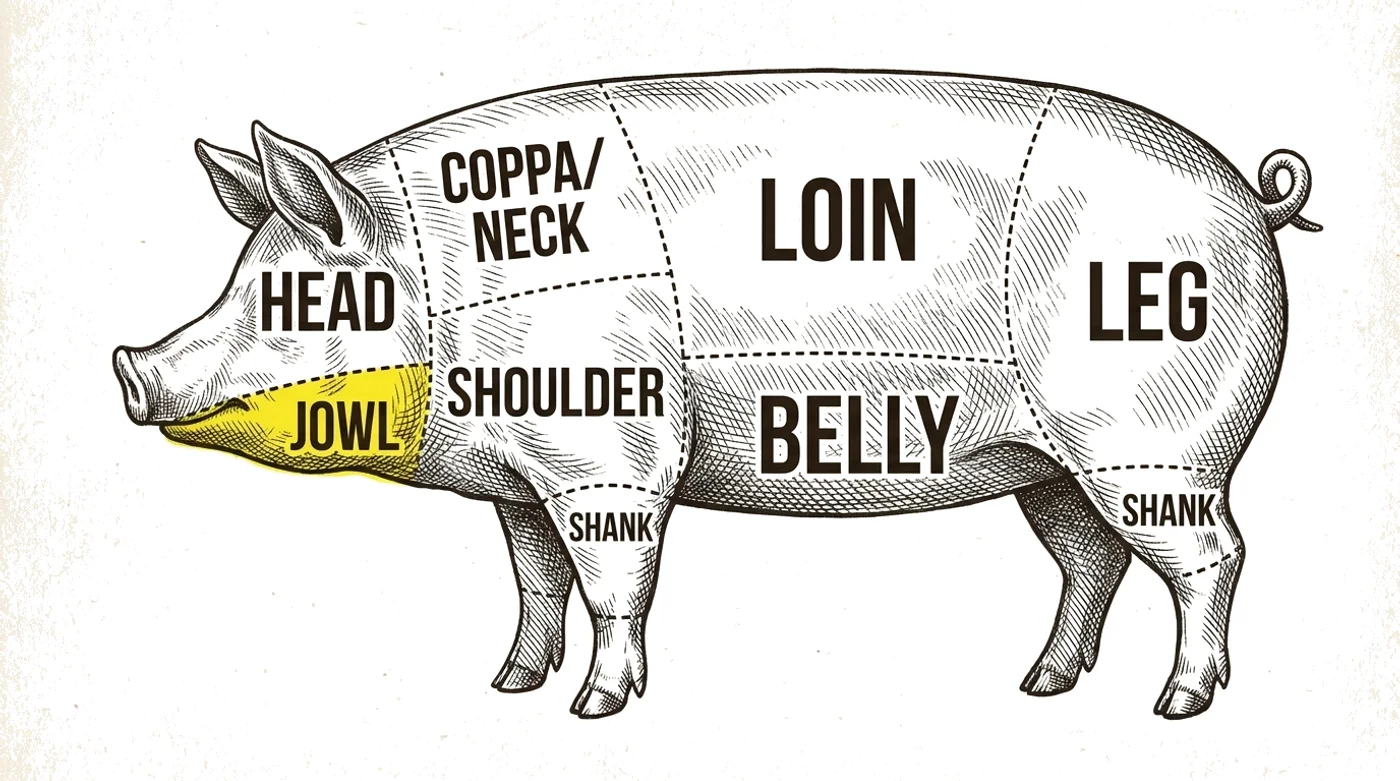
The official mixture includes defined proportions of pork jowl, neck, belly, shoulder, tongue and liver, with a high addition of red wine, salt, pepper and optional warm spice. It is packed in pig bladder, tied into a melon shape and matured for at least six months, or at least four months for qualifying cooked product.
- Meat
- pork
- Salt (%)
- 2
- Curing salt
- Cure #1 at 2.5 g/kg (0.25%)
- Fermented
- No
- Smoked
- No
- Target aW or weight loss
- cooked, not dried
- Temperature (°C)
- cooked through to a safe core temperature
- Humidity (%)
- n/a
- Maturation
- dried a few months, then boiled for hours
- Basis
- per 1000 g green meat
- Style
- Traditional, cooked
Ingredients
- pork (base)100% · 1000 g/kg
- pork liver10% · 100 g/kg
- sea salt2.5% · 25 g/kg
- Cure #10.25% · 2.5 g/kg
- black pepper0.4% · 4 g/kg
- spices (nutmeg, clove, cinnamon)0.3% · 3 g/kg
- red wine5% · 50 g/kg
Method
- Mix coarse pork and liver with salt, cure, spices and plenty of red wine.
- Stuff into a bladder and tie into segments.
- Dry and age for some months.
- Boil very gently for hours and serve spooned from the skin.
Notes
- The official protected specification controls the named product. Any Curesmith EQ, starter-culture, curing-salt or home-scale adaptation is a separate method and must not be presented as designation-compliant.
- This is a cooked product. It must be cooked through before eating. Where a cure is used it is Cure #1 (nitrite), suited to the shorter, cooked process rather than long drying.
In the Codex
What this product teaches, and where to read more.
Temple. Pillar, Meat Quality