
Salame Mantovano
Mantua, Lombardy, Italy
Soft and openly garlicky, a rustic Po-plain salame.
Overview
Salame Mantovano is soft and openly garlicky, a rustic po-plain salame. A medium-coarse strawberry-red slice with clean white fat, fresh garlic and pepper. Wine softens the aroma without making the salame sweet.
Where it's from
Climate. The lower Po plain around Mantua.
Altitude. Po plain
The cut
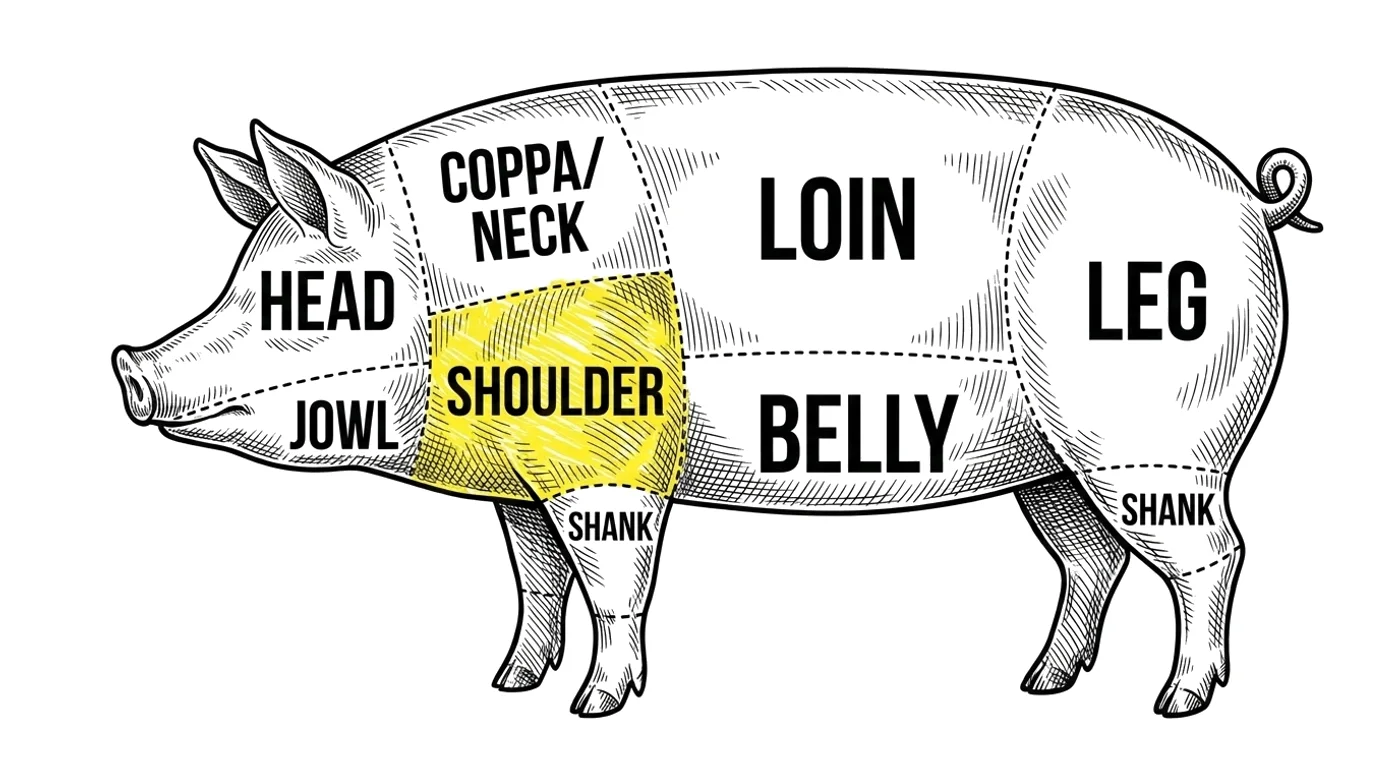
How to recognise it
A medium-coarse strawberry-red slice with clean white fat, fresh garlic and pepper. Wine softens the aroma without making the salame sweet. Garlic should be fresh and integrated, not bitter; grease smear, voids or a sour wet centre are faults.
- Shape and size
- Cylindrical, soft
- Lean colour
- Red
- Fat and marbling
- White
- Casing
- Natural hog casing, tied by hand, 45 to 60 mm
- Surface bloom
- White mould
Origins and history
Pork curing on the low plain around Mantua is very old, with roots reaching back to Etruscan settlement and a later refinement under the Renaissance ducal court. This is the farmhouse salame of that flat, watery country, a plain and honest sausage of lean pork and generous fat bound with little more than salt, pepper and a good deal of fresh garlic. Recipes shift from village to village, some steeping the garlic and spices in wine, others working raw garlic paste straight into the meat. A splash of local red is often added, which lends the cut its soft, strawberry-red grain.
Pork curing on the Mantuan plain is ancient and was refined through farm and court traditions. The local salame remained direct and aromatic, using garlic and wine rather than a long list of spices. The verified production area is Mantua and the lower Po plain, Lombardy, Italy. Stories and etymologies are retained when they help explain the tradition, but legends are not used as evidence for the modern specification.
Name. Named for Mantua (Mantova).
- Production today
- Producers in the Mantua area.
- Protection
- Not EU-protected as a general name.
- Tradition vs modern
- Garlic-in-wine seasoning; a softer cure.
- Seasonality
- Year-round.
Compare with. Salame Cremona
Serving and cultural significance
Serve medium-thin slices with bread, Grana Padano, mostarda and Lambrusco. The garlic-led farmhouse style also belongs beside risotto alla pilota and other Mantuan pork dishes. A simple plate is preferable, because strong smoke or chilli would hide the regional character.
Recipe and cure
This is not a finished recipe. It is a window into how this meat is traditionally cured. Before you follow any process, please run it through one of our curing calculators, so the salt, cure and timings are right and safe for your own batch.
Make this — the measured Curesmith version →The cure below is the traditional reference. “Make this” opens the measured Curesmith home recipe, scaled to your batch.
Traditional or protected production
Salame Mantovano is a farmhouse-style pork salame with generous firm fat, black pepper, fresh garlic and often local red wine. Recipes vary by village and producer and the generic name has no EU geographical indication.
- Meat
- pork
- Salt (%)
- 2.2
- Curing salt
- Not included in the base recipe below
- Fermented
- Yes
- Target pH
- 4.9
- Starter or mould
- Natural surface mould
- Smoked
- No
- Target aW or weight loss
- ~30% weight loss
- Temperature (°C)
- ferment 22 to 24, then dry 13 to 15
- Humidity (%)
- ferment ~90, then 75 to 80
- Maturation
- 3 to 6 weeks
- Basis
- per 1000 g green meat
- Style
- Traditional fermented and dried salame
Ingredients
- Lean pork (base)100% · 1000 g/kg
- Pork back fat or pancetta33.33% · 333 g/kg
- Black pepper, part cracked whole and part ground0.5% · 5 g/kg
- Fresh garlic, peeled and crushed to a paste0.3% · 3 g/kg
- Red wine2.5% · 25 g/kg
Method
- Mince pork and fat and mix with all ingredients to green meat weight.
- Stuff into casing.
- Ferment to the target pH.
- Dry to the target weight loss.
Notes
- This traditional recipe uses no nitrite. For safety we recommend adding Cure #2: in a low-oxygen, slow-dried product nitrite is the specific guard against Clostridium botulinum, while salt, acidity and drying control Salmonella, E. coli, Listeria and Staphylococcus.
In the Codex
What this product teaches, and where to read more.
Temple. Roof, Water Activity