
Salchicha de Turista
Also known as Spanish Tourist Sausage, Tourist Sausage, Spanish cooked-smoked branch
Spain
Overview
Salchicha de Turista is recorded here as a small Spanish-style cured, smoked and cooked sausage made from pork, beef and a modest fat fraction. The narrow casing and short links make it portable and quick to reheat, while coriander, caraway and garlic give it a profile distinct from a plain frankfurter. Despite the tourist name, the reviewed evidence does not establish one protected Spanish recipe. The Atlas therefore treats this as a documented source branch rather than the national tourist sausage of Spain.
Where it's from
The cut
Identity and terminology
Turista means tourist or traveller. Similar travel, hunter and tourist names appear in several European sausage traditions, usually suggesting a convenient portable food rather than a shared legal formula. Those names can hide important differences in composition and process. The Spanish-language title must not be merged automatically with Polish Kiełbasa Turystyczna, Russian Turist sausage or German hunter products. Each requires its own evidence, and the current record remains tied to its pork-beef, small-link, cooked-smoked architecture.
Composition and characteristics
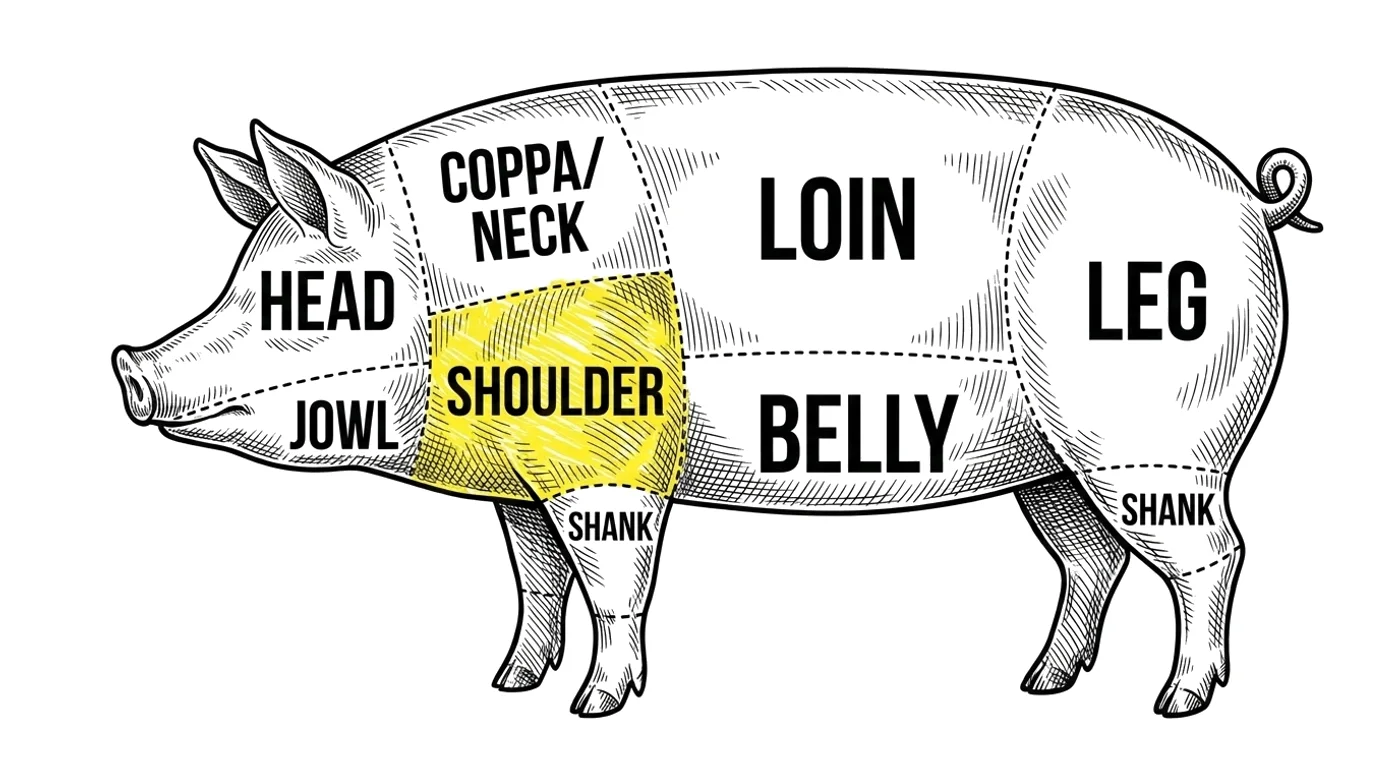
Lean pork is the largest fraction, beef strengthens the bind and deepens the cured colour, and firm pork fat keeps the link juicy without creating a heavy mosaic. Coriander and caraway sit behind black pepper and garlic. The salt level is assertive for a cooked sausage, consistent with the product's concentrated snack character, but it does not make the link shelf stable. The cut face is medium-fine and pink, with a light brown smoked casing and no fermentation tang.
Production and process
The beef is ground finer than the pork and fat so it can provide an adhesive binding phase. Cold meat is mixed with salt, accurately measured nitrite cure, ice and seasoning, stuffed into narrow sheep casings and cured under refrigeration. Controlled surface drying precedes smoke. A gentle poach then brings the cold point to the required endpoint, followed by rapid chilling. The historical idea of portability never replaces temperature control, and air cooling alone is not an adequate home process.
History and regional forms
Portable sausages developed wherever workers, hunters, soldiers and travellers needed compact food. The label tourist sausage became especially visible in twentieth-century Central and Eastern European trade. The source applies that idea to a Spanish formula, but current Spanish meat-product law supplies broad product categories rather than confirming this exact name as a protected designation. The cautious treatment is to preserve the recipe and its title while qualifying the origin story and avoiding a fabricated national standard.
Use, storage and related products
Serve the links chilled as part of a cold plate, warmed gently, or browned briefly and eaten with bread, mustard, pickled vegetables or a simple salad. They remain refrigerated ready-to-eat sausages after cooking. Salchicha de Turista should not be used as an alias for every small smoked Spanish sausage, and it is distinct from uncured fresh salchicha, dry salchichón and named protected products. Its identity rests on the documented branch, not on a geographical certification claim.
The recipe for this product is in preparation and will be published once it has been verified.
Safety. Treat the name as source-bounded, calculate cure on the animal block, cook to 71°C, chill rapidly and refrigerate.