
Salsiccia di Calabria
Calabria (regional), Calabria, Italy
Spicy and aromatic, chilli-warm with a backbone of fennel.
Overview
Salsiccia di Calabria is a matured pork sausage made in sweet, hot or pepper-led forms. Its smaller diameter and linked presentation distinguish it from broad Soppressata, while Calabrian chilli and local wine provide the regional flavour.
Where it's from
Climate. Calabria.
Altitude. Calabrian hills
The cut
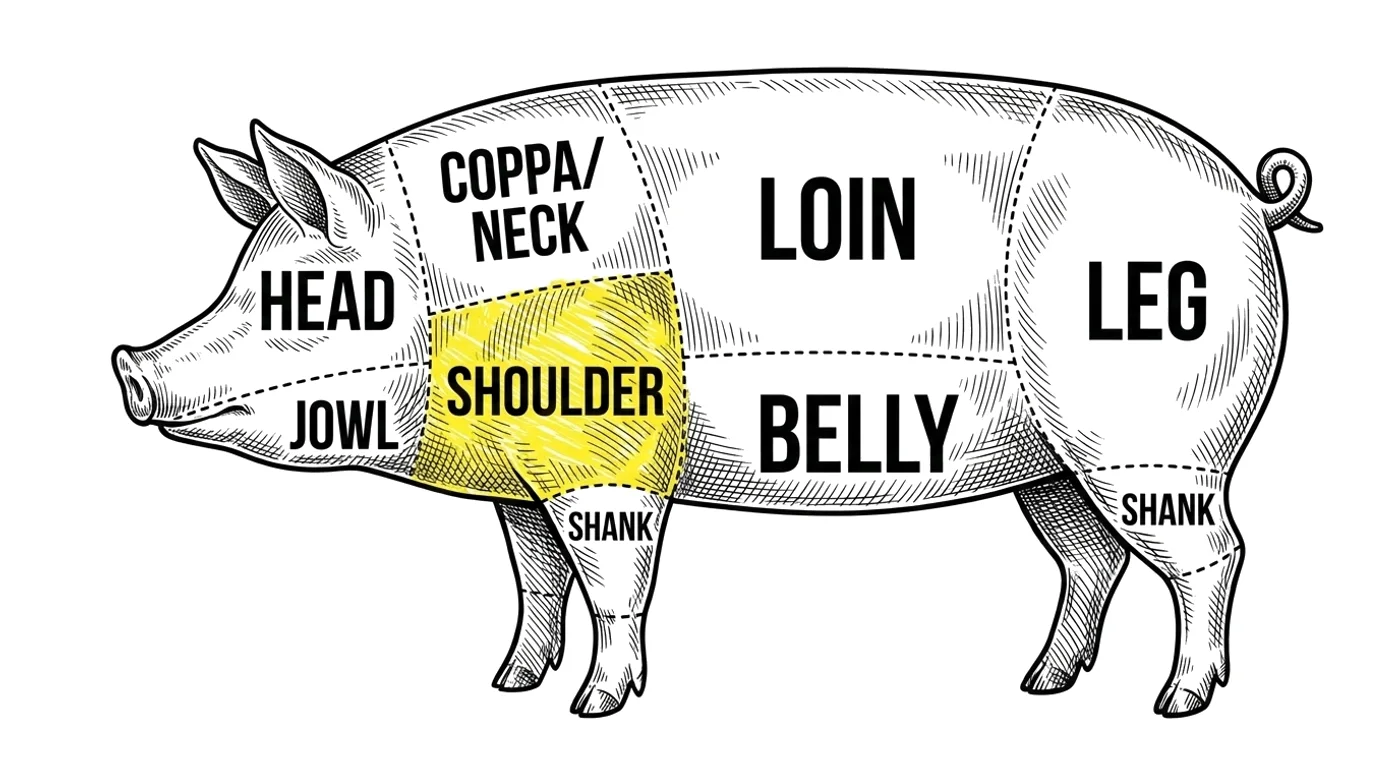
How to recognise it
The sausage is narrower than Soppressata and may be presented in links, a horseshoe or a chain. The slice is red with small white fat particles, and the casing should be dry and well attached. Chilli or pepper should smell clean and integrated. Sourness, loose casing, smeared fat, hollow centres or sticky uncontrolled mould are faults.
- Shape and size
- Linked, often U-shaped, red
- Lean colour
- Red
- Fat and marbling
- White flecks
- Casing
- Hog, 36 to 40 mm
- Surface bloom
- Possible
Origins and history
Salsiccia was the flexible sausage of the Calabrian matanza. Household makers could fill narrower casing and eat part of the batch relatively young while leaving other links to mature. Shoulder and other suitable pork cuts were balanced with firm fat, then seasoned according to family preference with black pepper, sweet chilli or hot chilli. Peppers introduced from the Americas found ideal growing conditions in Calabria and gradually became an emblem of the regional table. The sausage could be linked, braided or formed into compact chains, making it easy to hang in farmhouse curing rooms. PDO protection defines the Calabrian production area, raw material and minimum maturation while preserving several accepted flavour presentations.
Name. Salsiccia, sausage, from the Latin salsus, 'salted'.
- Production today
- Consortium producers in Calabria.
- Protection
- DOP.
- Tradition vs modern
- Traditional chilli-and-fennel seasoning.
- Seasonality
- Traditionally the winter slaughter.
Compare with. Chorizo
Serving and cultural significance
Serve mature Salsiccia di Calabria in diagonal slices with bread, cheese and olives, or use small amounts to flavour pasta, beans and vegetables. Hot versions need simple accompaniments; sweet versions are more versatile on a mixed salumi board.
Recipe and cure
This is not a finished recipe. It is a window into how this meat is traditionally cured. Before you follow any process, please run it through one of our curing calculators, so the salt, cure and timings are right and safe for your own batch.
Curesmith home adaptation — not designation-compliant
Make this — the measured Curesmith version →The cure below is the traditional reference. “Make this” opens the measured Curesmith home recipe, scaled to your batch.
Traditional or protected production
The protected meat block is led by pork shoulder, with defined allowances for leg, loin and back fat. The sausage is stuffed into natural casing, often tied in a U shape, and matured for at least the protected minimum. Pepper, chilli or fennel distinguish producer styles.
- Meat
- pork
- Salt (%)
- 2.8
- Curing salt
- Not included in the base recipe below
- Fermented
- Yes
- Target pH
- 4.9
- Starter or mould
- Natural surface mould
- Smoked
- No
- Target aW or weight loss
- ~30% weight loss
- Temperature (°C)
- ferment 22 to 24, then dry 13 to 15
- Humidity (%)
- ferment ~90, then 75 to 80
- Maturation
- 3 to 5 weeks
- Basis
- per 1000 g green meat
- Style
- Traditional fermented and dried sausage
Ingredients
- Pork shoulder (base)100% · 1000 g/kg
- Pork loin with fat80% · 800 g/kg
- Back fat20% · 200 g/kg
- Dextrose (or sugar)0.3% · 3 g/kg, or sugar 0.2% · 2 g/kg
- Black pepper0.1% · 1 g/kg
- Red pepper0.1% · 1 g/kg
- Sweet paprika0.2% · 2 g/kg
- Fennel seeds, whole0.1% · 1 g/kg
- Red wine1% · 10 g/kg
Method
- Mince pork and fat and mix with all ingredients to green meat weight.
- Stuff into casing.
- Ferment to the target pH.
- Dry to the target weight loss.
Notes
- The official protected specification controls the named product. Any Curesmith EQ, starter-culture, curing-salt or home-scale adaptation is a separate method and must not be presented as designation-compliant.
- This traditional recipe uses no nitrite. For safety we recommend adding Cure #2: in a low-oxygen, slow-dried product nitrite is the specific guard against Clostridium botulinum, while salt, acidity and drying control Salmonella, E. coli, Listeria and Staphylococcus.
In the Codex
What this product teaches, and where to read more.
Temple. Roof, Water Activity