
Saucisse de Pommes de Terre
Also known as Saucisse de pommes de terre d'Alsace, Grumbeerewurscht
Northern Alsace, France
Overview
Saucisse de pommes de terre is a moist cooked sausage from the northern Alsatian border country in which pork is extended with potato and small quantities of carrot and leek. It is a butcher's link rather than a smooth frankfurter: the filling remains visibly coarse, pale and vegetable-rich. The sausage is cooked after stuffing, chilled and later reheated or browned. Potato softens the pork texture and carries pepper, allspice and nutmeg, while the vegetables give sweetness and colour.
Where it's from
The cut
Identity and terminology
The French name means potato sausage. In Alsatian speech, related forms are commonly built from Grumbeere, the regional word for potatoes, and Wurscht, sausage. The wording is descriptive and appears in more than one French region, so it cannot by itself establish one protected recipe. This article is limited to the northern Alsatian pork, potato, carrot and leek branch. It must not absorb Swedish potatiskorv, Finnish perunamakkara, German Kartoffelwurst or the separate Auvergne offal-and-potato product.
Composition and characteristics
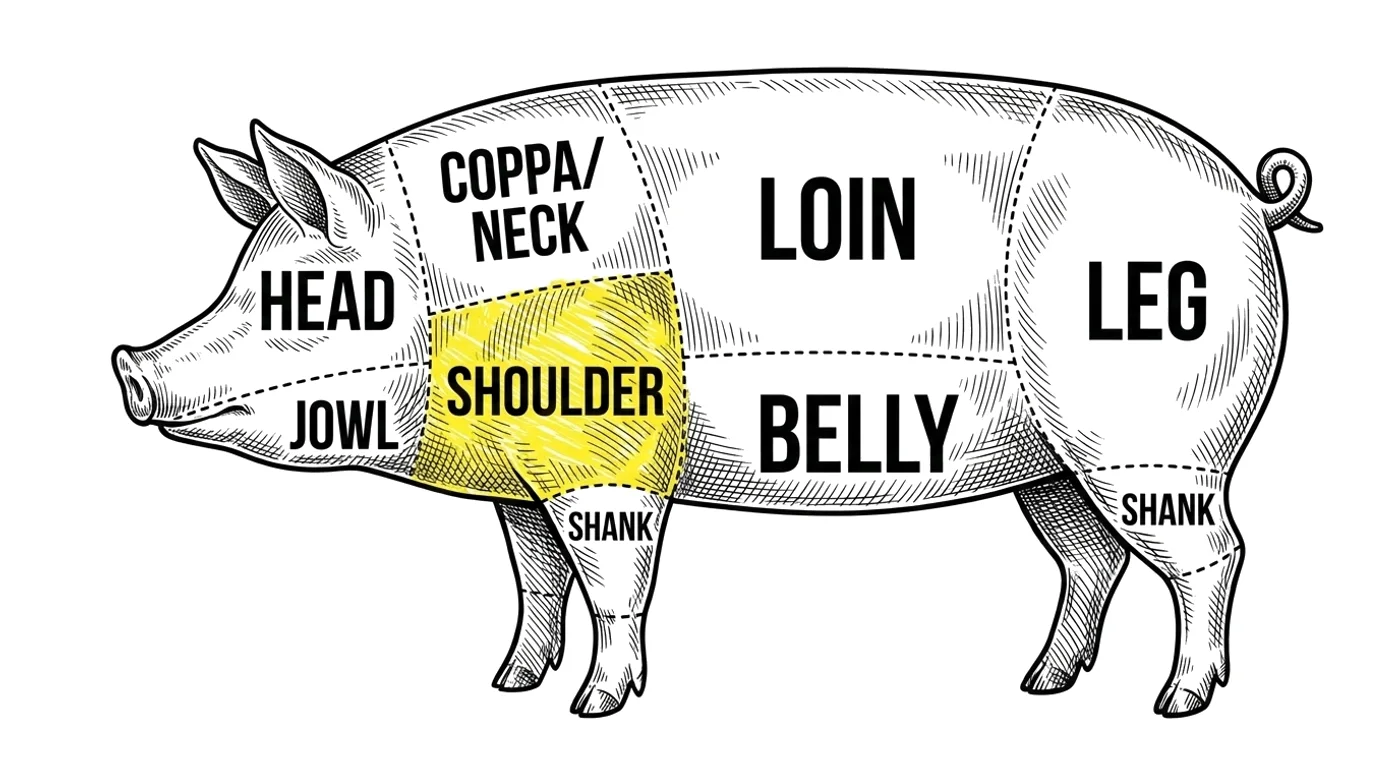
Pork shoulder supplies the meat and natural fat. Semi-cooked potato forms nearly a third of the filling, with carrot and leek as smaller inclusions. The cut face is pale beige, flecked orange and green, and more open than an emulsion sausage. White pepper, allspice and nutmeg provide a mild warm seasoning rather than smoke or garlic dominance. The potato must remain firm enough to retain particles; overcooking or aggressive mixing turns the filling pasty and weakens the bite.
Production and process
Potatoes are par-cooked, while carrot and leek are softened separately. Every cooked vegetable is drained and chilled before it meets raw pork. The pork and potato are ground coarsely, the vegetables are cut smaller, and the mixture is stuffed into hog casing. Gentle poaching cooks the centre without bursting the vegetable-rich filling. Rapid chilling follows because neither the potato nor the salt supplies preservation, and the product carries no fermentation, drying or smoke stage.
History and regional forms
Potatoes became central to everyday cookery on both sides of the Rhine, and sausages offered one way to combine a plentiful starch with a smaller quantity of pork from household or village slaughter. Contemporary northern Alsatian event material still records potato-sausage service, confirming a living local association. The surviving evidence is stronger for regional use than for a single origin date or inventor. No PDO, PGI or TSG located under this exact name should be inferred from its regional popularity.
Use, storage and related products
The chilled link may be reheated gently, browned in butter, or served with salad, cabbage or other potatoes. Its soft filling makes hard boiling unsuitable. Keep it refrigerated and use opened product promptly. It differs from Saucisse de Strasbourg through its coarse vegetable filling, from Saumagen through its narrow casing and absence of a broad stomach form, and from Finnish and German potato sausages through seasoning, service and cultural setting.
The recipe for this product is in preparation and will be published once it has been verified.
Safety. Chill cooked vegetables before mixing with raw pork, cook the cold point fully, cool rapidly and keep refrigerated.