
Scottish White Pudding
Also known as Mealie pudding, Mealy pudding, Scotch white pudding, Scotch pudding
Scotland
Overview
Scottish White Pudding is a savoury cooked pudding made principally from oatmeal, fat and seasoning, packed in a sausage-shaped casing. In Scotland it is also called mealie or mealy pudding. Its pale colour comes from the absence of blood, not from dairy or lean white meat. The product can be served as part of breakfast, beside mince and potatoes, or battered and fried as a chip-shop supper. Onion, wheat farina and leek appear in recognised recipe branches without changing the core identity.
Where it's from
The cut
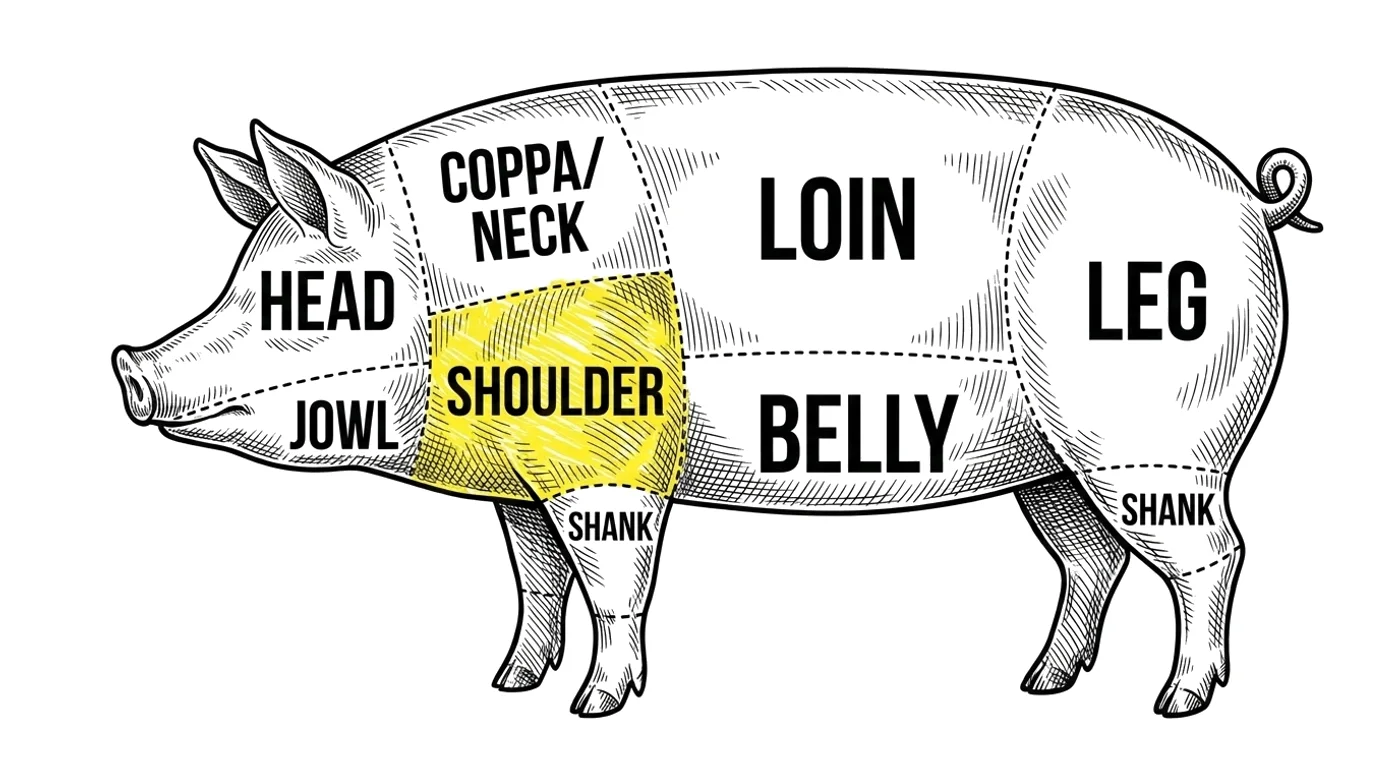
Identity and terminology
The word pudding here follows the older British meaning of a seasoned mixture cooked in a casing. It does not describe a sweet course. The Dictionary of the Scots Language records mealie-pudding as a sausage-shaped preparation of oatmeal and fat and equates it with white pudding. That evidence supports Scottish White Pudding as the controlling title and places the shorter source label Scotch Pudding within the same family. The name is customary rather than a registered geographical indication.
Composition and characteristics
Oatmeal supplies the grain body and absorbs water released during cooking, while beef suet or another declared fat supplies richness and a soft, crumbly slice. Salt and white pepper are fundamental; onion adds sweetness, coriander and allspice can create a warmer branch, and leek gives a greener aromatic form. Farina produces a firmer wheat-supported texture. Oats and wheat must be declared separately because both are regulated cereals containing gluten unless a compliant specialist ingredient and claim are used.
Production and process
Steel-cut oats are cooked to a defined yield, chilled rapidly and mixed with cold diced or ground suet. Vegetable additions are cleaned, weighed and kept cold. The mass is stuffed loosely because cereal continues to swell, then poached gently until the cold point is verified. Immediate cooling limits bacterial growth and prevents the casing from wrinkling excessively. The cooked pudding remains moist and perishable; neither salt nor casing makes it safe for ambient storage.
History and regional forms
White puddings have a long record in Scottish food vocabulary, and the mealie name connects the product directly to oatmeal. Historical and modern forms vary considerably, so one recipe should not be presented as the sole national standard. Scottish branches are generally more cereal-and-suet centred than many Irish white puddings, which may contain more pork meat or liver. Fruit pudding adds dried fruit and sweetness and belongs as a related Scottish product rather than a synonym.
Use, storage and related products
Chill the whole pudding before slicing so the grain and fat set cleanly. Fry or grill slices until hot and browned, or reheat the intact pudding gently. Keep unused cooked pudding covered and refrigerated, and avoid contaminating it with raw-meat equipment. Scottish White Pudding is distinct from black pudding because it contains no blood, from haggis because it lacks the defining pluck mixture, and from Cornish hog's pudding through its Scottish oatmeal-and-suet identity.
The recipe for this product is in preparation and will be published once it has been verified.
Safety. Cook oatmeal to a measured yield, chill it before mixing with suet, declare oats and any wheat or milk, verify the cooked centre and refrigerate promptly.