
Overview
Pennsylvania scrapple is a cooked pork-and-cereal loaf associated with Pennsylvania German foodways. Pork meat and edible by-products are simmered, minced and thickened with cornmeal, flour or related cereal before being moulded and chilled. Slices are fried until crisp outside while the centre remains soft and savoury.
Where it's from
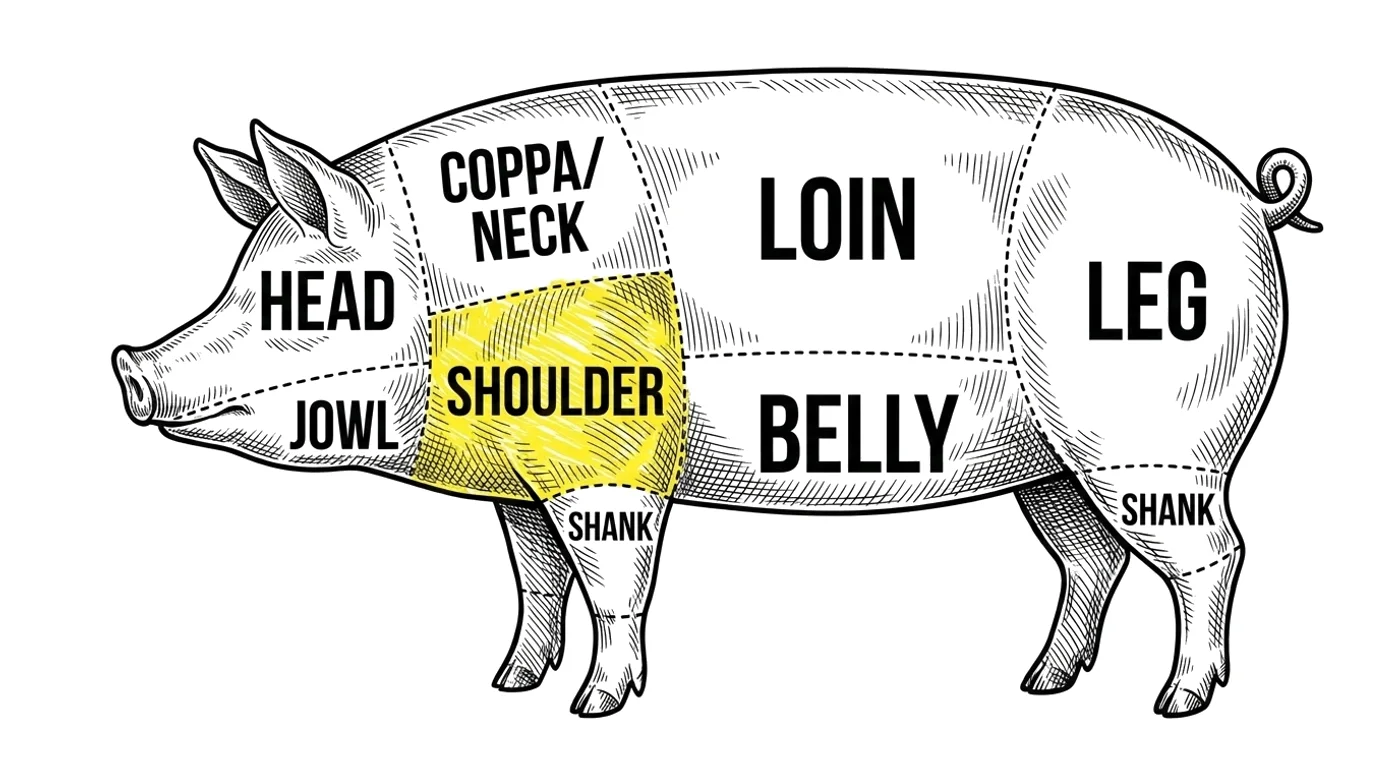
The cut
Identity and terminology
Scrapple is both a regional name and a standardised U.S. product identity. Federal rules define minimum meat and meat-by-product content, while cereal choice creates recognised variations. Pennsylvania Dutch scrapple is a common cultural description. Panhaas is closely related, but goetta and generic breakfast meat loaves have different cereal and regional identities. The standard protects the product class without turning every regional butcher formula into one fixed recipe.
Composition and characteristics
The loaf is grey-brown and rectangular, with a fine to moderately coarse interior. Pork, broth and edible offal provide flavour and protein; cornmeal, buckwheat flour or wheat flour supplies the set. Chilled slices should hold together, then develop a dark crisp crust during frying without becoming rubbery or greasy.
Production branches
Pork components are cooked until tender, minced or ground, returned to measured broth and combined with cereal until the mass thickens. It is packed into loaf pans, cooked or held as required, rapidly chilled and sliced cold. Cornmeal, buckwheat and mixed-cereal branches should remain visible because they materially affect flavour and texture.
History and cultural context
Scrapple developed from German-speaking settler traditions of using the remaining edible parts of a pig after primary cuts were taken. In the Mid-Atlantic, local maize joined European grain-and-meat puddings. The product became a durable marker of Pennsylvania German breakfast culture and remains commercially produced throughout the region.
Culinary use and relationships
Slices are pan-fried and served with eggs, toast, apple butter, syrup, ketchup or savoury condiments. Crispness is created during service rather than during loaf production. Related products include panhaas, goetta, livermush and breakfast sausage, but scrapple is distinguished by its pork-and-cereal loaf structure and Pennsylvania regional identity.
Recipe and cure
This is not a finished recipe. It is a window into how this meat is traditionally cured. Before you follow any process, run it through one of our curing calculators so the salt, cure and timings are right and safe for your own batch.
Make this — the measured Curesmith version →“Make this” opens the same cure as a measured recipe, scaled to your batch.
- Meat
- Pork shoulder
- Cut
- Pork shoulder
- Curing salt
- None
- Fermented
- No
- Smoked
- No
- Basis
- 1,000 g prepared loaf
- Style
- Cooked pork-and-cereal loaf, chilled and sliced for frying.
Ingredients
- Pork shoulder100% · 1000 g
- Pork liver65% · 650 g
- Pork heart35% · 350 g
- Strong pork broth36.4% · 850 g
- Fine cornmeal33.3% · 333.5 g
- Buckwheat flour7.1% · 166.5 g
- Fine salt2.5% · 58.5 g
- Black pepper0.35% · 8.5 g
- Dried sage0.5% · 5 g
- Ground mace0.07% · 1.5 g
Safety. All meat and by-products must be edible and handled under refrigeration before cooking. The dense loaf requires a measured thermal process, and large batches must be cooled rapidly to control spore-forming bacteria. Store refrigerated, slice with clean equipment and reheat or fry without allowing the centre to remain cold after extended storage.