
Overview
Serwolatka Pieczona is a Polish large-calibre sausage built from beef and pork belly, smoked and finished by baking rather than scalding in water. The cut face combines medium particles with a finer beef binding phase, giving it more structure than a uniform emulsion. Its broad fibrous casing and straight log form make it a slicing sausage. Pepper, coriander and a restrained amount of paprika support the cured beef flavour without turning it into a paprika-led salami.
Where it's from
The cut
Identity and terminology
The Polish spelling is serwolatka; the source's Servolatka is a simplified transcription. The name resembles German Servela and the wider cervelat word family, but the products are not interchangeable. Servela is a narrow German scalded link with cooked skin, while Serwolatka Pieczona is a thick Polish sausage with a smoked-and-baked finish. Pieczona means baked or roasted and is necessary to identify this process branch.
Composition and characteristics
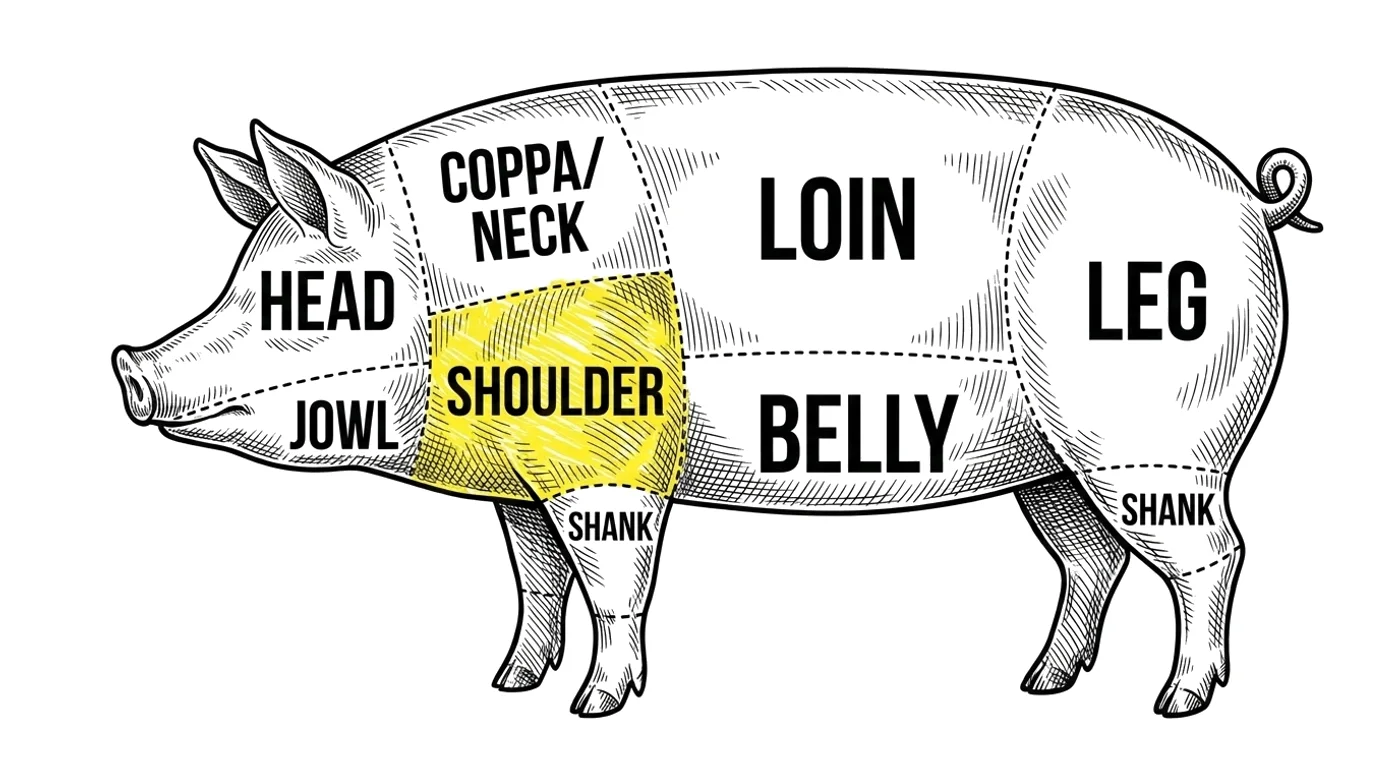
Lean beef with relatively little connective tissue supplies visible meat particles. Collagen-rich beef and smaller trimmings are worked more finely to create the protein-rich phase that binds the slice. Skinless pork belly contributes meat and fat, softening the beef texture without producing separate white cubes. The finished interior should be cured red, cohesive and moderately coarse, surrounded by a dark brown-red exterior. It should not show free liquid, fat pockets or a salami-like dry rim.
Production and process
Production depends on separating the beef fractions before grinding. The connective fraction is reduced to a fine cold batter, while cleaner beef and belly retain a larger particle. After mixing, the sausage is packed firmly into a broad smoke-permeable casing. A cool surface-drying stage precedes smoking. The later chamber-baking stage provides the cook and intensifies exterior colour, after which prompt chilling is essential because the product remains a moist refrigerated sausage.
History and regional forms
Polish technical classifications from the twentieth century list serwolatki among semi-durable sausage types, evidence that the name belonged to an established manufacturing vocabulary. That archival record does not make the old formula current law and does not establish geographical protection. Contemporary procurement documents still use kiełbasa serwolatka as a market category, but composition can vary. The Atlas preserves one documented baked branch without claiming that every modern serwolatka follows it.
Use, storage and related products
Serve Serwolatka Pieczona cold in broad slices with bread, mustard, pickles or horseradish, or warm a thick slice gently. Keep the cut face covered and refrigerated. It differs from Servela through calibre, composition and baked finish; from Austrian Speckwurst because it lacks the defining large bacon mosaic; and from Polish Krakowska because the binding phase and particle pattern are different. The full title prevents those cooked sausages from collapsing into one family.
The recipe for this product is in preparation and will be published once it has been verified.
Safety. Keep the fine beef phase cold, distribute cure through the complete animal block, verify the centre during smokehouse baking and cool rapidly.