
Speck Alto Adige
shpek AL-toh AH-dee-jeh
Alto Adige (regional), Trentino-Alto Adige, Italy
Woodsier and firmer than prosciutto, a harmony of light smoke and mountain air.
Overview
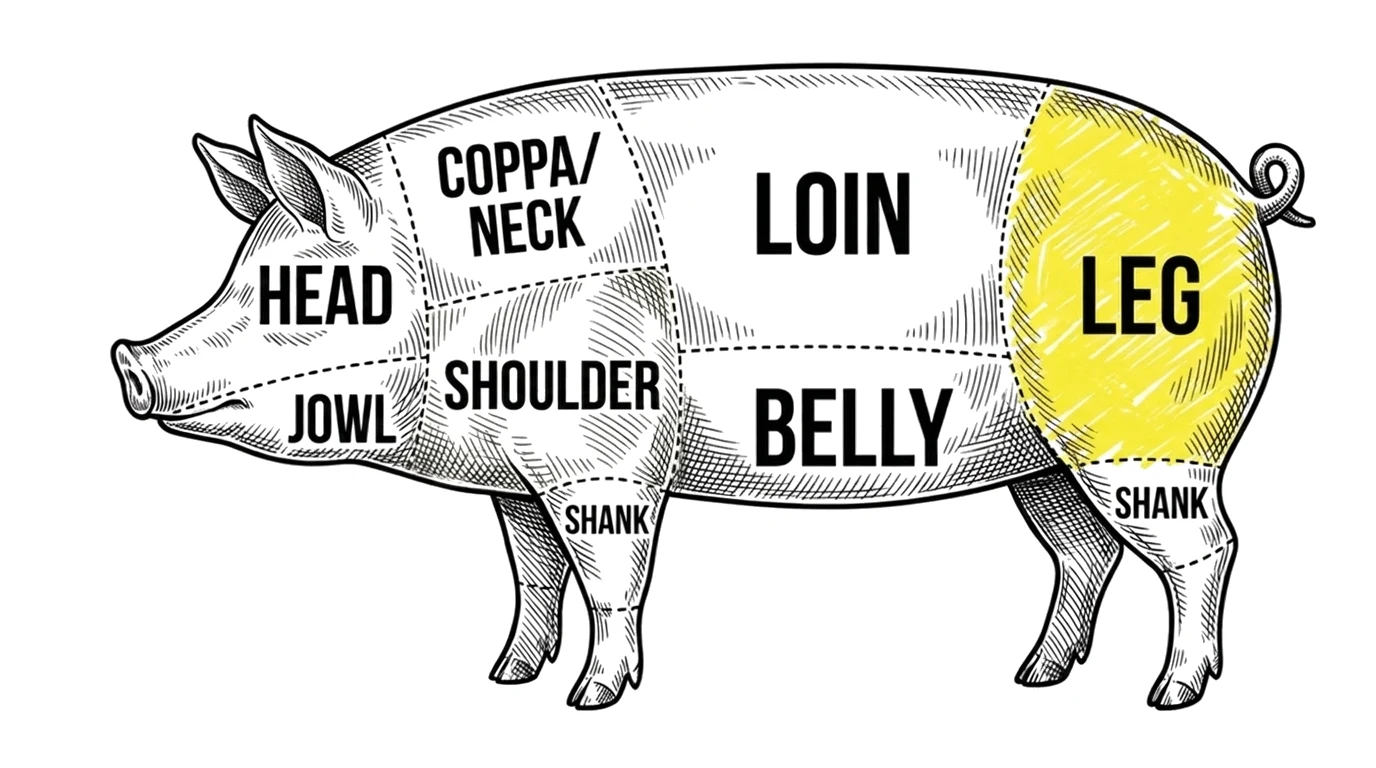
Speck Alto Adige combines two preservation traditions: the air drying associated with Mediterranean hams and the cool smoke of the Alpine north. Boneless pork leg is seasoned, gently smoked and matured in mountain air, producing a firm rectangular ham with juniper, smoke and sweet pork in balance.
Where it's from
Climate. South Tyrol, where Alpine cold favours a light cold-smoke as well as air-drying.
Altitude. South Tyrol, Alpine
The cut
How to recognise it
A whole piece is compact and broadly rectangular, with one side protected by rind and fat and the cut face showing red lean with white marbling. The exterior is brown from smoke and maturation, often with a light natural bloom. Smoke should be gentle, with juniper and mountain-herb notes. A black soot layer, bitterness, rancidity, sticky casing or hard dry rim is unacceptable.
- Shape and size
- Flattish boned leg, sliced thin
- Lean colour
- Deep rose
- Fat and marbling
- Firm white edge
- Casing
- None
- Surface bloom
- None
Origins and history
South Tyrol sits between German-speaking Alpine culture and northern Italy, and Speck expresses that position. Farm families slaughtered pigs in the cold season and needed meat that could survive beyond winter. Heavy northern smoking alone could dominate a ham, while unsmoked Mediterranean curing was difficult in the local climate. The South Tyrolean answer was little salt, little smoke and plenty of air. The word speck appears in written records from the eighteenth century, although the farmhouse practice is older. It was eaten during Marende, the strengthening snack of bread, cheese, wine and cured meat taken after field work. Producers organised to protect the name in the late twentieth century, forming the consortium in 1992. EU PGI recognition followed in 1996.
Name. Speck is a Germanic word for fat or bacon.
- Production today
- South Tyrol producers under the PGI.
- Protection
- PGI (Speck Alto Adige); cold-smoked and air-cured to a set standard.
- Tradition vs modern
- The gentle alternation of light smoke and fresh air is the traditional signature kept under the PGI.
- Seasonality
- Made year-round.
Compare with. Jambon de Savoie, Jamón Serrano
Serving and cultural significance
Cut Speck into thin slices across the grain or into small batons for Marende with rye bread, Schüttelbrot, Alpine cheese, pickles and wine or beer. It can also flavour dumplings, eggs, pasta and soups. When cooking, use it as a seasoning and avoid prolonged high heat that makes the lean hard.
Recipe and cure
This is not a finished recipe. It is a window into how this meat is traditionally cured. Before you follow any process, please run it through one of our curing calculators, so the salt, cure and timings are right and safe for your own batch.
Curesmith home adaptation — not designation-compliant
Make this — the measured Curesmith version →The cure below is the traditional reference. “Make this” opens the measured Curesmith home recipe, scaled to your batch.
Traditional or protected production
PGI Speck Alto Adige is made from pork leg, seasoned with salt and a producer's spice blend, lightly cold smoked and slowly matured in South Tyrol. The protected principle is minimal salt and smoke, followed by ample time and mountain air. The product is inspected and branded only when the specification's origin, processing and quality requirements are met.
- Meat
- pork
- Cut
- boned leg
- Salt (%)
- 3
- Curing salt
- Salt, sometimes with a little nitrate
- Other agents
- salt, juniper, bay and spices
- Fermented
- No
- Smoked
- Yes
- Target aW or weight loss
- ~ weight loss
- Temperature (°C)
- 12 to 15
- Humidity (%)
- 70 to 75
- Maturation
- 22 weeks and up
- Basis
- percentage of green meat weight
- Style
- Traditional dry salting, cold-smoked
Ingredients
- sea salt3% · 30 g/kg
- juniper0.3% · 3 g/kg
- bay0.1% · 1 g/kg
- black pepper0.3% · 3 g/kg
- garlic0.2% · 2 g/kg
Method
- Bone the leg and rub with salt and spices, resting cold.
- Cold-smoke gently below 20 degrees over beech, alternating smoke and fresh air.
- Air-dry and age to the target loss.
Notes
- The official protected specification controls the named product. Any Curesmith EQ, starter-culture, curing-salt or home-scale adaptation is a separate method and must not be presented as designation-compliant.
- A more efficient way of curing this product is using the EQ Method. No more than 2.5% salt to meat weight is required. To follow the EQ method, please use our whole-muscle EQ curing calculator to work out proper ratios and curing times.
Safety. A light cold smoke, not a hot one. Keep smoke temperature low. Verify before serving.
In the Codex
What this product teaches, and where to read more.
Temple. Roof, Microclimate