
Tradiční Lovecký salám / Tradičná Lovecká saláma
Czech Republic
Overview
Tradiční Lovecký salám and Tradičná Lovecká saláma are reserved Czech and Slovak TSG names for a fermented, smoked and dried sausage made in a distinctive flat form. The product is designed for long keeping and direct consumption.
Where it's from
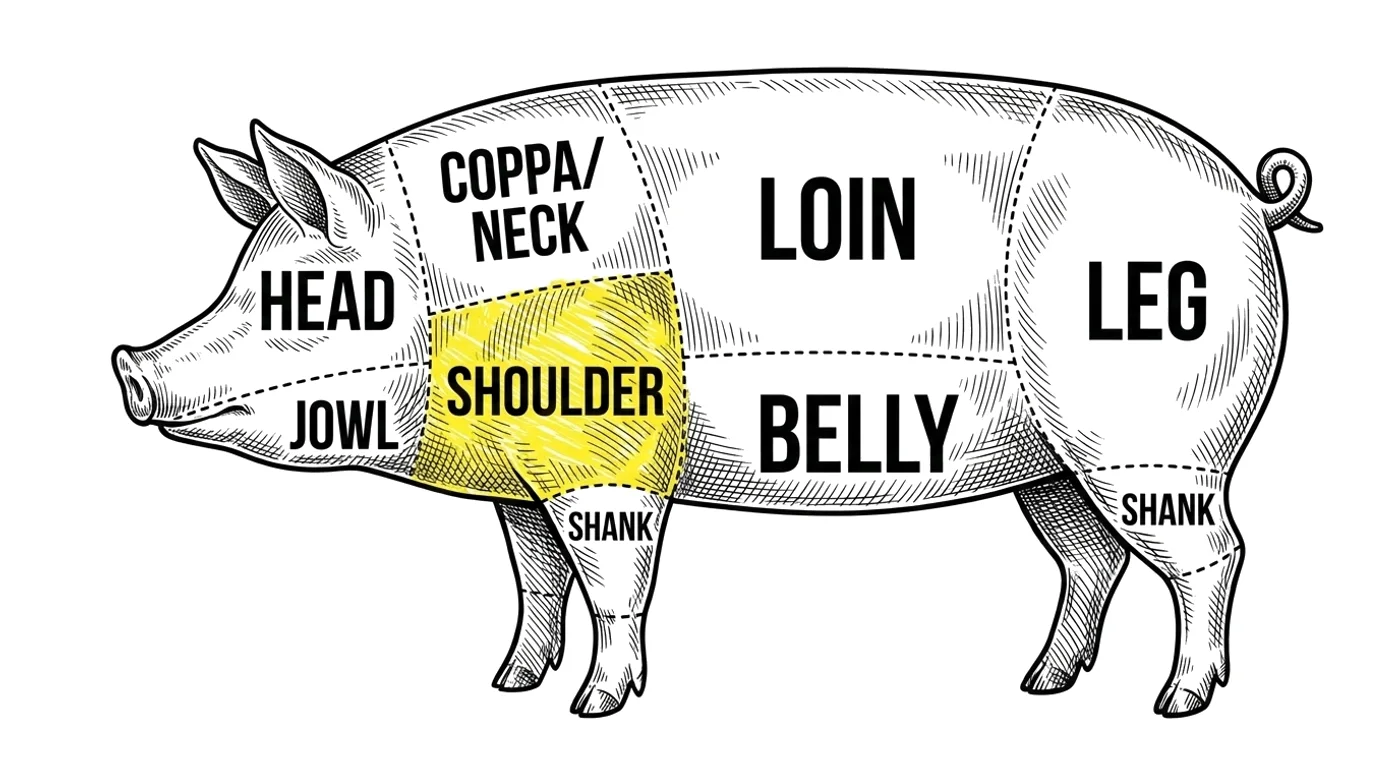
The cut
Identity and terminology
The TSG protects a traditional composition and method rather than a geographical area. The specification controls the flat rectangular shape, compositional limits, sensory properties, pH below the required threshold and water activity not above the stated maximum. Only compliant product may use the reserved names.
Composition and characteristics
The sausage uses beef and pork with fat, curing ingredients and seasoning within specified analytical limits. It is fine to medium in grain, distinctly smoky, pleasantly acidic and firm. The flattened shape is not merely decorative; it affects drying and is part of the protected identity.
The flattened cross-section increases surface area relative to volume and contributes to the distinctive drying pattern. Shape consistency therefore matters to both identity and process control, and an ordinary round salami cannot be relabelled with the reserved name.
Production and process
The mixture is cured, comminuted, stuffed and formed into the characteristic flat profile. Fermentation is followed by prolonged cold smoking at controlled temperature and drying until the required water activity is reached. Process monitoring must cover pH, temperature, humidity, smoke conditions and final aw.
History and regional forms
Hunter-style durable sausages were valued for portability and keeping quality. Czech and Slovak production developed a recognisable flattened form and a specific smoke-and-dry sequence. TSG registration preserved this shared traditional method after changes in national borders and industrial production.
The shared Czech-Slovak registration is also a reminder that traditional products can cross modern national borders. Both language forms are current and worth knowing. Neither is replaced by a generic English translation.
Use, storage and related products
The salami is sliced thin and eaten with bread, cheese, pickles or as a travel snack. Storage follows the specification and package instructions. Generic Lovecký salám, Polish Myśliwska and Landjäger are related in purpose but remain separate identities.
Recipe and cure
This is not a finished recipe. It is a window into how this meat is traditionally cured. Before you follow any process, run it through one of our curing calculators so the salt, cure and timings are right and safe for your own batch.
Make this — the measured Curesmith version →“Make this” opens the same cure as a measured recipe, scaled to your batch.
- Meat
- Pork shoulder
- Cut
- Pork shoulder
- Salt (%)
- 2.5
- Curing salt
- Cure #1/#2 as specified
- Fermented
- Yes
- Target pH
- 5.3 or lower
- Smoked
- Yes
- Basis
- per 1,000 g pork shoulder
- Style
- Pressed fermented salami inspired by the protected product.
Ingredients
- Pork shoulder100% · 1000 g
- Lean beef60% · 600 g
- Pork back fat40% · 400 g
- Fine salt2.5% · 50 g
- Cure #2 containing 6.25% sodium nitrite0.25% · 5 g
- Dextrose0.4% · 8 g
- Black pepper0.25% · 5 g
- Garlic0.2% · 4 g
- Sweet paprika0.2% · 4 g
- Ground coriander0.1% · 2 g
- Flora Italia LC or equivalent starter culture0.03% · 0.5 g
Safety. Only specification-compliant product may use the reserved traditional names. Fermentation must achieve the required pH, drying must reach the specified water activity, and smoke cannot substitute for pathogen control. Home-scale production requires an independently validated process and may not claim the TSG name.