
Westfälische grobe Mettwurst
Also known as Westphalian Salami
Westphalia, Germany
Overview
Westphalian Salami is a firm red sausage with white fat, gentle pepper and allspice and a light beech-smoke aroma. A firm red sausage with white fat, gentle pepper and allspice and a light beech-smoke aroma. The Codex treats it as a complete production system, not merely a familiar name. Raw material, cut or particle size, casing, smoke, fermentation, cooking and maturation all contribute to the identity. The current status is Traditional Westphalian sausage style : no generic EU GI. The protected or traditional reference and the Curesmith home method remain separate.
Where it's from
The cut
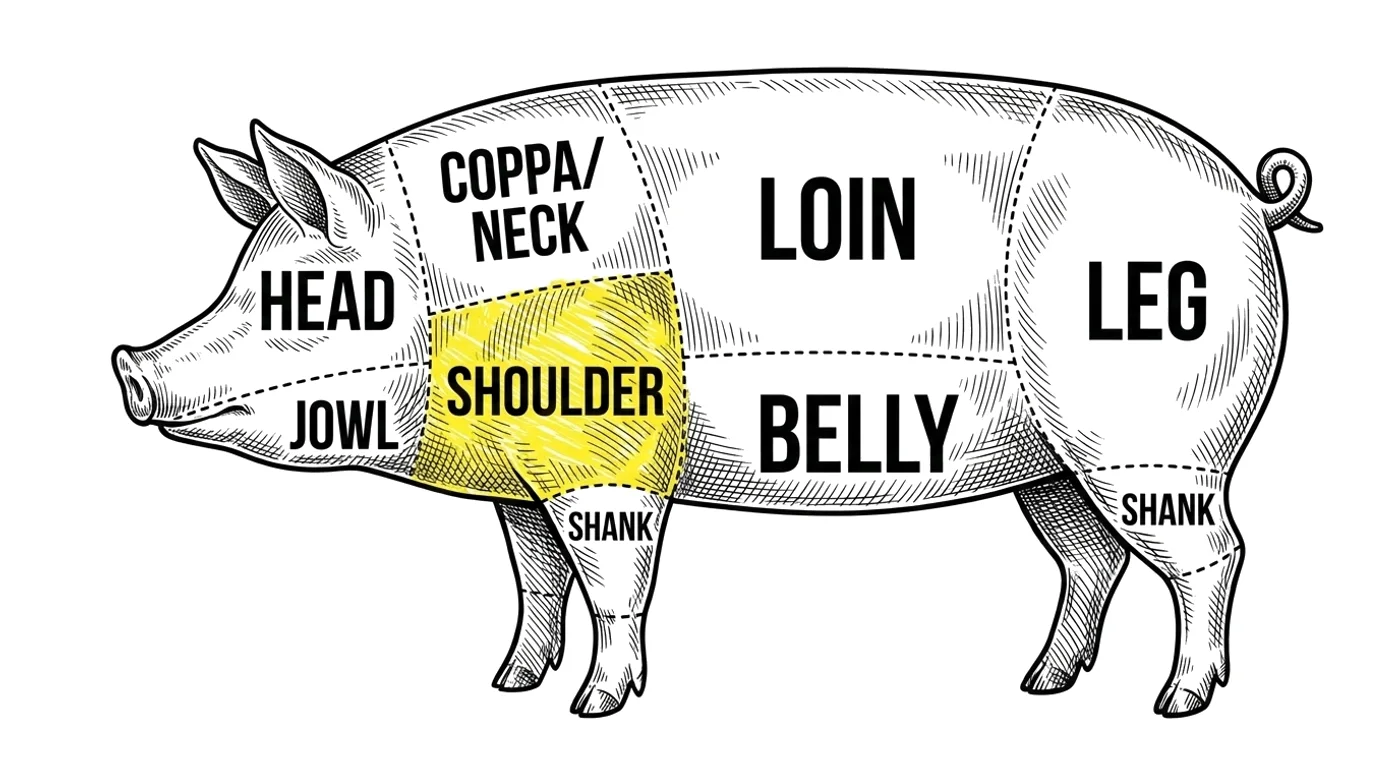
How to recognise it
A firm red sausage with white fat, gentle pepper and allspice and a light beech-smoke aroma. Grease smear, hollow pockets, case hardening, a wet centre, rancidity or uncontrolled dark mould is a production fault.
Origins and history
Westphalia developed a strong culture of smoked pork, rye bread and sausages made for cool farm storage. A salami-style mixture of pork, beef and firm fat fitted twentieth-century butcher-shop production, while juniper and restrained smoke linked it with the region's broader curing palate. The style is milder and less paprika-driven than Hungarian or southern European salami. Westphalian Salami is not itself a registered geographical indication, and it must not borrow the PGI status of Westfälischer Knochenschinken or Westphalian bread products. The Atlas keeps it as a regional style with a defined Curesmith formula rather than inventing a protected specification.
Serving and cultural significance
Serve with pumpernickel, butter, mustard, pickles and beer. Its restrained spice suits sandwiches and cold plates. Brief warming can release juniper and smoke, but prolonged heat will toughen the lean. It also suits the Westphalian Abendbrot tradition, where dark rye bread and lightly acidic accompaniments keep the sausage from becoming heavy.
Recipe and cure
This is not a finished recipe. It is a window into how this meat is traditionally cured. Before you follow any process, run it through one of our curing calculators so the salt, cure and timings are right and safe for your own batch.
Curesmith home adaptation — not designation-compliant
Make this — the measured Curesmith version →The cure below is the traditional reference. “Make this” opens the measured Curesmith home recipe, scaled to your batch.
Traditional or protected production
Westphalian Salami has no generic protected specification. Regional butcher-shop versions combine pork, beef and firm fat with mild pepper, allspice, garlic and sometimes juniper, followed by curing, fermentation, restrained smoke and drying. The style is usually milder than paprika-rich Hungarian salami. It must not inherit the PGI status of Westfälischer Knochenschinken or other unrelated Westphalian protected foods.
- Meat
- pork and beef
- Cut
- minced
- Salt (%)
- 2.2 to 2.5%
- Curing salt
- Cure #1
- Other agents
- dextrose; white pepper
- Fermented
- Yes
- Target pH
- ~4.9
- Starter or mould
- lactic acid bacteria starter
- Smoked
- beechwood cold-smoked
- Target aW or weight loss
- ~30% weight loss
- Temperature (°C)
- ferment then dry 12 to 14
- Humidity (%)
- 72 to 75
- Maturation
- weeks
- Basis
- percentage of meat weight
- Style
- minced, cured, fermented and dried
Ingredients
- pork and beef
- salt
- dextrose
- white pepper
- Cure #1
Notes
- The official protected specification controls the named product. Any Curesmith EQ, starter-culture, curing-salt or home-scale adaptation is a separate method and must not be presented as designation-compliant.
- Nitrite at 156 ppm ingoing.
- Target roughly pH 4.9 through a prompt, clean ferment.
- Convert any volume spice measures to weight as a percentage of the meat.
- Cold-smoked over beech, which gives the regional character.
Safety. A fermented sausage: the acid drop and drying carry the safety. Ferment promptly to close the early Staphylococcus aureus window.
In the Codex
What this product teaches, and where to read more.
Temple. Roof, pH