
Wollwurst
Also known as Wool sausage, Woolly sausage, Geschwollene
Bavaria, Germany
Overview
Wollwurst is a pale, fine-textured Bavarian scalded sausage formed without a casing. The soft batter is piped directly into hot water, where the surface sets into a delicate skin of coagulated protein. Its name refers to the slightly fuzzy or wool-like exterior that develops after cooking and cooling. The links are usually warmed or browned before serving, which gives contrast between a tender centre and a lightly coloured outside.
Where it's from
The cut
Identity and terminology
The name is associated with southern Germany and sits within a group of uncured white sausages. Regional speech may use Geschwollene, while English sources translate the name as wool sausage or woolly sausage. It should remain separate from Münchner Weißwurst, which has its own herb and presentation conventions, and from Oberländer, whose naming and local practice overlap without making the two labels universally interchangeable.
Composition and characteristics
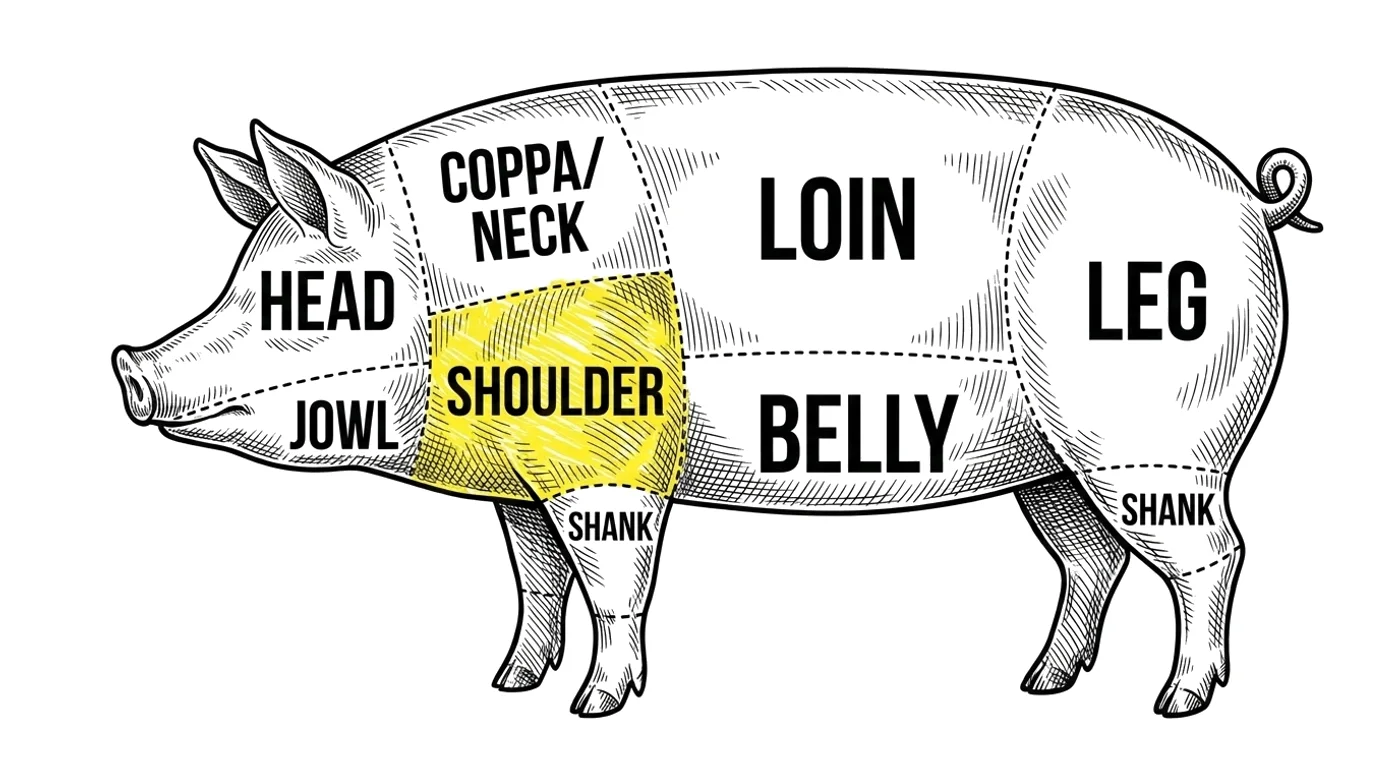
A traditional profile combines pale pork or a pork-and-veal mixture with fatty pork, salt and mild warm spices. Mace, white pepper, ginger, cardamom and lemon are compatible with the restrained flavour. The batter is finely comminuted and deliberately left uncured, so the cooked interior remains ivory rather than cured pink. Absence of a casing is the strongest visual and handling characteristic.
Production and process
Cold meat and fat are ground finely, re-chilled and mixed with salt and ice until a cohesive batter forms. Instead of entering a casing, the batter is extruded into a controlled poaching bath and divided into long links. Gentle heat sets the surface without turbulence. After cooking, rapid chilling protects the product; browning in a pan before service is a finishing step rather than the primary safety cook.
History and regional development
Wollwurst belongs to the white-sausage culture of Bavaria, where fresh and scalded products developed around local butchers and same-day consumption. The descriptive name records texture and manufacture more than a single town of origin. Modern guideline treatment helps preserve a recognisable product family, but it does not create a geographical indication or make every pale casingless sausage authentically Bavarian.
Use, storage and related products
The links are often dipped in milk and browned in butter or fat, then served with potato salad, mustard or simple vegetables. Their soft casingless surface makes them more fragile than conventional links, so gentle handling is important. Keep them refrigerated, separate ready-to-eat links from raw meat equipment and reheat only the portion needed. Related products include Weißwurst, Oberländer and other uncured Brühwürste.
The recipe for this product is in preparation and will be published once it has been verified.
Safety. Maintain a cold batter, pipe safely into controlled hot water, verify the cook, chill rapidly and refrigerate.