
Overview
Zampone is an Italian sausage in which a pork mixture is enclosed in the skin of a pig's front trotter. The filled limb retains its recognisable foot shape and becomes sliceable after prolonged gentle cooking. Lean pork, fatty jowl and finely processed rind create a rich, gelatinous texture. Pepper and sweet warm spices are traditional directions, and lentils are the classic festive accompaniment.
Where it's from
The cut
Identity and terminology
The generic word zampone derives from the Italian word for a large paw or foot and describes the unusual natural container. Zampone Modena is not merely a decorative expansion of that name: it is a registered protected geographical indication with a specification, production area and presentation rules. A source-inspired home sausage should therefore be called Zampone unless every legal condition for the protected name is met.
Composition and characteristics
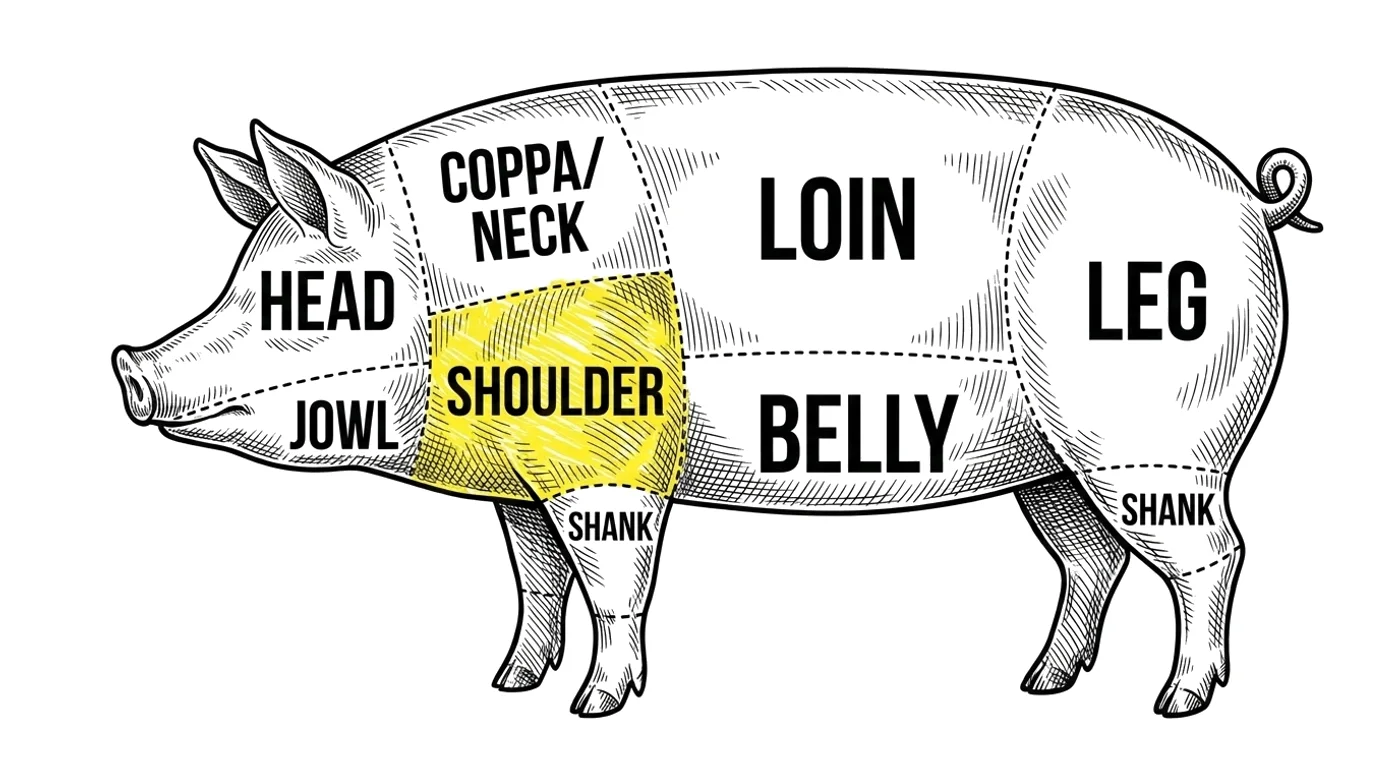
The filling combines skeletal pork, fat-bearing cuts and pork rind. Coarser lean particles remain visible while jowl softens the bite and a fine rind paste binds moisture during cooking. Salt, pepper, nutmeg, cloves and cinnamon are characteristic, with wine or other aromatics varying by formula. The casing is the cleaned skin of the forelimb rather than an ordinary intestine or synthetic tube.
Production and process
Rind is softened and finely comminuted, then cooled before it returns to the raw mixture. Chilled lean and jowl are ground at different textures, cure and seasoning are dispersed evenly and the trotter is filled without damaging the skin. Netting or cloth supports the shape during gentle poaching. The thick irregular geometry demands a verified cold-point cook and carefully managed cooling.
History and regional development
Tradition connects zampone with Mirandola and the early modern need to preserve and use the whole pig during conflict. Whatever the exact details of the popular siege story, the product became strongly associated with Modena and Emilia-Romagna. Its later commercial importance and regional reputation underlie the protected Zampone Modena specification. Historical association does not allow the PGI name to migrate to unrestricted production.
Use, storage and related products
Zampone is commonly served in slices with lentils, beans, mashed potato or other winter accompaniments, especially around New Year. Cotechino uses a closely related rind-rich filling but a different casing and should not be treated as the same presentation. Fresh products require full cooking; cooked products remain perishable. Protect the ready-to-eat surface, refrigerate promptly and follow the label on certified packaged product.
The recipe for this product is in preparation and will be published once it has been verified.
Safety. Use an inspected prepared trotter, dose cure accurately, manage the thick cold point, cool rapidly and keep refrigerated.