
The Curesmith
5 notes · the long-form lessons
Cure Notes
The long-form lessons: what happens inside a curing chamber and why, the science behind the rules, and the mistakes worth writing down so nobody repeats them.
 9 June 2026Microclimate in Dry Curing: Temperature, Humidity, ControlMicroclimate is the environment that makes dry curing safe. Learn the right temperature, humidity, and air exchange for your chamber, and the mistakes that ruin months of work.Read the note →
 27 May 2026Water Activity in Meat Curing: What It Is and Why It MattersWater activity is the foundation of dry curing safety. Learn what aW means, why microbes care about it, and how to track it at home without specialist equipment.Read the note →
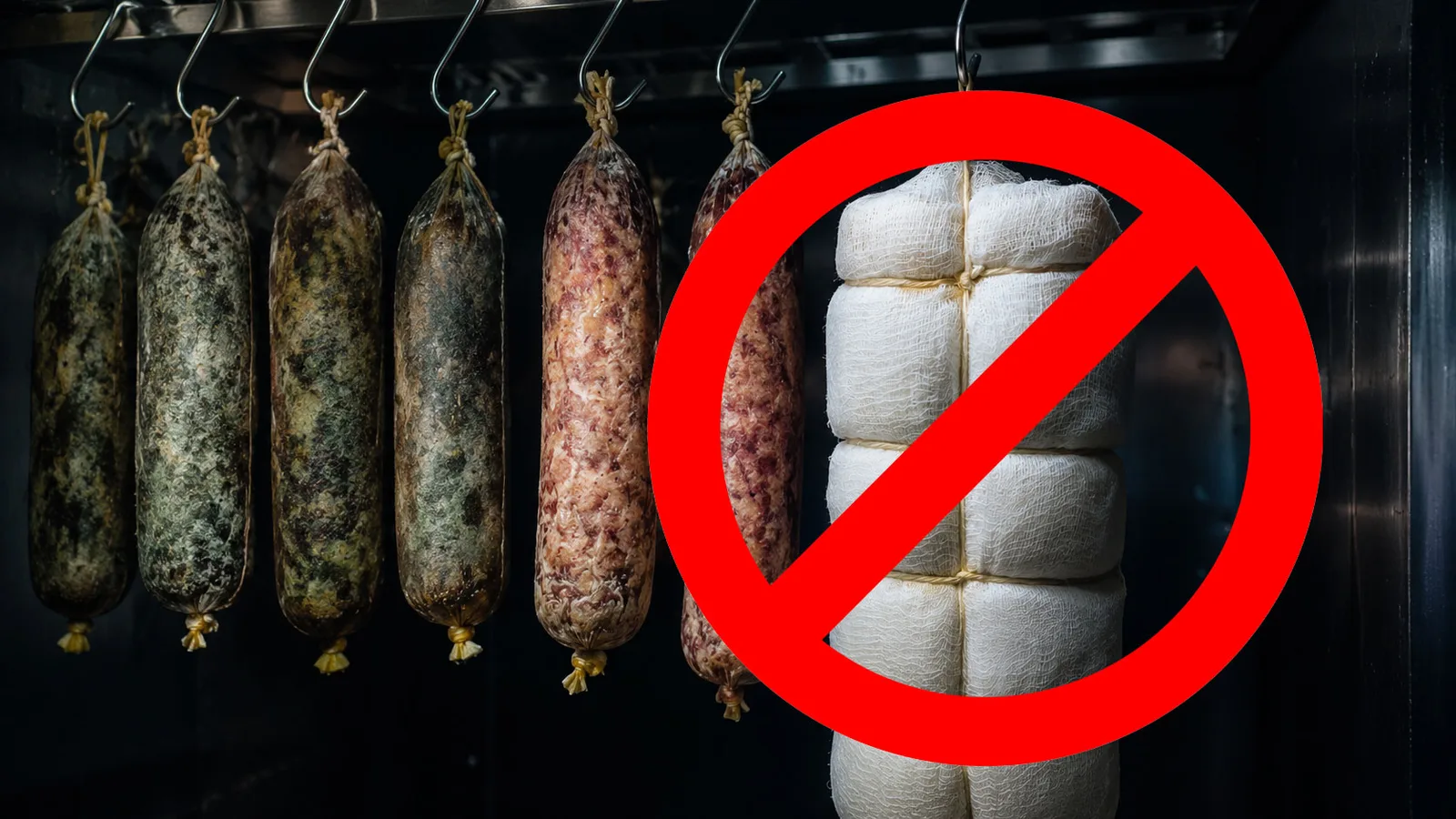 27 May 2026Why You Should Not Use Cheesecloth for Cured MeatsCheesecloth can trap moisture against cured meat during drying and ageing. Learn why proper casings are a better choice for salami, bresaola, coppa, pancetta, ham, and other dry-cured meats.Read the note →
 18 May 2026Do You Need a Fan in Your Meat Curing Chamber?Do you need a fan in your curing chamber? In this Curing Questions Answered article, we look at why commercial airflow advice does not translate into converted fridges, drinks fridges, and small home curing chambers, and what your chamber actually needs instead.Read the note →
 11 May 2026Fire, Salt, Nitrite and the Curesmith’s Temple: From the History to the Science of Meat CuringFire, salt and smoke were humanity’s first answers to decay. In Episode 1 of FROM ZERO, we trace meat curing from ancient preservation to modern food safety science, showing how nitrate, nitrite, water activity, pH, microbes and time all fit into the Curesmith’s Temple.Read the note →
A batch in trouble right now?
Get the free field guide