
Overview
Biltong is thick strips with a dark cured exterior, red-to-brown lean centre and toasted coriander aroma. good yellow beef fat may be retained and is exceptionally flavourful when fresh and clean. Thick strips with a dark cured exterior, red-to-brown lean centre and toasted coriander aroma. Good yellow beef fat may be retained and is exceptionally flavourful when fresh and clean. The Codex treats it as a complete production system, not merely a familiar name. Raw material, cut or particle size, casing, smoke, fermentation, cooking and maturation all contribute to the identity. The current status is Traditional South African dried-meat product : no GI. The protected or traditional reference and the Curesmith home method remain separate.
Where it's from
Climate. Dry interior air, historically the open veld.
The cut
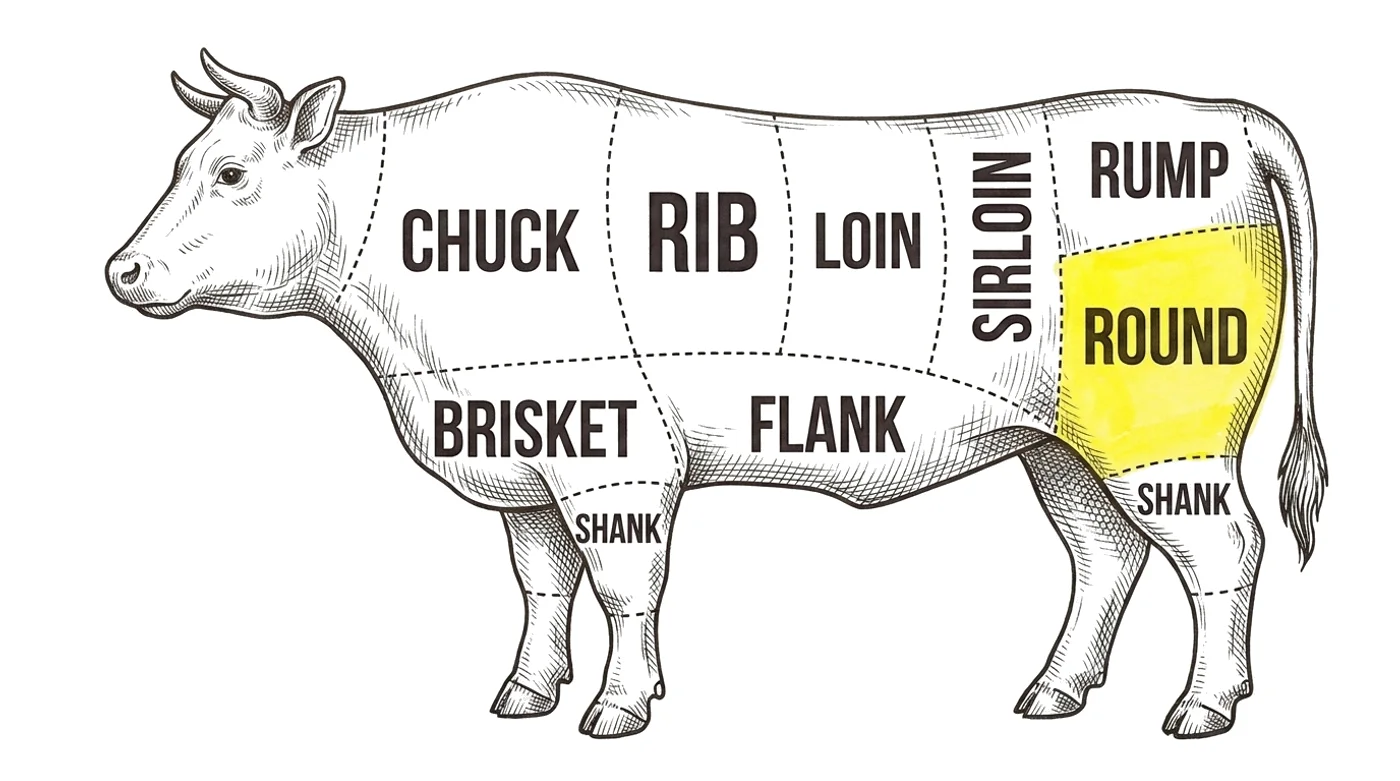
How to recognise it
Thick strips with a dark cured exterior, red-to-brown lean centre and toasted coriander aroma. Good yellow beef fat may be retained and is exceptionally flavourful when fresh and clean. A hard dry rim, wet grey centre, rancid fat, sourness, insect damage or uncontrolled mould indicates a failed process.
Origins and history
Southern Africans preserved meat by salting and drying long before a single product called biltong was documented. Indigenous pastoral and hunting communities already understood the value of thinly cut, air-dried meat. The Dutch East India Company settlement at the Cape began in 1652 and introduced European vinegar curing, pepper, coriander and other spice traditions into that older preservation landscape. Frontier farmers, hunters and wagon travellers refined thick-strip drying because the meat was light, durable and needed no cooking. The Great Trek of roughly 1835 to 1846 helped make it emblematic of mobile Afrikaner life, but did not invent dried meat. The Afrikaans name combines bil, the rump or buttock, with tong, tongue, describing the long strip-like form. Modern biltong became a shared Southern African food made from beef and game in many textures.
Serving and cultural significance
Cut across the grain into thin slices or thicker chips according to dryness. Serve it alone, with beer, in sandwiches or grated into eggs and savoury dishes. Yellow beef fat is prized when clean and fresh, not a defect to remove.
Recipe and cure
This is not a finished recipe. It is a window into how this meat is traditionally cured. Before you follow any process, run it through one of our curing calculators so the salt, cure and timings are right and safe for your own batch.
Make this — the measured Curesmith version →The cure below is the traditional reference. “Make this” opens the measured Curesmith home recipe, scaled to your batch.
Traditional or protected production
There is no protected specification for generic Biltong. Whole-muscle beef or game is cut into strips, salted, treated with vinegar and seasoned, most characteristically with toasted coriander and pepper, then hung in moving dry air. Commercial texture ranges from moist and red-centred to very dry. The process normally lacks a cooking step, so hygienic raw material, controlled curing, drying conditions and a verified final water activity are essential.
- Meat
- beef, or game such as kudu or ostrich
- Cut
- strips cut along the grain
- Salt (%)
- traditional, salted then dried
- Curing salt
- traditionally none; some modern recipes add a little Cure #1
- Other agents
- brown vinegar, toasted coriander, black pepper
- Fermented
- No
- Smoked
- No
- Target aW or weight loss
- ~50% weight loss for a firm result
- Temperature (°C)
- cool, dry, well-ventilated
- Humidity (%)
- low
- Maturation
- days to a couple of weeks
- Basis
- traditional cure, then air drying
- Style
- marinated in vinegar and spice, salted, air-dried
Ingredients
- beef or game
- salt
- brown vinegar
- toasted coriander
- black pepper
Notes
- Not fermented and not smoked, which sets it apart from the European dried sausages.
- The vinegar marinade lowers the surface pH and adds flavour; coriander and pepper are the signature spices.
- Traditionally cured without nitrite; some modern recipes add a little Cure #1 for colour and extra safety.
Safety. Safety rests on salt, the vinegar's acidity and thorough drying rather than on a ferment or smoke. Dry in clean, cool, moving air.
In the Codex
What this product teaches, and where to read more.
Temple. Roof, Water Activity