
Botifarra
Also known as Butifarra
-, Catalonia, Spain
A fresh white Catalan sausage, gently spiced, grilled and served with beans.
Overview
Butifarra is a fresh white catalan sausage, gently spiced, grilled and served with beans. A pale fresh sausage in hog casing with a coarse juicy pork texture and gentle pepper. It should not be paprika-red or dry-cured.
Where it's from
Climate. Catalonia.
Altitude. Coast and hills
The cut
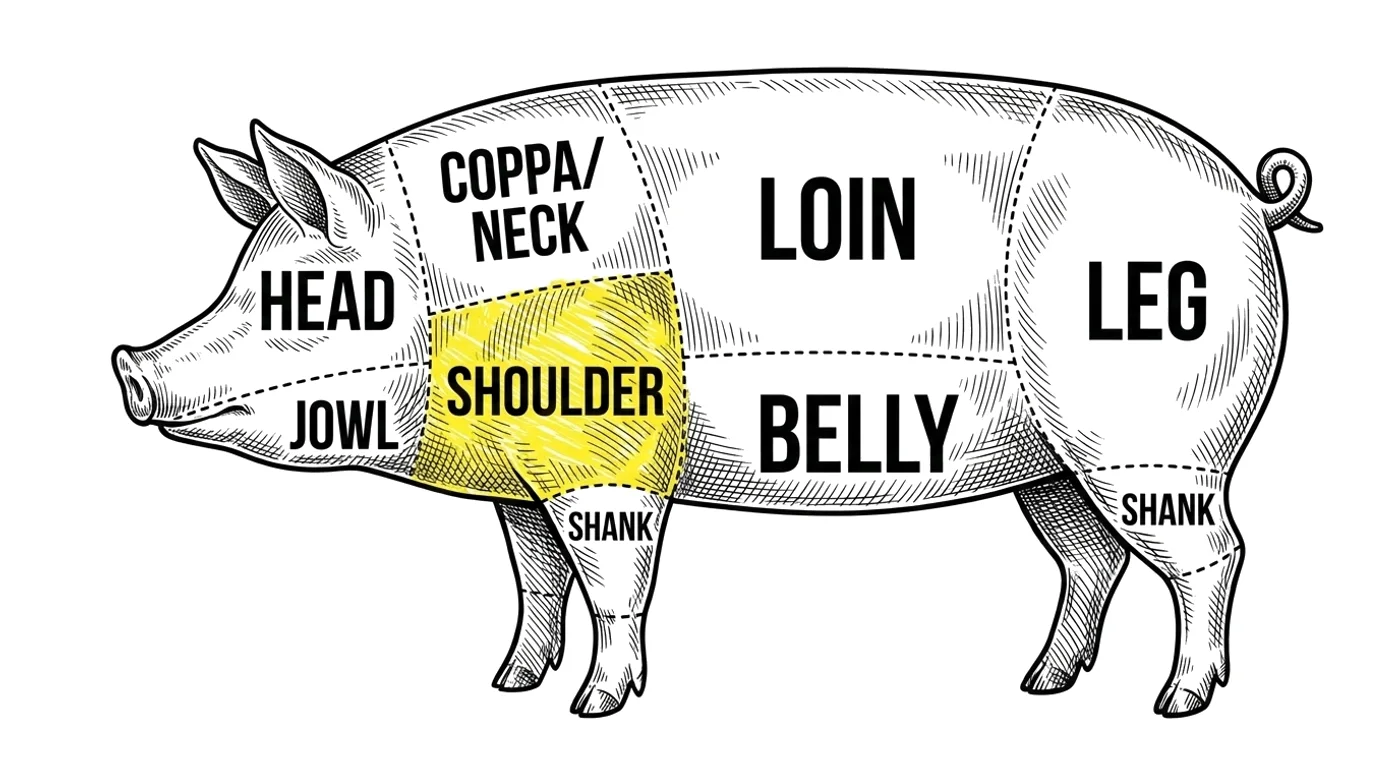
How to recognise it
A pale fresh sausage in hog casing with a coarse juicy pork texture and gentle pepper. It should not be paprika-red or dry-cured. Shape and size: Pale fresh links. Lean colour: Pale pink. Fat and marbling: White specks. Casing or exterior: Hog casing, 36 mm. Surface: None. The form is pale fresh links. the lean is pale pink. the fat or marbling is white specks. and the exterior uses hog casing, 36 mm. A raw or grey centre, split filling, sourness, greasy purge or poor refrigerated handling is unacceptable.
- Shape and size
- Pale fresh links
- Lean colour
- Pale pink
- Fat and marbling
- White specks
- Casing
- Hog casing, 36 mm
- Surface bloom
- None
Origins and history
Butifarra is the everyday fresh sausage of Catalonia, in north-eastern Spain, and its line runs back to the plain pork sausages of Roman cooking, close relatives of the old botulus and lucanica. Through the medieval centuries it settled into Catalan kitchens, kept deliberately simple so that the pork and a little seasoning do the work. The white form here is set apart from butifarra negra, the darker sausage bound with blood. It is still made and eaten across the region, cooked fresh rather than matured or smoked.
The family descends from the household pig slaughter and takes many forms according to what needed using. The fresh white version became the classic partner for mongetes, white beans, while cooked black and white butifarres developed as separate charcuterie.
Name. Butifarra (botifarra), an old Catalan sausage name of debated origin.
- Production today
- Made across Catalonia.
- Protection
- Not EU-protected as a general name.
- Tradition vs modern
- Fresh and cooked, with many regional members.
- Seasonality
- Year-round.
Compare with. Boudin blanc de Rethel
Serving and cultural significance
Butifarra is sold fresh and always cooked before eating, most often grilled or fried over a steady, moderate heat so the casing colours without bursting. The classic Catalan plate sets it beside mongetes, the small white beans of the region, often with garlic and good olive oil. It also goes into bean stews, rice dishes and grilled vegetable plates, while the sweeter matured styles are served in thin slices.
Recipe and cure
This is not a finished recipe. It is a window into how this meat is traditionally cured. Before you follow any process, please run it through one of our curing calculators, so the salt, cure and timings are right and safe for your own batch.
Make this — the measured Curesmith version →The cure below is the traditional reference. “Make this” opens the measured Curesmith home recipe, scaled to your batch.
Traditional or protected production
Butifarra is a broad family rather than one formula. The Atlas entry is narrowed to the fresh white Catalan sausage: pork and fat, salt, pepper and restrained seasoning, stuffed fresh and cooked. Blood, sweet, egg, rice and cooked offal variants should be separate entries.
The reference process can be summarised as follows: No single EU specification governs generic Butifarra. For the fresh white style, grind pork and fat, season simply, stuff and keep refrigerated until fully cooked.
- Meat
- pork
- Salt (%)
- 1.8
- Curing salt
- None; a fresh sausage, cooked before eating
- Fermented
- No
- Smoked
- No
- Target aW or weight loss
- cooked, not dried
- Temperature (°C)
- cooked through to a safe core temperature
- Humidity (%)
- n/a
- Maturation
- fresh; cooked before eating
- Basis
- per 1000 g green meat
- Style
- Traditional, cooked
Ingredients
- Beef (base)100% · 1000 g/kg
- Pork jowl and belly42.86% · 429 g/kg
- Pepper0.1% · 1 g/kg
- Garlic powder0.1% · 1 g/kg
- Cinnamon0.05% · 0 g/kg
- Cayenne0.05% · 0 g/kg
- Red wine6% · 60 g/kg
Method
- Mix pork with salt, pepper and a little spice.
- Stuff into casing.
- Grill or poach through before eating.
- Serve hot.
Notes
- This is a cooked product. It must be cooked through before eating. Where a cure is used it is Cure #1 (nitrite), suited to the shorter, cooked process rather than long drying.
- Recipe reconciled to the fuller traditional cure, with the starter culture, curing salt and the complete spicing recorded as ingredients.
In the Codex
What this product teaches, and where to read more.
Temple. Pillar, Meat Quality