
Carne Salada del Trentino
Trentino, Trentino-Alto Adige, Italy
Lean, aromatic salt-cured beef, sliced thin and eaten raw or lightly seared.
Overview
Carne salada is lean, aromatic salt-cured beef, sliced thin and eaten raw or lightly seared. A very lean ruby-red beef muscle with fresh garlic, juniper and bay aroma. It remains moist and tender rather than dry.
Where it's from
Climate. Trentino, the southern Alps.
Altitude. Alpine valleys
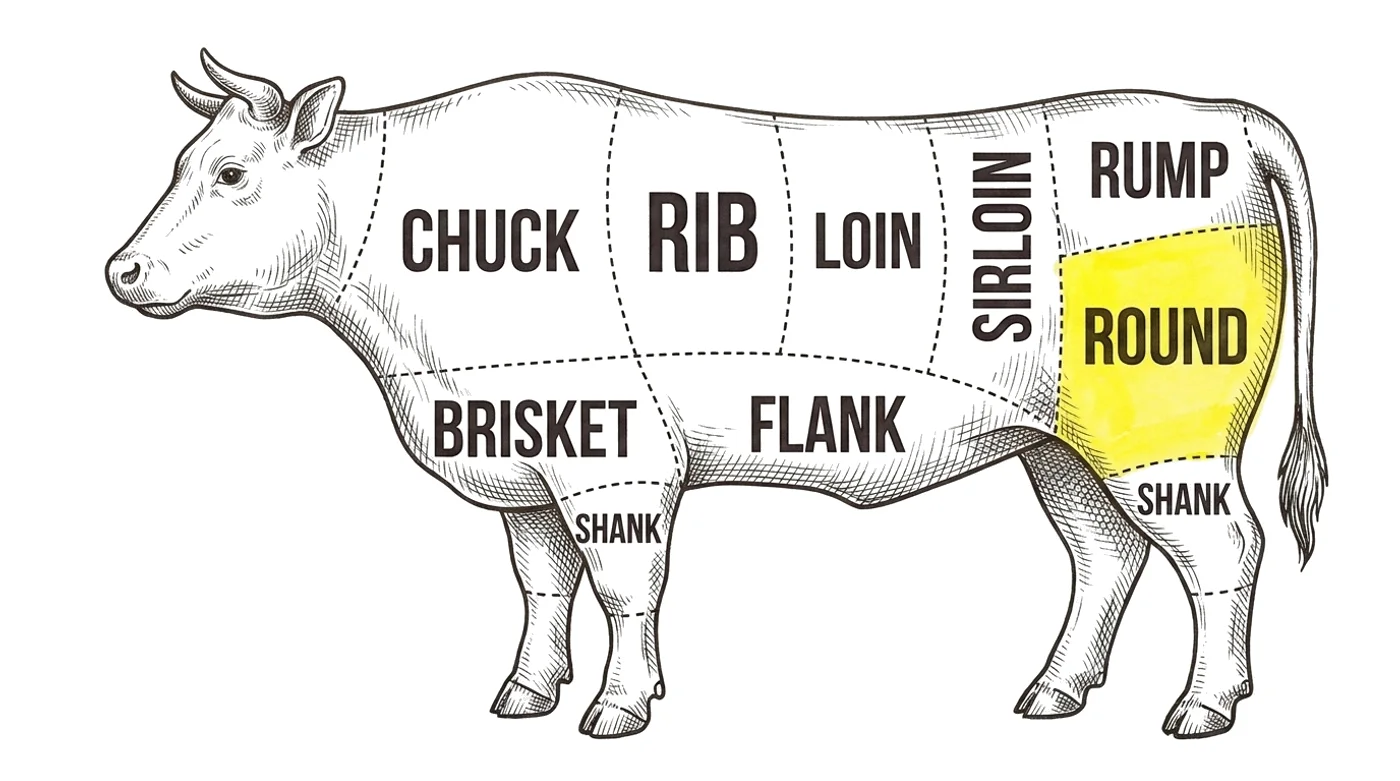
The cut
How to recognise it
A very lean ruby-red beef muscle with fresh garlic, juniper and bay aroma. It remains moist and tender rather than dry. Slime, sourness, grey-green meat or an uncertain refrigeration history excludes raw service.
- Shape and size
- Cured beef, sliced thin
- Lean colour
- Deep red
- Fat and marbling
- Very lean
- Casing
- None
- Surface bloom
- None
Origins and history
A Trentino speciality of beef, usually the topside, salted and layered with aromatics, garlic, juniper, bay, pepper and rosemary, and left to cure for a week or two under its own developing brine. It is eaten thinly sliced, either raw like a carpaccio or briefly seared, a lean alternative to the region's smoked meats. It reflects an Alpine tradition of preserving beef where pork was not the only meat.
Trentino households used aromatic salt and the meat's own developing brine to preserve beef for a week or several weeks. The product is a short refrigerated cure rather than a dry-aged bresaola. The verified production area is Trentino, especially Alto Garda and the southern Alpine valleys, Italy. Stories and etymologies are retained when they help explain the tradition, but legends are not used as evidence for the modern specification.
Name. Carne salada, 'salted meat'.
- Production today
- Producers across Trentino.
- Protection
- Not EU-protected (a local tradition).
- Tradition vs modern
- Eaten raw or lightly seared after a short cure.
- Seasonality
- Year-round.
Compare with. Bresaola della Valtellina
Serving and cultural significance
Slice the beef very thinly. Serve it raw only when the complete process has been validated for ready-to-eat use; otherwise sear it briefly and serve with beans, salad, olive oil and lemon. Trentino restaurants commonly offer both carpaccio-like and cooked presentations.
Recipe and cure
This is not a finished recipe. It is a window into how this meat is traditionally cured. Before you follow any process, please run it through one of our curing calculators, so the salt, cure and timings are right and safe for your own batch.
Curesmith home adaptation — not designation-compliant
Make this — the measured Curesmith version →The cure below is the traditional reference. “Make this” opens the measured Curesmith home recipe, scaled to your batch.
Traditional or protected production
Carne salada is lean beef, usually topside, cured cold for a relatively short period with salt, garlic, juniper, bay, pepper and rosemary. It is eaten as very thin raw slices in validated production or briefly seared and served warm.
- Meat
- beef
- Salt (%)
- 2.8
- Curing salt
- Sea salt with garlic, juniper, bay and pepper
- Fermented
- No
- Smoked
- No
- Target aW or weight loss
- not aged to weight loss; eaten fresh-cured
- Temperature (°C)
- cold, 2 to 6
- Humidity (%)
- n/a
- Maturation
- 1 to 2 weeks under its own brine
- Basis
- percentage of green meat weight
- Style
- Traditional salt-and-herb cure (short)
Ingredients
- beef topside (base)100% · 1000 g/kg
- sea salt2.8% · 28 g/kg
- garlic0.3% · 3 g/kg
- juniper0.3% · 3 g/kg
- black pepper0.3% · 3 g/kg
- bay0.1% · 1 g/kg
- rosemary0.1% · 1 g/kg
Method
- Layer the beef with salt and aromatics in a container.
- Cure cold for one to two weeks, turning, in the brine that forms.
- Slice thin.
- Eat raw like a carpaccio, or sear briefly.
Notes
- The official protected specification controls the named product. Any Curesmith EQ, starter-culture, curing-salt or home-scale adaptation is a separate method and must not be presented as designation-compliant.
- A more efficient way of curing this product is using the EQ Method. No more than 2.5% salt to meat weight is required. To follow the EQ method, please use our whole-muscle EQ curing calculator to work out proper ratios and curing times.
In the Codex
What this product teaches, and where to read more.
Temple. Foundation, Time