
Cecina de León
theh-THEE-nah deh leh-OHN
León, Castile-León, Spain
Dark, smoky and intense, more assertive than pork, with a clean lean finish.
Overview
Cecina de León is made from four large muscles of adult cattle, salted, lightly smoked and matured in the dry continental climate of León. The result is a dark garnet beef cure with a firm but tender texture and a subtle smoke that should never overpower the meat.
Where it's from
Climate. The cool, dry uplands of Leon in north-west Spain.
Altitude. Leon uplands
The cut
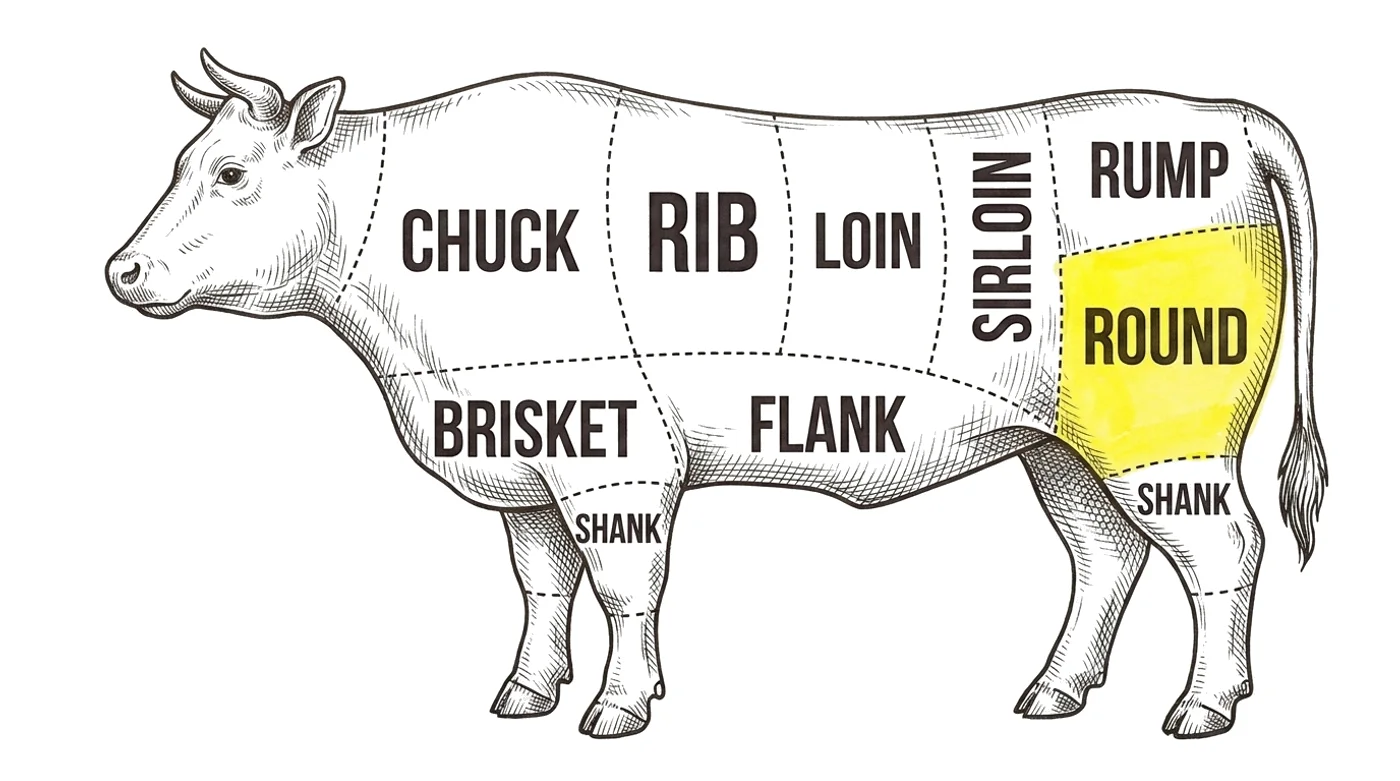
How to recognise it
The exterior is brown to dark mahogany, while the slice is cherry-red to deep garnet, becoming darker toward the edge. Fine fat marbling may appear and contributes juiciness. Smoke should be light and clean, with cured-beef aroma and modest salt. A black soot layer, grey wet centre, sourness, rancid fat or severe case hardening is unacceptable.
- Shape and size
- Dark cured beef muscle, sliced very thin
- Lean colour
- Deep burgundy
- Fat and marbling
- Very lean
- Casing
- None
- Surface bloom
- None
Origins and history
Cecina belongs to a wider Iberian tradition of preserving meat by salting and air drying. Classical agricultural writing described processes recognisably similar to cecina, although the specific León product developed within the cattle and droving economy of the north-western plateau. León's cold winters, dry air and access to hardwood smoke made large beef muscles suitable for long preservation. The food appears in Spanish literature and travel accounts, showing that it was more than a private farmhouse practice. Muleteers and seasonal workers valued meat that could be carried without cooking, while households used it through winter. The modern regulatory council was recognised in 1994, and European PGI protection followed, limiting processing to León and defining the accepted beef cuts and stages.
Name. Cecina from the Latin siccus, 'dry'.
- Production today
- Producers in the province of Leon under the IGP.
- Protection
- IGP; salted, smoked over oak and air-dried for at least seven months.
- Tradition vs modern
- The oak smoke is traditional and central to the flavour and the IGP.
- Seasonality
- Made year-round.
Compare with. Bresaola della Valtellina
Serving and cultural significance
Slice cecina thinly and serve with olive oil, bread, roasted peppers or mature cheese. It also works with fruit, nuts and local red wine. Warm it only gently, because strong heat can tighten the lean and hide the smoke.
Recipe and cure
This is not a finished recipe. It is a window into how this meat is traditionally cured. Before you follow any process, please run it through one of our curing calculators, so the salt, cure and timings are right and safe for your own batch.
Curesmith home adaptation — not designation-compliant
Make this — the measured Curesmith version →The cure below is the traditional reference. “Make this” opens the measured Curesmith home recipe, scaled to your batch.
Traditional or protected production
PGI Cecina de León uses the tapa, contra, babilla and cadera muscles from adult cattle. The pieces are trimmed, salted, washed, settled, optionally smoked with approved woods and dried or matured. The complete transformation occurs in León. The protected process produces a whole-muscle beef cure, not a spiced bresaola imitation.
Sea salt (salt-box) and oak smoke. No fixed salt percentage.
- Meat
- beef
- Cut
- large hind-leg muscles
- Salt (%)
- traditional, no fixed % (salt-box)
- Curing salt
- Sea salt; oak smoke
- Other agents
- salt and oak smoke
- Fermented
- No
- Smoked
- Yes
- Target aW or weight loss
- ~ weight loss
- Temperature (°C)
- cold salting, then 12 to 15
- Humidity (%)
- 70 to 75
- Maturation
- 7 months and up
- Basis
- percentage of green meat weight
- Style
- Traditional dry salting (salt-box), oak-smoked
Ingredients
- sea salt4.5% · 45 g/kg
- sugar1.5% · 15 g/kg
- Cure #2 (optional)0.3% · 3 g/kg
Method
- Salt the beef muscle in sea salt (salt-box).
- Rest so the salt draws through.
- Smoke over oak.
- Air-dry at least seven months to the target loss.
Notes
- The official protected specification controls the named product. Any Curesmith EQ, starter-culture, curing-salt or home-scale adaptation is a separate method and must not be presented as designation-compliant.
- A more efficient way of curing this product is using the EQ Method. No more than 2.5% salt to meat weight is required. To follow the EQ method, please use our whole-muscle EQ curing calculator to work out proper ratios and curing times.
- A traditional salt-box rub of roughly 75:25 salt to sugar at 6% of meat weight, then packed in coarse salt and rinsed before drying; optional Cure #2 for the long dry. Oak cold-smoked, then dried to around 35% weight loss.
Safety. Lean beef plus smoke. Watch surface drying. Verify before serving.
In the Codex
What this product teaches, and where to read more.
Temple. Roof, Microclimate