
Chicharrones de Cádiz
Cadiz, Andalusia, Spain
Spiced, pressed cooked pork sliced wafer-thin, eaten with lemon.
Overview
Chicharrones de Cádiz is spiced, pressed cooked pork sliced wafer-thin, eaten with lemon. A compact cooked block with alternating lean and fat, an oregano-and-garlic aroma and a tender slice that can be cut almost translucent.
Where it's from
Climate. Cadiz, on the Andalusian Atlantic coast.
Altitude. Coastal Andalusia
The cut
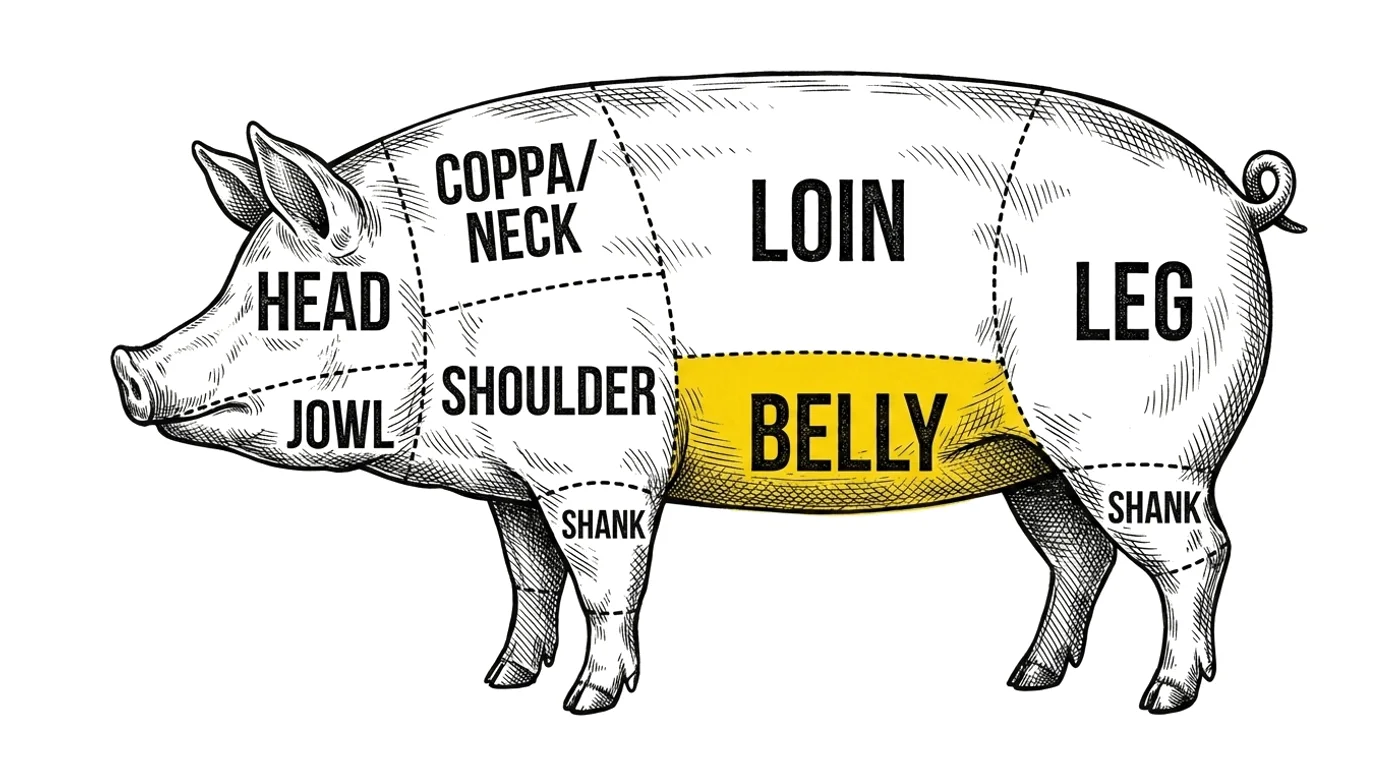
How to recognise it
A compact cooked block with alternating lean and fat, an oregano-and-garlic aroma and a tender slice that can be cut almost translucent. Shape and size: Pressed block, sliced wafer-thin. Lean colour: Cooked pork mosaic. Fat and marbling: Set. Casing or exterior: Pressed, no casing. Surface: None. The form is pressed block, sliced wafer-thin. the lean is cooked pork mosaic. the fat or marbling is set. and the exterior uses pressed, no casing. A raw or grey centre, split filling, sourness, greasy purge or poor refrigerated handling is unacceptable.
- Shape and size
- Pressed block, sliced wafer-thin
- Lean colour
- Cooked pork mosaic
- Fat and marbling
- Set
- Casing
- Pressed, no casing
- Surface bloom
- None
Origins and history
Chicharrones de Cadiz belong to the matanza tradition of the Andalusian south west, where the household pig was worked into products that would keep and be shared through the winter. Unlike the crisp fried scraps that carry the same name elsewhere in Spain, the Cadiz version is a whole piece of belly cooked slowly in seasoned lard until it is tender rather than crunchy, then cooled so it firms into a sliceable block. It settled into the province's tapas counters and Christmas tables, valued for cutting clean and thin. Today it is most often sold loncheado, pressed and machine cut into near translucent leaves.
The product grew from the Andalusian matanza and the need to preserve and serve rich pork cuts without wasting the cooking fat. It became a tapas-counter speciality, frequently dressed with lemon and eaten in wafer-thin slices.
Name. Chicharrones, usually 'pork scratchings'; in Cadiz, a pressed cooked-pork speciality.
- Production today
- Producers and counters in Cadiz.
- Protection
- Not EU-protected as a general name.
- Tradition vs modern
- A pressed cooked-pork tradition.
- Seasonality
- Year-round.
Compare with. Coppa di testa
Serving and cultural significance
Serve it cold and sliced as thinly as the blade allows, laid out flat so the seasoned rim and pale centre are both on show. The traditional finish is a squeeze of fresh lemon and a little coarse salt, which cut the richness and lift the flavour. It suits a dry fino sherry or a cold beer and sits happily on bread or beside other cold cuts as part of a spread.
Recipe and cure
This is not a finished recipe. It is a window into how this meat is traditionally cured. Before you follow any process, please run it through one of our curing calculators, so the salt, cure and timings are right and safe for your own batch.
Make this — the measured Curesmith version →The cure below is the traditional reference. “Make this” opens the measured Curesmith home recipe, scaled to your batch.
Traditional or protected production
Chicharrones de Cádiz are not the crisp fried pork rinds known by the same name elsewhere. The Cádiz style consists of seasoned pork, often belly and shoulder, cooked slowly in lard, pressed or chilled and sliced very thin.
The reference process can be summarised as follows: No EU specification governs the name. Traditional practice seasons the pork, cooks it slowly in lard until tender, presses or shapes it and chills it for slicing.
- Meat
- pork
- Salt (%)
- 2
- Curing salt
- None; a pressed cooked-pork speciality
- Fermented
- No
- Smoked
- No
- Target aW or weight loss
- cooked, not dried
- Temperature (°C)
- cooked through to a safe core temperature
- Humidity (%)
- n/a
- Maturation
- cooked; then eaten
- Basis
- per 1000 g green meat
- Style
- Traditional, cooked
Ingredients
- pork shoulder (base)100% · 1000 g/kg
- sea salt1.8% · 18 g/kg
- spices (oregano, pepper, garlic)0.5% · 5 g/kg
Method
- Season and cook the pork cuts.
- Press into a firm block while warm.
- Chill until set.
- Slice wafer-thin; serve with lemon.
Notes
- This is a cooked product. It must be cooked through before eating. Where a cure is used it is Cure #1 (nitrite), suited to the shorter, cooked process rather than long drying.
In the Codex
What this product teaches, and where to read more.
Temple. Pillar, Meat Quality