
Chorizo Riojano
La Rioja (regional), La Rioja, Spain
Coarse, garlicky and paprika-rich, with a light smoke, good raw or cooked.
Overview
Chorizo Riojano is a protected Rioja sausage made from pork and firm fat with garlic and pimentón. It is commonly presented in a horseshoe or string form and balances bright paprika with a clean, firm slice. It is more specific than generic Spanish chorizo.
Where it's from
Climate. La Rioja, dry and well-ventilated.
Altitude. Ebro valley and foothills
The cut
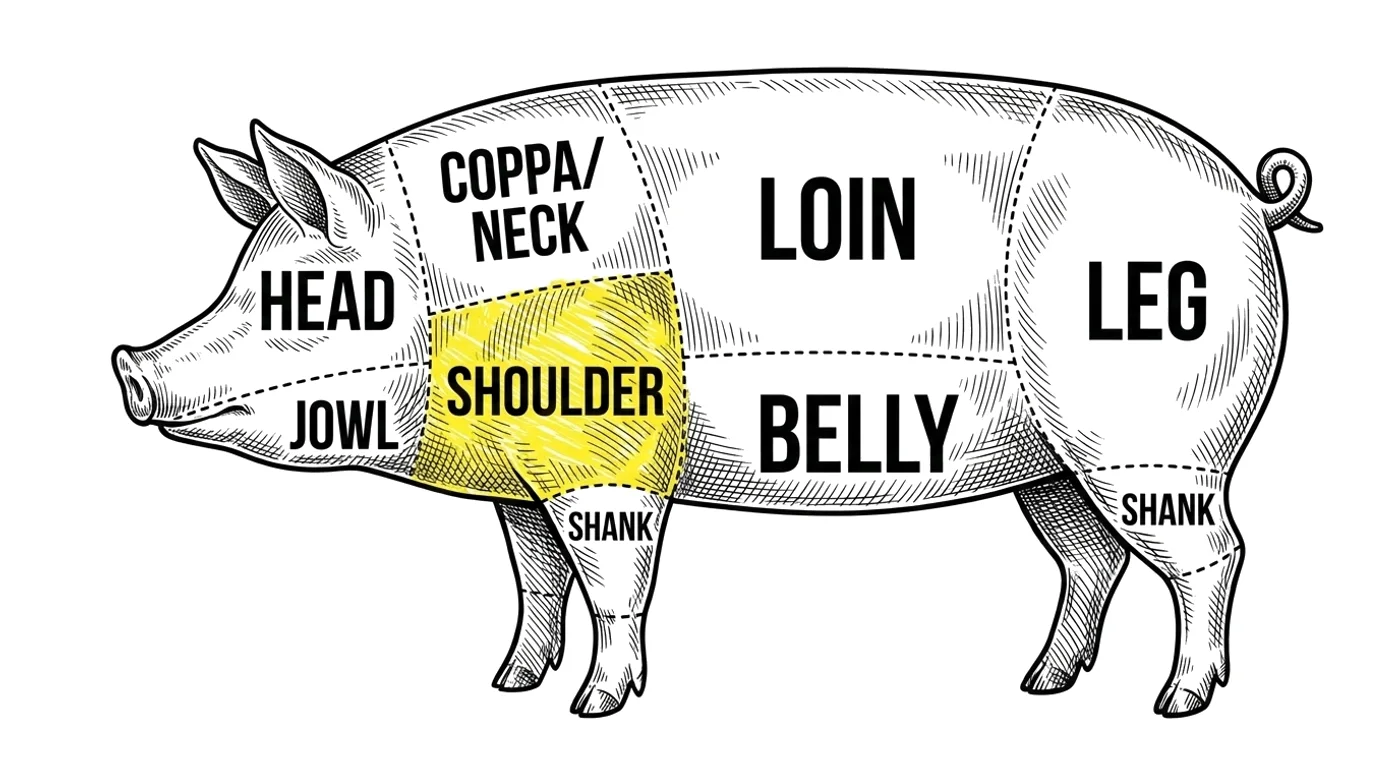
How to recognise it
The casing is red-brown and may form a horseshoe or tied string. The slice is red with clean white fat and a firm but not brittle texture. Garlic and pimentón lead, with no rancid smoke or harsh acid. Grease smear, hollow pockets, black mould or a wet centre are faults.
- Shape and size
- Horseshoe (sarta) or straight, deep red
- Lean colour
- Red-orange
- Fat and marbling
- White flecks
- Casing
- Hog casing, 30 to 40 mm
- Surface bloom
- Possible
Origins and history
La Rioja's wine, peppers and winter pig slaughter created a natural setting for chorizo. Before refrigeration, households converted shoulder meat and fat into links that could be hung, carried and added gradually to beans and potatoes. Pimentón, adopted after peppers arrived from the Americas, gave the sausage its modern red colour and helped make regional differences visible. Rioja producers built a reputation for a balanced, garlic-led style rather than extreme heat. As generic chorizo expanded commercially, local makers organised to protect their name, ingredients and production area. PGI recognition now distinguishes Chorizo Riojano from both fresh chorizo and protected sausages from other Spanish regions.
Name. Chorizo; Riojano for La Rioja.
- Production today
- Producers across La Rioja.
- Protection
- IGP.
- Tradition vs modern
- Sweet or hot by the paprika; often lightly smoked.
- Seasonality
- Traditionally tied to the winter matanza.
Compare with. Chorizo, Chorizo de Cantimpalos
Serving and cultural significance
Serve in diagonal slices with bread, Rioja cheese and wine, or use it to season potatoes, beans and lentils. The rendered paprika fat is valuable in cooking, so modest quantities are often enough. For a warm tapa, brown the cut surface briefly rather than cooking the link for a long time, which can dry the lean and scorch the paprika.
Recipe and cure
This is not a finished recipe. It is a window into how this meat is traditionally cured. Before you follow any process, please run it through one of our curing calculators, so the salt, cure and timings are right and safe for your own batch.
Curesmith home adaptation — not designation-compliant
Make this — the measured Curesmith version →The cure below is the traditional reference. “Make this” opens the measured Curesmith home recipe, scaled to your batch.
Traditional or protected production
The PGI controls the pork and fat block, pimentón, garlic, casing, drying and production in La Rioja. The official product may be produced in recognised presentations but must retain the protected sensory and analytical profile.
- Meat
- pork
- Cut
- minced pork and fat
- Salt (%)
- 2.8
- Curing salt
- Cure #2
- Fermented
- Yes
- Target pH
- 4.9
- Starter or mould
- Natural surface mould
- Smoked
- No
- Target aW or weight loss
- ~30% weight loss
- Temperature (°C)
- ferment 22 to 24, then dry 13 to 15
- Humidity (%)
- ferment ~90, then 75 to 80
- Maturation
- 3 to 5 weeks
- Basis
- per 1000 g of lean pork (main meat); back fat and spices are added as a percentage of the lean
- Style
- Traditional fermented and dried sausage, lightly smoked
Ingredients
- lean pork (base)100% · 1000 g/kg
- back fat42.86% · 429 g/kg
- smoked paprika (pimenton dulce)2.5% · 25 g/kg
- hot paprika (pimenton picante)0.2% · 2 g/kg
- garlic0.7% · 7 g/kg
Method
- Mince pork and fat and mix with all ingredients to green meat weight.
- Stuff into casing.
- Ferment to the target pH.
- Dry to the target weight loss.
Notes
- The official protected specification controls the named product. Any Curesmith EQ, starter-culture, curing-salt or home-scale adaptation is a separate method and must not be presented as designation-compliant.
- This traditional recipe uses no nitrite. For safety we recommend adding Cure #2: in a low-oxygen, slow-dried product nitrite is the specific guard against Clostridium botulinum, while salt, acidity and drying control Salmonella, E. coli, Listeria and Staphylococcus.
- Recipe reconciled to the fuller traditional cure, with the starter culture, curing salt and the complete spicing recorded as ingredients.
In the Codex
What this product teaches, and where to read more.
Temple. Roof, Water Activity