
Chouriço de Portalegre
Portalegre, Alentejo, Portugal
A PGI Alentejo chourico of pork, red-pepper paste and wood smoke.
Overview
Chouriço de Portalegre is a pgi alentejo chourico of pork, red-pepper paste and wood smoke. A dark red smoked sausage with clearly visible pieces of lean and white fat, garlic and pepper-paste aroma and a firm but not brittle texture. The Codex treats the product as a complete curing or cooking system, not simply a famous name. Raw material, cut or particle size, casing, smoke, fermentation, heat treatment and maturation all contribute to the result. The current legal or quality status is IGP / PGI. The source tradition and the Curesmith home method are kept separate.
Where it's from
Climate. Portalegre in the northern Alentejo, montado country.
Altitude. Alentejo plains and hills
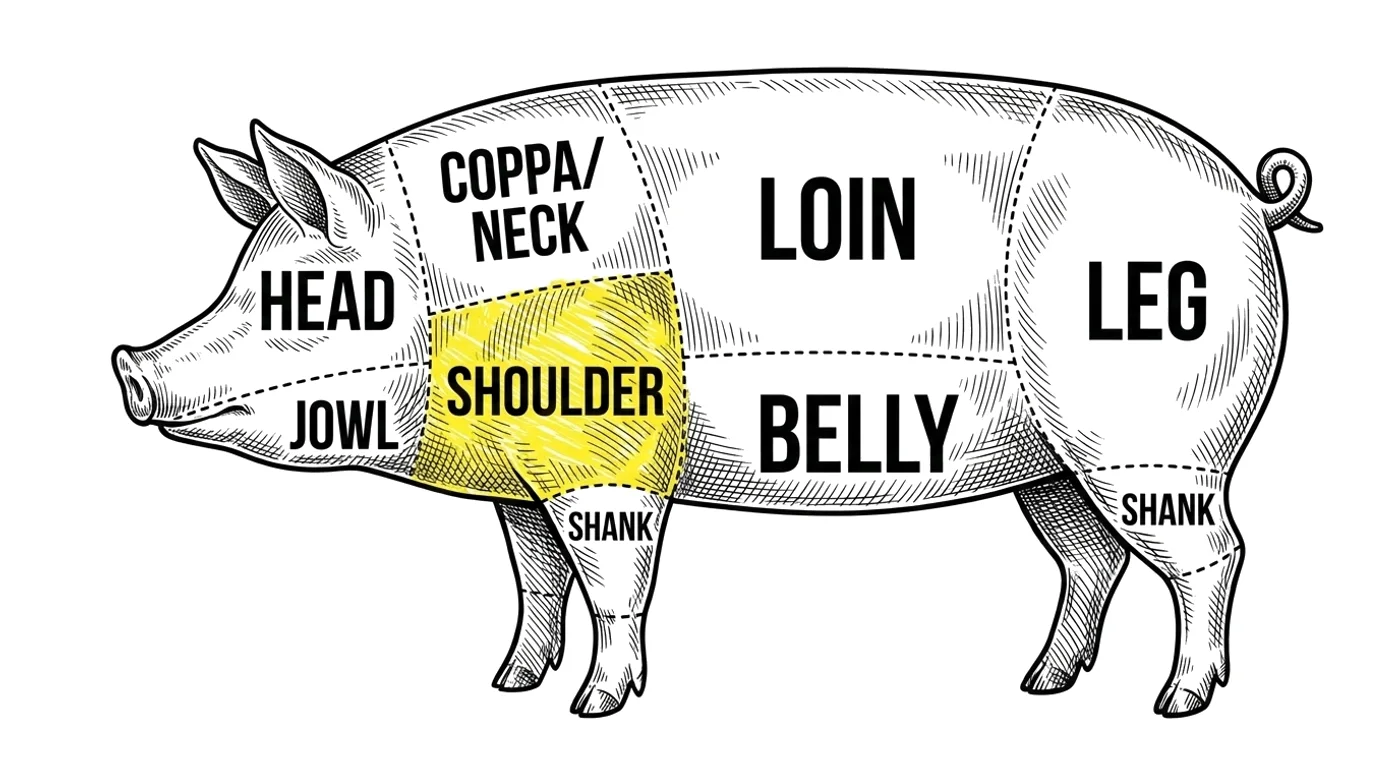
The cut
How to recognise it
A dark red smoked sausage with clearly visible pieces of lean and white fat, garlic and pepper-paste aroma and a firm but not brittle texture. Grease smear, hollow pockets, case hardening, wet centre, rancidity or uncontrolled dark mould is a fault.
- Shape and size
- Looped or straight, deep red
- Lean colour
- Deep red
- Fat and marbling
- White
- Casing
- Natural casing
- Surface bloom
- Possible
Origins and history
A chourico of Portalegre in the northern Alentejo, holding a PGI, made from pork seasoned with the regional massa de pimentao, a red-pepper paste, along with wine and garlic, then smoked. It is a deep-red, gently smoky sausage of the southern plains, belonging to the great Alentejo tradition of pork from the montado oak pastures. The sausage belongs to the montado pig culture of northern Alentejo. Pepper paste, garlic and smoke preserve the flavour of large pieces of Alentejana pork rather than reducing them to a fine industrial mince. Legends and commercial origin stories are identified as such rather than used as proof of the current specification.
Name. Chourico; Portalegre the Alentejo town.
- Production today
- Producers in the Portalegre district.
- Protection
- IGP/PGI, registered 1997.
- Tradition vs modern
- Massa de pimentao and wood smoke.
- Seasonality
- Traditionally the winter matanca.
Compare with. Chorizo, Salpicão de Vinhais
Serving and cultural significance
Sliced, grilled, or cooked in stews. Add the mandatory starter culture and quantified Cure #2 in the home layer. Preserve the protected Alentejana-pig and large-piece identity. it shows how place, material and process create identity. The reader can compare authenticity, legal status and practical home safety without confusing them. Serve sliced, grilled or simmered in beans and stews, using the red-pepper fat as seasoning.
Recipe and cure
This is not a finished recipe. It is a window into how this meat is traditionally cured. Before you follow any process, please run it through one of our curing calculators, so the salt, cure and timings are right and safe for your own batch.
Curesmith home adaptation — not designation-compliant
Make this — the measured Curesmith version →The cure below is the traditional reference. “Make this” opens the measured Curesmith home recipe, scaled to your batch.
Traditional or protected production
Chouriço de Portalegre PGI is made from fresh meat and firm fat of Alentejana pigs, cut into pieces larger than about 1.5 cm. Salt, dry garlic, sweet pepper and pepper paste are used, with regional white wine optional. The sausage is packed in natural casing and smoked.
- Meat
- Iberian pig
- Salt (%)
- 2.5
- Curing salt
- Not included in the base recipe below
- Fermented
- Yes
- Target pH
- 4.9
- Starter or mould
- Natural surface mould
- Smoked
- Yes
- Target aW or weight loss
- ~30% weight loss
- Temperature (°C)
- ferment 22 to 24, then dry 13 to 15
- Humidity (%)
- ferment ~90, then 75 to 80
- Maturation
- a few weeks, smoked
- Basis
- per 1000 g green meat
- Style
- Traditional fermented, smoked and dried sausage
Ingredients
- pork (base)100% · 1000 g/kg
- massa de pimentao (red-pepper paste)3% · 30 g/kg
- garlic0.6% · 6 g/kg
- sea salt2.5% · 25 g/kg
- dry white wine2% · 20 g/kg
Method
- Mince meat and fat and mix with all ingredients to green meat weight.
- Stuff into casing.
- Ferment to the target pH, with smoke where traditional.
- Dry to the target weight loss.
Notes
- The official protected specification controls the named product. Any Curesmith EQ, starter-culture, curing-salt or home-scale adaptation is a separate method and must not be presented as designation-compliant.
- This traditional recipe uses no nitrite. For safety we recommend adding Cure #2: in a low-oxygen, slow-dried product nitrite is the specific guard against Clostridium botulinum, while salt, acidity and drying control Salmonella, E. coli, Listeria and Staphylococcus.
In the Codex
What this product teaches, and where to read more.
Temple. Roof, Water Activity