
Fiocchetto
Bassa Parmense, Emilia-Romagna, Italy
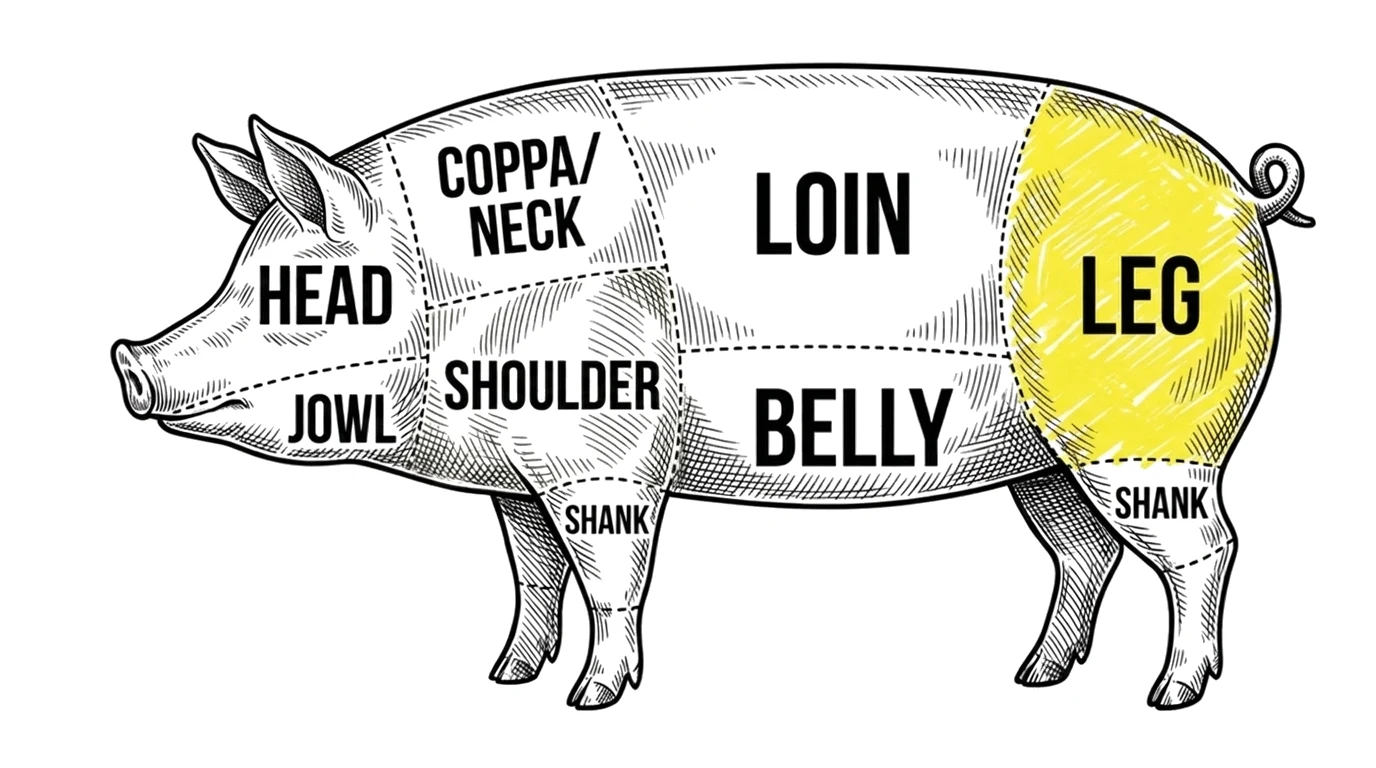
Delicate and lean, the smaller cousin cured from the same leg as culatello.
Overview
Fiocchetto is delicate and lean, the smaller cousin cured from the same leg as culatello. A small oval or tapered muscle with ruby-red lean, very little internal fat and a delicate sweet aroma. It is leaner, smaller and quicker to mature than Culatello.
Where it's from
Climate. The Bassa Parmense along the Po, culatello country.
Altitude. Po river plain
The cut
How to recognise it
A small oval or tapered muscle with ruby-red lean, very little internal fat and a delicate sweet aroma. It is leaner, smaller and quicker to mature than Culatello. Shape and size: Small cased muscle. Lean colour: Deep red. Fat and marbling: Lean. Casing or exterior: Bladder or natural casing. Surface: Cellar mould. The form is small cased muscle. the lean is deep red. the fat or marbling is lean. and the exterior uses bladder or natural casing. A hard dry rim, wet grey centre, rancid fat, sourness or air beneath a casing indicates an uneven or contaminated cure.
- Shape and size
- Small cased muscle
- Lean colour
- Deep red
- Fat and marbling
- Lean
- Casing
- Bladder or natural casing
- Surface bloom
- Cellar mould
Origins and history
The smaller, leaner muscle of the pork leg cured alongside culatello in the Bassa Parmense, taken from the front portion the culatello leaves behind. Cased and aged in the same humid river cellars, it is more delicate and quicker to mature than culatello, and it is often the culatello maker's second treasure. Together the two make the most of a single leg.
The product reflects the disciplined use of a valuable heavy-pig leg. The larger posterior muscle became Culatello; the smaller front muscle was too good to waste and developed its own identity. Its shorter six-to-eight-month maturation made it the earlier reward while the Culatello continued ageing. Emilia-Romagna records Fiocchetto as a traditional agri-food product. The regional description confirms that it receives the same basic salting as Culatello, is enclosed in bladder and is still made through a strongly manual process.
Name. Fiocchetto, a diminutive, 'little bow' or tuft, for its shape.
- Production today
- Producers of the Bassa Parmense.
- Protection
- Not EU-protected as a general name.
- Tradition vs modern
- Cured with culatello from the same leg.
- Seasonality
- Winter slaughter.
Compare with. Culatello di Zibello, Spalla cruda di Palasone
Serving and cultural significance
Sliced thin, leaner than culatello. Because it is leaner than Culatello, keep the slices covered after cutting and serve them before fattier salumi on a tasting board. Mild bread, butter and sparkling wine suit its delicate profile better than strongly flavoured cheese or pickles.
Recipe and cure
This is not a finished recipe. It is a window into how this meat is traditionally cured. Before you follow any process, please run it through one of our curing calculators, so the salt, cure and timings are right and safe for your own batch.
Make this — the measured Curesmith version →The cure below is the traditional reference. “Make this” opens the measured Curesmith home recipe, scaled to your batch.
Traditional or protected production
Fiocchetto, also called Fiocco di Culatello, is the smaller, leaner muscle separated from the pork leg when Culatello is shaped. It is salted, commonly enclosed in bladder or casing and matured in the same humid lowland cellars, but reaches readiness sooner than Culatello.
The reference process can be summarised as follows: Separate the smaller muscle from the prepared leg, trim carefully, dry salt, rest cold, place in bladder or suitable casing, tie and mature naturally for approximately six to eight months.
Sea salt, black pepper and a little garlic, salt-box method; no fixed percentage.
- Meat
- pork
- Salt (%)
- traditional, no fixed %
- Curing salt
- Sea salt with pepper
- Fermented
- No
- Starter or mould
- Cellar mould
- Smoked
- No
- Target aW or weight loss
- ~ weight loss
- Temperature (°C)
- cold salting, then 12 to 15
- Humidity (%)
- 75 to 80
- Maturation
- 8 months and up
- Basis
- percentage of green meat weight
- Style
- Traditional dry salting (salt-box)
Method
- Salt and season by the traditional method and rest cold.
- Case or hang as the style requires.
- Age in the cellar air.
- Age to the target loss.
Notes
- A more efficient way of curing this product is using the EQ Method. No more than 2.5% salt to meat weight is required. To follow the EQ method, please use our whole-muscle EQ curing calculator to work out proper ratios and curing times.
In the Codex
What this product teaches, and where to read more.
Temple. Pillar, Meat Quality