
Fish for Curing
Also known as salt fish, cured fish, smoked fish, bacalhau, mojama, gravlax, salted cod
A different material and a different hazard set. Fish muscle has almost no connective tissue and far more unsaturated fat, so it cures in hours rather than weeks and goes rancid in a fraction of the time. Its parasites and its toxins are its own.
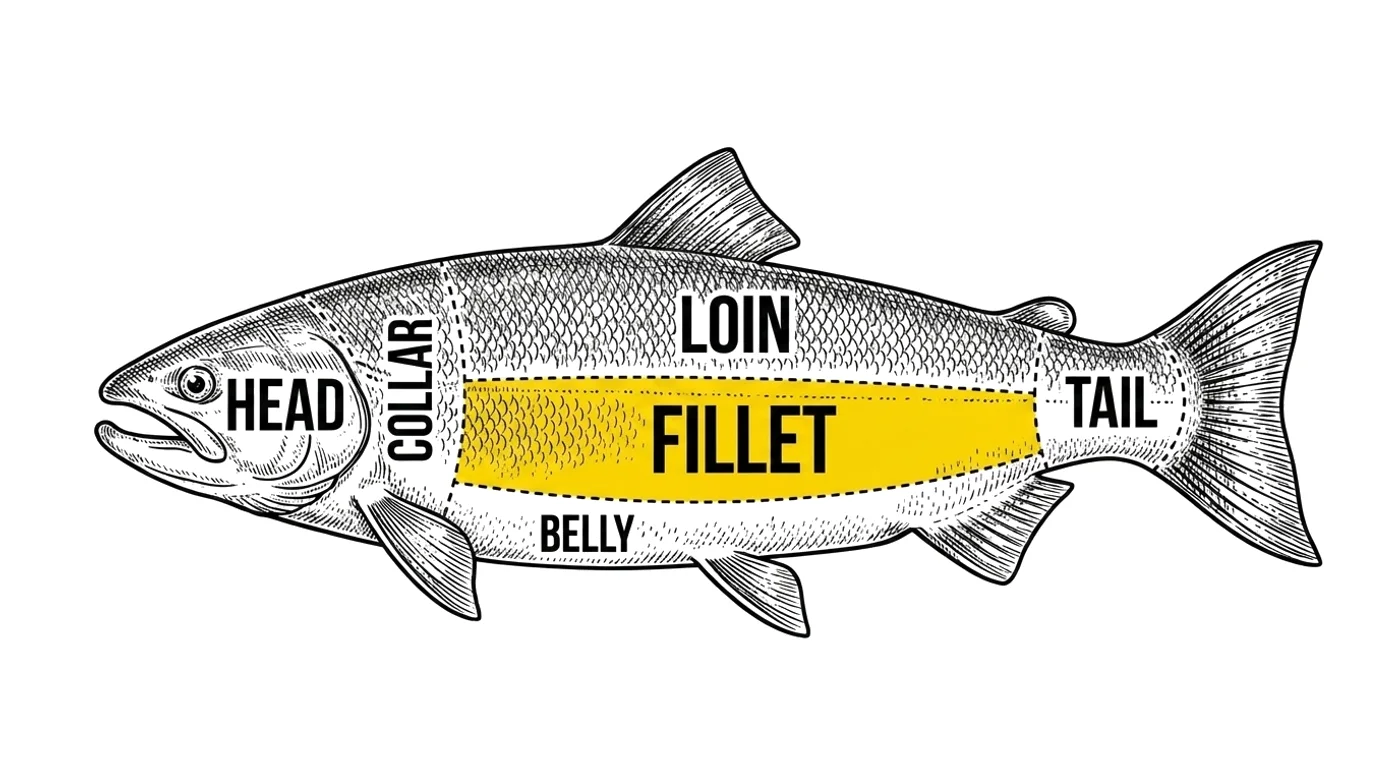
Fish is not meat with fins, and treating it as such is where most trouble starts. Its muscle is arranged in short blocks separated by thin sheets of connective tissue, and that tissue is far weaker than mammalian collagen, converting to gelatin at temperatures a mammal would not notice. So fish flakes rather than holding, cooks in minutes, and cures in hours where a ham takes weeks. Salt penetrates it fast because the structure is open and the pieces are thin.
The great salt-fish traditions exploit that speed and then take it further. Bacalhau and klippfisk are cod salted heavily and dried to the point where they keep for months without refrigeration, effectively a water-activity product like a ham but reached in days. Mojama is tuna loin salted and air-dried. Gravlax is salmon buried in salt, sugar and dill for a couple of days, which is a light cure and a fresh product, not a preserved one. Smoked salmon is a light brine and a cold smoke, and it is raw. The keeping quality of each is completely different, and their appearance is not a guide.
Fat is the second difference. Fish oils are highly unsaturated, which is what makes them nutritionally valuable and what makes them oxidise fast. An oily fish left exposed to air, warmth and light will be rancid within days, and the rancidity in fish is unmistakable. This is why oily fish for curing is worked cold and fast, why mojama is packed in oil or vacuum, and why lean fish like cod keeps far better salted than mackerel ever will.
The hazards are different from those of red meat and need their own treatment. Parasitic worms, chiefly Anisakis, are present in many wild marine species, and the recognised control for fish that will be eaten raw or lightly cured is a validated freezing schedule, not salt. Scombrotoxin, the histamine poisoning associated with tuna, mackerel and their relatives, forms in fish left warm after catch and is heat-stable, so no amount of subsequent cooking or curing removes it. Marine biotoxins and environmental contaminants are not affected by curing either. And the smoked-fish safety literature is dominated by Clostridium botulinum type E, which grows at refrigeration temperatures and is the reason vacuum-packed cold-smoked fish is treated with such caution.
The cooking endpoint for fish is 63°C, lower than the meat figures, and it reflects both the different structure and the different organisms.
Temple element. Pillar, Meat Quality