
Glamorgan Sausage
Also known as Selsig Morgannwg, Selsig Sir Forgannwg
Glamorgan, United Kingdom
Overview
Glamorgan Sausage is a Welsh vegetarian sausage-shaped dish made from cheese, leeks, breadcrumbs and egg. It has no casing and no meat: the mixture is formed into short cylinders, coated and fried or baked until crisp outside and soft within. Traditional Welsh Caerphilly is the practical modern cheese, supplying acidity and a crumbly texture that balances sweet leek. The product belongs in the Atlas because it is a historically named sausage form, but its culinary architecture is closer to a cheese croquette than to charcuterie.
Where it's from
The cut
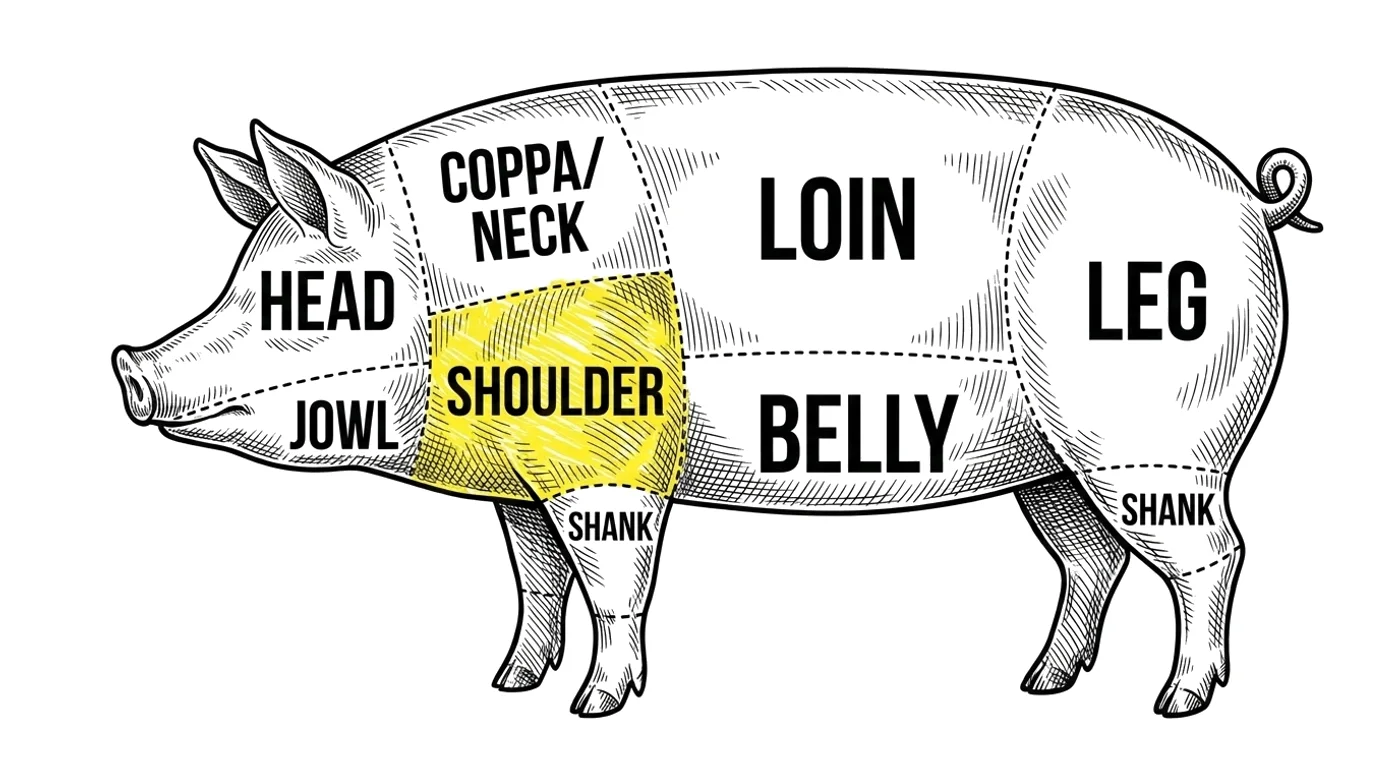
Identity and terminology
The English name refers to the historic county of Glamorgan; the Welsh forms Selsig Morgannwg and Selsig Sir Forgannwg mean Glamorgan sausage. Accounts often connect the dish to Glamorgan cheese, once made from the milk of local Glamorgan cattle. That explanation fits the modern cheese-based form but should not be treated as the whole history, because archival discussion includes earlier meat-containing recipes under the same name. The present vegetarian identity is therefore an evolved Welsh dish rather than an unchanging ancient formula.
Composition and characteristics
A good Glamorgan sausage has a crisp breadcrumb coat, a tender pale filling and visible fine leek. Caerphilly contributes a clean lactic tang and enough dryness to keep the interior cohesive; mature Cheddar makes a richer but less regionally specific substitute. Fresh breadcrumbs bind moisture, egg holds the cylinder together and mustard, parsley and thyme give savoury depth. The sausage should hold its shape when turned in the pan without becoming rubbery, oily or dense.
Production and process
Leeks are softened gently and cooled before mixing with grated cheese, breadcrumbs, egg, milk and seasoning. The paste is shaped and chilled, then passed through flour, beaten egg and dry crumbs. Moderate frying browns the coat while warming the centre without forcing out cheese fat. Baking and grilling are established alternatives, but they create a drier crust. Because the mixture contains egg and dairy, it requires chilled handling, complete cooking and prompt refrigeration of leftovers. It has no curing or preservation stage.
History and regional forms
George Borrow's Wild Wales, published in 1862 from travels made in the 1850s, provides an early printed reference to Glamorgan sausages as a breakfast dish. The modern vegetarian version became the dominant understanding, especially when meat scarcity encouraged cheese-based cooking during the twentieth century. Welsh public food sources now present cheese, leek and breadcrumbs as the classic composition. The name is culturally Welsh but is not a registered geographical indication in the current GB protected-name register.
Use, storage and related products
Glamorgan sausages can be served for breakfast, as a starter with chutney, or as a main course with potatoes, vegetables and gravy. Their sharp cheese and sweet leek suit apple, onion relish and mustard. They differ from commercial vegetarian meat analogues because their identity depends on recognisable cheese, vegetable and breadcrumb ingredients rather than imitation meat texture. Keep uncooked shaped pieces refrigerated and cook them promptly. Cool leftovers quickly, store at 0–4°C and reheat only once.
Recipe and cure
This is not a finished recipe. It is a window into how this meat is traditionally cured. Before you follow any process, run it through one of our curing calculators so the salt, cure and timings are right and safe for your own batch.
- Meat
- Fresh white breadcrumbs for filling
- Cut
- Fresh white breadcrumbs for filling
- Salt (%)
- 0.6
- Curing salt
- None
- Fermented
- No
- Starter or mould
- None; this product is not fermented
- Smoked
- No
- Maturation
- Refrigerate at 0–4°C; use within 4 days or freeze promptly
- Basis
- per 1,000 g leek, white and pale green parts, finely sliced
- Style
- vegetarian Welsh cheese-and-leek sausage-shaped croquette
Ingredients
- Traditional Welsh Caerphilly cheese, finely grated100% · 1000 g
- Leek, white and pale green parts, finely sliced100% · 1000 g
- Fresh white breadcrumbs for filling100% · 1000 g
- Beaten whole egg for filling40% · 400 g
- Whole milk for filling20% · 200 g
- Fine salt2.4% · 24 g
- Black pepper0.8% · 8 g
- English mustard powder0.8% · 8 g
- Fresh parsley, chopped4% · 40 g
- Dried thyme0.4% · 4 g
- Plain wheat flour for coating12% · 120 g
- Beaten whole egg for coating20% · 200 g
- Whole milk for coating12% · 120 g
- Fine dry breadcrumbs for coating40% · 400 g
- Neutral oil or clarified butter, estimated absorption16% · 160 g
Method
- Cook the sliced leek gently in a small part of the frying fat until soft but not browned, then cool.
- Mix cheese, filling breadcrumbs, leek, egg, milk, mustard, herbs and seasoning to a firm cohesive paste.
- Form even cylinders and refrigerate for 30 minutes.
- Roll in flour, then egg and milk, then dry breadcrumbs.
- Shallow-fry over moderate heat, turning carefully, until evenly golden and the centre reaches 74°C.
- Serve immediately, or cool leftovers under the two-stage rule.
Safety. Keep the egg-and-dairy mixture chilled, prevent cross-contact with wheat and mustard, cook the centre thoroughly and refrigerate leftovers.