
Lomo de Orza
-, Andalusia/Castile, Spain
Pork loin cooked and preserved under fat in a pot, a confit-style preserve.
Overview
Lomo de Orza is pork loin cooked and preserved under fat in a pot, a confit-style preserve. Tender cooked loin pieces with garlic, oregano, pepper and paprika aromas, surrounded by clear oil or lard. The meat should be fully cooked, moist and clean-smelling. The Codex treats the product as a complete curing or cooking system, not simply a famous name. Raw material, cut or particle size, casing, smoke, fermentation, heat treatment and maturation all contribute to the result. The current legal or quality status is Traditional Spanish preserve : no EU GI. The source tradition and the Curesmith home method are kept separate.
Where it's from
Climate. Andalusia and Castile, warm and dry.
Altitude. Southern plains and plateau
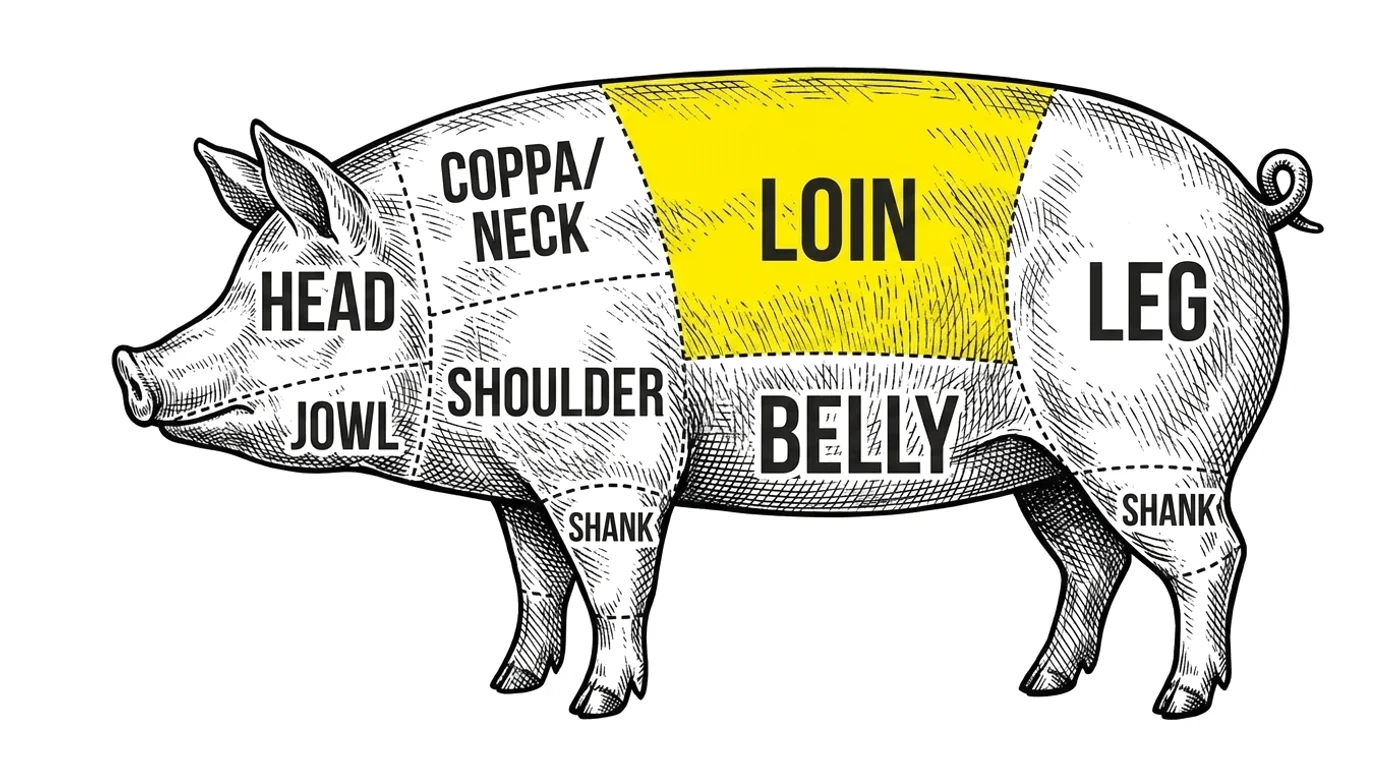
The cut
How to recognise it
Tender cooked loin pieces with garlic, oregano, pepper and paprika aromas, surrounded by clear oil or lard. The meat should be fully cooked, moist and clean-smelling. A raw or grey centre, split filling, sourness, greasy purge or broken refrigeration is unacceptable.
- Shape and size
- Pieces of loin kept under fat
- Lean colour
- Cooked pork
- Fat and marbling
- Sealed under fat
- Casing
- Earthenware pot (orza)
- Surface bloom
- None
Origins and history
Lomo de orza belongs to the thrifty country kitchens of interior and southern Spain, above all Castilla-La Mancha, Castilla y Leon, Aragon and parts of Andalusia. It grew out of the matanza, the autumn pig slaughter, when a household needed to keep the year's meat sound long before refrigeration. Pieces of loin were seasoned, cooked slowly in fat and packed into a wide-mouthed earthenware jar called an orza, then sealed beneath a layer of lard that held back air and spoilage. Cooks lifted out portions through the winter as they were wanted, a habit of preserving pork in its own fat thought to predate French duck confit by a good many years. The method arose from the autumn pig slaughter, when households needed to preserve prime loin without refrigeration. The earthenware jar and fat layer reduced air exposure, but modern home production must treat the product as refrigerated cooked meat rather than a shelf-stable preserve. Legends and commercial origin stories are identified as such rather than used as proof of the current specification.
Name. Lomo, 'loin'; orza, the earthenware pot it is preserved in.
- Production today
- A home and artisan tradition across the south.
- Protection
- Not EU-protected (a traditional preserve).
- Tradition vs modern
- A confit-style fat preserve, not a dry cure.
- Seasonality
- Traditionally the winter matanza, kept through the year.
Serving and cultural significance
The loin is first marinated in an adobo of garlic, sweet pimenton, oregano and other warm spices, then poached gently in fat or olive oil until tender rather than dried hard. Slices are usually warmed briefly in a pan and eaten hot, or brought to room temperature and served as a tapa, dressed with a little pimenton, sea salt and a thread of olive oil. In the south it is sometimes potted in coloured lard, manteca colora, and spread straight onto bread. Remove any implication that a fat seal alone makes the product shelf stable. The Curesmith method is a refrigerated cooked preserve with no curing salt. it shows how place, material and process create identity. The reader can compare authenticity, legal status and practical home safety without confusing them. Warm only the portion needed, and use the seasoned fat with potatoes or vegetables while the jar remains within the same refrigerated shelf life.
Recipe and cure
This is not a finished recipe. It is a window into how this meat is traditionally cured. Before you follow any process, please run it through one of our curing calculators, so the salt, cure and timings are right and safe for your own batch.
Make this — the measured Curesmith version →The cure below is the traditional reference. “Make this” opens the measured Curesmith home recipe, scaled to your batch.
Traditional or protected production
Lomo de Orza is a cooked pork preparation rather than a raw cured meat. Loin pieces are marinated with garlic, herbs, paprika or vinegar, cooked in oil or lard and historically stored in an earthenware orza beneath a fat seal.
- Meat
- pork
- Salt (%)
- 2
- Curing salt
- None; a confit-style preserve under fat
- Fermented
- No
- Smoked
- No
- Target aW or weight loss
- cooked, not dried
- Temperature (°C)
- cooked through to a safe core temperature
- Humidity (%)
- n/a
- Maturation
- cooked, then kept under fat
- Basis
- per 1000 g green meat
- Style
- Traditional, cooked
Ingredients
- pork loin, in pieces (base)100% · 1000 g/kg
- sea salt1.8% · 18 g/kg
- garlic0.4% · 4 g/kg
- spices (oregano, pepper, paprika)0.4% · 4 g/kg
- olive oil or lard (to cover)30% · 300 g/kg
Method
- Season the pork pieces.
- Fry or slow-cook gently until done.
- Pack into an earthenware pot (orza).
- Cover with lard or oil and keep cool.
Notes
- This is a cooked product. It must be cooked through before eating. Where a cure is used it is Cure #1 (nitrite), suited to the shorter, cooked process rather than long drying.
In the Codex
What this product teaches, and where to read more.
Temple. Pillar, Meat Quality