
Lonzo de Corse / Lonzo de Corse – Lonzu
Also known as Lonzo de Corse, Lonzo de Corse – Lonzu
Corsica (regional), Corsica, France
Lean, fine and mountain-scented, the loin of the Corsican cured trio.
Overview
Lonzo de Corse, or Lonzu, is the protected Corsican loin cure. The lean loin is salted, peppered, cased and matured with a strip of fat left along one side, creating a cleaner, less marbled slice than Coppa de Corse while retaining the island's Nustrale pig character.
Where it's from
Climate. The Corsican mountains, where island pigs range on chestnuts and acorns.
Altitude. Corsican mountains
The cut
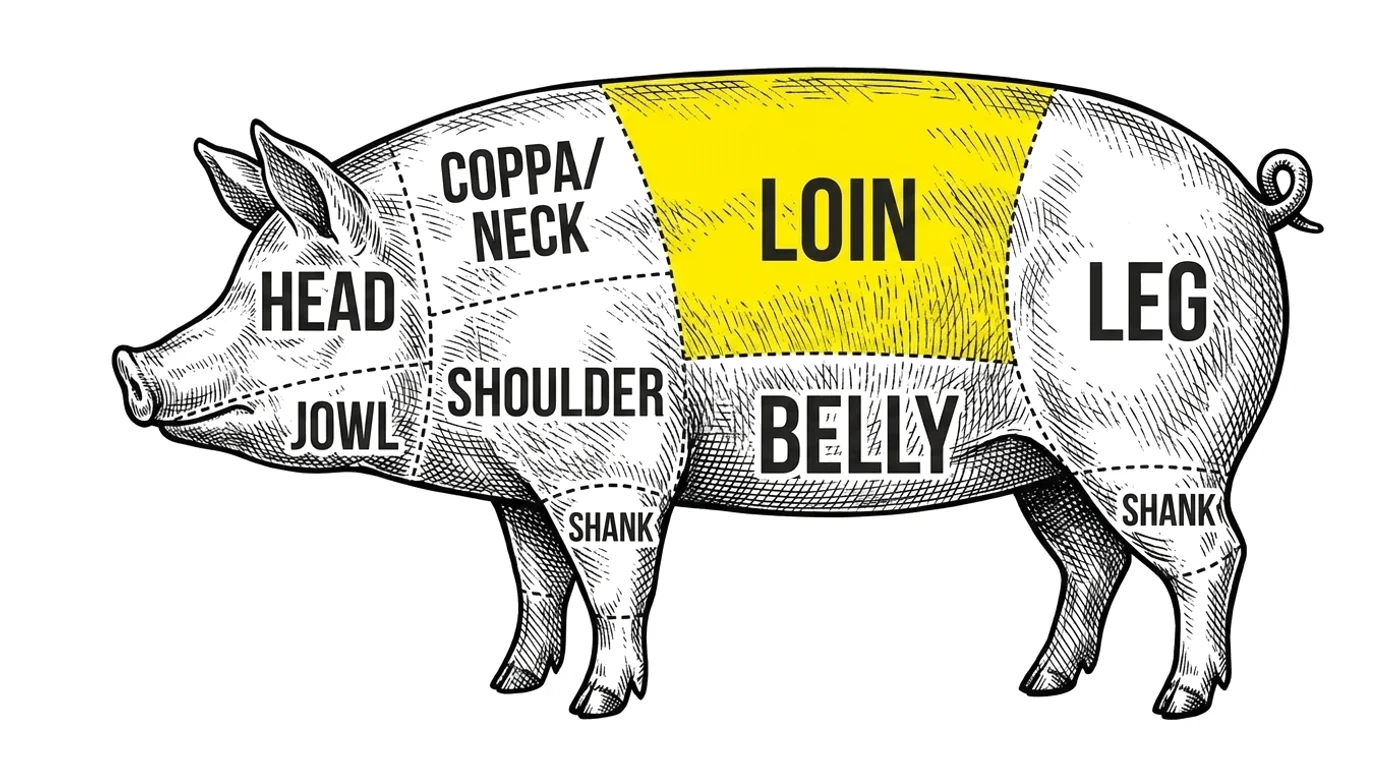
How to recognise it
The whole piece is compact and cylindrical, cased and tied, with a lean red slice bordered by a deliberate white fat strip. Pepper is clear and smoke is not dominant. Excessive dryness, grey centre meat, rancid edge fat or air beneath the casing are faults.
- Shape and size
- Cured pork loin, cylindrical
- Lean colour
- Deep red
- Fat and marbling
- Lean, thin fat cap
- Casing
- Hog casing, about 55 to 75 mm
- Surface bloom
- Possible
Origins and history
Corsican winter slaughter divided the pig according to muscle, fat and time. The loin was lean and valuable, so families cured it as a compact whole piece that could mature faster than a ham. A protective fat strip helped prevent excessive drying, while pepper and casing guarded the surface. The Nustrale pig's outdoor life among chestnut, oak and maquis gave even this lean cut a distinctive aroma. During the twentieth century imported pork and generic lonzo threatened the island identity. Breed recovery and producer organisation led to AOC and then European PDO protection in 2014. Lonzo de Corse therefore remains legally separate from the newer Île de Beauté PGI products introduced for a broader Corsican charcuterie chain.
Name. Lonzu, the Corsican word for the cured loin.
- Production today
- Corsican AOP producers.
- Protection
- AOP; from island pigs.
- Tradition vs modern
- Free-range island pigs and mountain ageing.
- Seasonality
- Winter slaughter.
Compare with. Coppa de Corse / Coppa de Corse – Coppa di Corsica, Jambon sec de Corse / Jambon sec de Corse – Prisuttu
Serving and cultural significance
Slice thinly and serve before fattier coppa or prisuttu on a Corsican charcuterie board. Pair with bread, brocciu, figs, chestnuts and light red wine. It can also be laid over warm bread or polenta so the protective fat strip softens without cooking the lean.
Recipe and cure
This is not a finished recipe. It is a window into how this meat is traditionally cured. Before you follow any process, please run it through one of our curing calculators, so the salt, cure and timings are right and safe for your own batch.
Curesmith home adaptation — not designation-compliant
Make this — the measured Curesmith version →The cure below is the traditional reference. “Make this” opens the measured Curesmith home recipe, scaled to your batch.
Traditional or protected production
The AOP uses qualifying Corsican-breed loin, protected husbandry and processing in Corsica. The muscle is trimmed with its characteristic fat cover, salted, peppered, cased and matured. It is not the same legal product as Lonzo de l'Île de Beauté PGI.
Sea salt and black pepper, salt-box method; no fixed percentage.
- Meat
- pork
- Cut
- loin (eye of the loin)
- Salt (%)
- traditional, no fixed %
- Curing salt
- Sea salt only
- Fermented
- No
- Starter or mould
- Natural cellar mould possible
- Smoked
- Yes
- Target aW or weight loss
- ~ weight loss
- Temperature (°C)
- cold salting, then 10 to 15
- Humidity (%)
- 70 to 80
- Maturation
- a few months
- Basis
- percentage of green meat weight
- Style
- Traditional dry salting (salt-box)
Method
- Salt and season the cut by the traditional method and rest cold so the salt draws through.
- Wash or brush off surface salt and begin the slow dry.
- Case or hang as the style requires.
- Age to the target loss, judging by weight.
Notes
- The official protected specification controls the named product. Any Curesmith EQ, starter-culture, curing-salt or home-scale adaptation is a separate method and must not be presented as designation-compliant.
- A more efficient way of curing this product is using the EQ Method. No more than 2.5% salt to meat weight is required. To follow the EQ method, please use our whole-muscle EQ curing calculator to work out proper ratios and curing times.
In the Codex
What this product teaches, and where to read more.
Temple. Pillar, Meat Quality