
Magret de canard séché
Gascony, Nouvelle-Aquitaine/Occitanie, France
Deep red duck breast rimmed with fat, salt-cured and air-dried, sliced thin.
Overview
Magret de canard séché is deep red duck breast rimmed with fat, salt-cured and air-dried, sliced thin. Deep red duck breast beneath a clean white fat cap, sliced thinly. The meat should be firm but not hard, and the fat should smell sweet and fresh. The Codex treats the product as a complete curing or cooking system, not simply a famous name. Raw material, cut or particle size, casing, smoke, fermentation, heat treatment and maturation all contribute to the result. The current legal or quality status is Generic French speciality : no EU GI. The source tradition and the Curesmith home method are kept separate.
Where it's from
Climate. South-west France, duck and foie-gras country.
Altitude. Gascony and Perigord
The cut
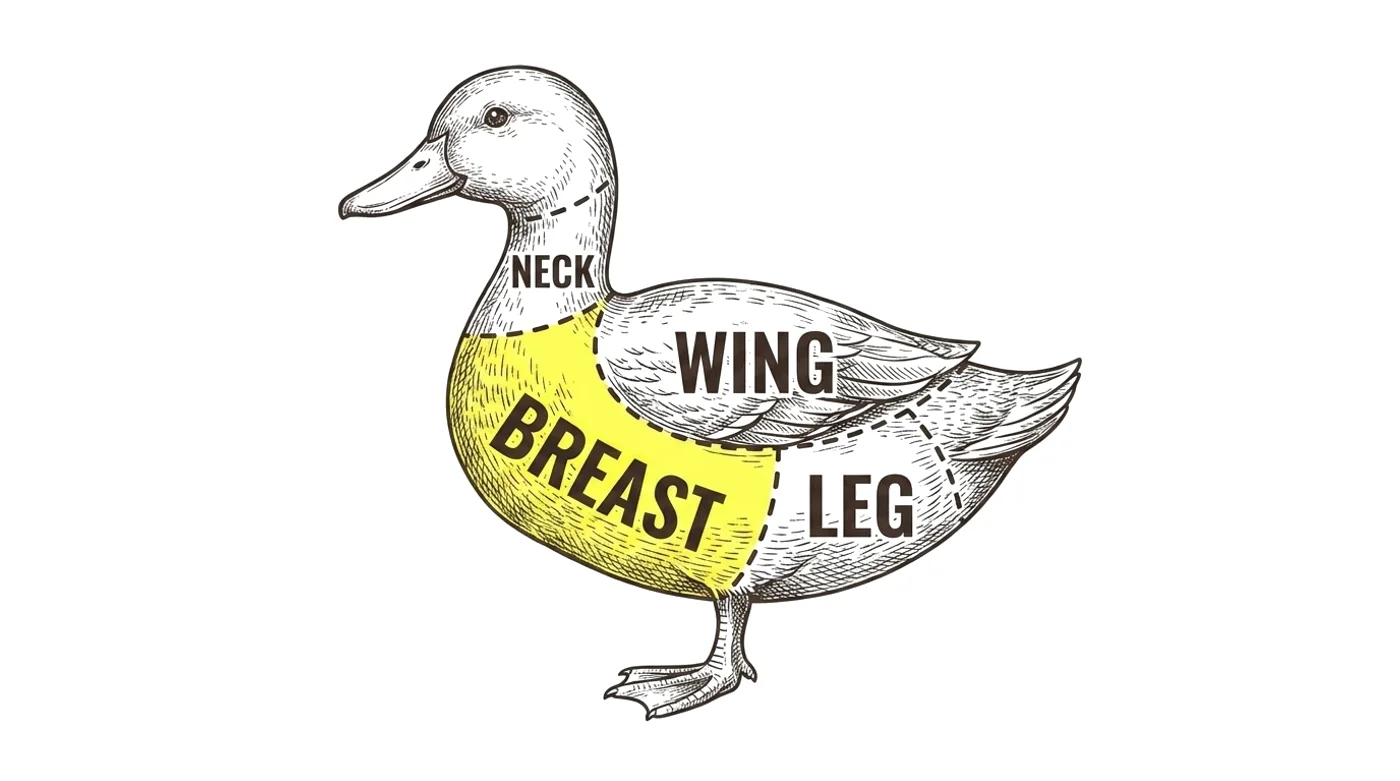
How to recognise it
Deep red duck breast beneath a clean white fat cap, sliced thinly. The meat should be firm but not hard, and the fat should smell sweet and fresh. A hard outer ring, wet grey centre, rancid fat, sourness or air beneath casing indicates an uneven cure.
- Shape and size
- Cured duck breast, sliced thin
- Lean colour
- Deep red
- Fat and marbling
- Ring of white fat
- Casing
- None
- Surface bloom
- Possible
Origins and history
Dried duck breast, a simple and elegant cure of south-west France's duck country, where the fatty magret from foie-gras ducks is buried in salt for a day, rinsed, peppered and air-dried for a week or two. Sliced thin, it shows a ring of white fat around deep red meat. It is one of the easiest home cures to attempt well, and a modern bistro favourite. The widespread availability of fatty magret in south-western duck country made it a natural small-scale cure. Because the muscle is small and surrounded by a thick fat cap, it can be prepared far more quickly than a ham. Legends and commercial origin stories are identified as such rather than used as proof of the current specification.
Name. Magret, the breast of a fattened duck; seche, 'dried'.
- Production today
- Home and artisan across the south-west.
- Protection
- Not EU-protected as a general name.
- Tradition vs modern
- A simple salt-and-dry cure.
- Seasonality
- Traditionally the duck season.
Serving and cultural significance
Sliced thin in salads or on a board. Replace salt burial with a measured short EQ cure using Cure #1. Refrigeration remains part of storage and service. it shows how place, material and process create identity. The reader can compare authenticity, legal status and practical home safety without confusing them. Cut thinly across the grain and include some fat cap, pairing it with walnuts, salad, figs or a sharp fruit dressing.
Recipe and cure
This is not a finished recipe. It is a window into how this meat is traditionally cured. Before you follow any process, please run it through one of our curing calculators, so the salt, cure and timings are right and safe for your own batch.
Make this — the measured Curesmith version →The cure below is the traditional reference. “Make this” opens the measured Curesmith home recipe, scaled to your batch.
Traditional or protected production
Magret de canard séché is a duck breast, normally from a foie-gras type duck, cured with salt and pepper and dried for a short period. It is a generic speciality rather than a protected name.
Coarse sea salt (to bury the breast), black pepper; no fixed percentage.
- Meat
- duck
- Salt (%)
- buried in salt, then dried
- Curing salt
- Sea salt (buried), then black pepper
- Fermented
- No
- Starter or mould
- Possible
- Smoked
- No
- Target aW or weight loss
- ~ weight loss
- Temperature (°C)
- fridge to 12
- Humidity (%)
- 70 to 80
- Maturation
- 1 to 2 weeks
- Basis
- percentage of green meat weight
- Style
- Salt-buried, then air-dried
Method
- Bury the duck breast in coarse salt for about a day.
- Rinse and pat dry, then coat with pepper.
- Wrap loosely and hang to dry for one to two weeks.
- Slice thin when firm.
Notes
- A more efficient way of curing this product is using the EQ Method. No more than 2.5% salt to meat weight is required. To follow the EQ method, please use our whole-muscle EQ curing calculator to work out proper ratios and curing times.
In the Codex
What this product teaches, and where to read more.
Temple. Foundation, Time