
Pancetta di Calabria
Calabria (regional), Calabria, Italy
Streaky and warm with chilli, drier and more assertive than the northern pancette.
Overview
Pancetta di Calabria is a flat, rind-on cured belly seasoned with pepper or chilli and matured without being rolled. The rectangular slab displays alternating red lean and white fat beneath a paprika- or pepper-coloured surface.
Where it's from
Climate. Calabria.
Altitude. Calabrian hills
The cut
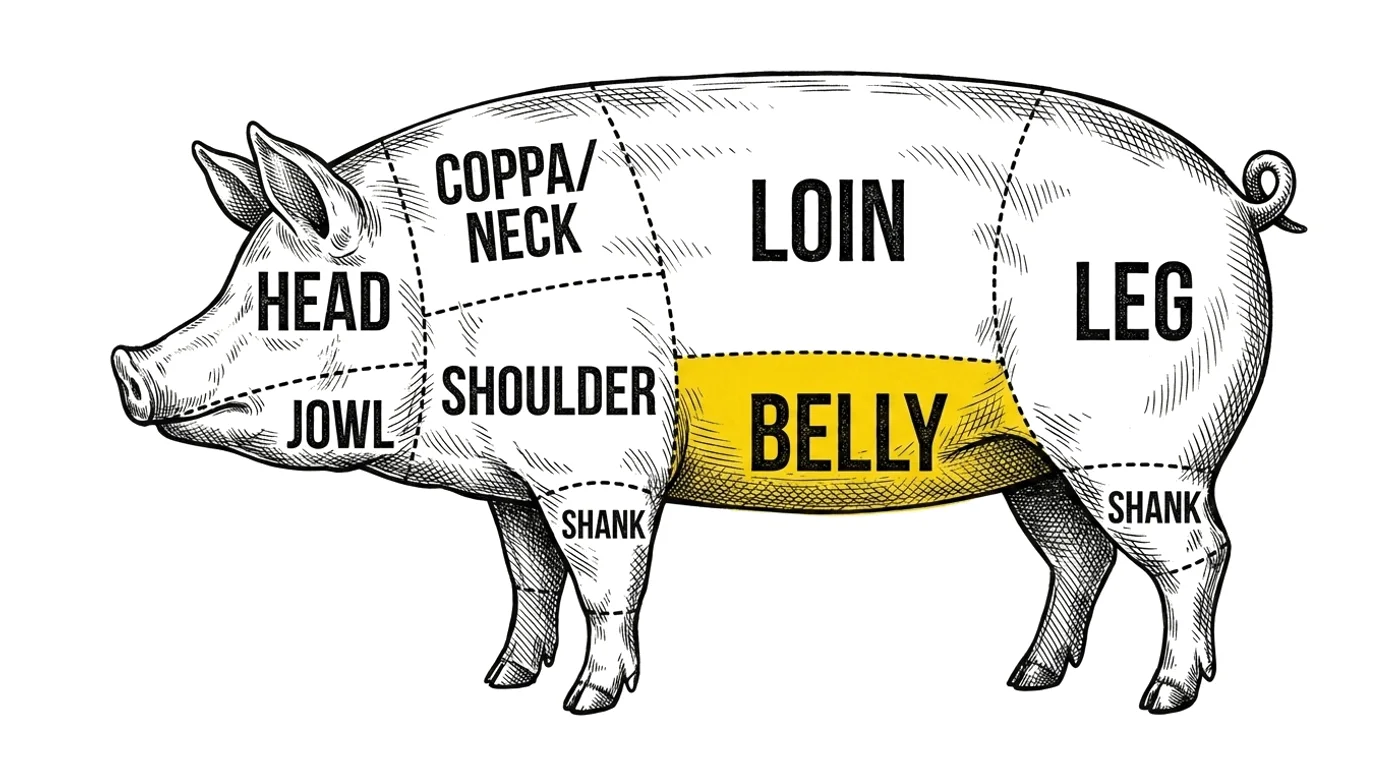
How to recognise it
The piece is rectangular and flat, normally with rind, and the cut face shows alternating layers of pink-red lean and white fat. The seasoned exterior may be red from chilli. The fat should smell sweet and remain firm, not oily or yellow. Rancidity, sourness, wet internal pockets or a dried hard edge are defects.
- Shape and size
- Flat or rolled belly, chilli-rubbed
- Lean colour
- Red streaks
- Fat and marbling
- White layers
- Casing
- Natural casing possible
- Surface bloom
- Possible
Origins and history
Belly was one of the most useful products of the Calabrian pig because it supplied both meat and cooking fat. Rather than rolling every slab, households often left the belly flat, salted it, rubbed it with local pepper or chilli and hung it in the cool season. The format dried more quickly than a tight roll and could later be cut into slices, cubes or seasoning pieces. The adoption of chilli after the Columbian exchange gave the Calabrian product a colour and flavour that separated it from the plainer pancettas of northern Italy. PDO protection placed this everyday farmhouse staple beside the region's better-known sausages and whole neck cure.
Name. Pancetta, from pancia, 'belly'.
- Production today
- Consortium producers in Calabria.
- Protection
- DOP.
- Tradition vs modern
- Traditional chilli rub.
- Seasonality
- Winter slaughter.
Compare with. Pancetta Piacentina
Serving and cultural significance
Slice it thinly for antipasti, crisp it gently with eggs or vegetables, or cut it into cubes for beans, pasta and stews. Chilli-seasoned Pancetta di Calabria is especially effective as a cooking ingredient because the rendered fat carries its spice through the whole dish.
Recipe and cure
This is not a finished recipe. It is a window into how this meat is traditionally cured. Before you follow any process, please run it through one of our curing calculators, so the salt, cure and timings are right and safe for your own batch.
Curesmith home adaptation — not designation-compliant
Make this — the measured Curesmith version →The cure below is the traditional reference. “Make this” opens the measured Curesmith home recipe, scaled to your batch.
Traditional or protected production
Pancetta di Calabria is made from pork belly, dry salted and seasoned with pepper or chilli. It is matured flat rather than rolled, producing a streaky protected product with the stronger seasoning associated with Calabrian charcuterie.
- Meat
- pork
- Salt (%)
- 2.8
- Curing salt
- Cure #2 at 2.5 g/kg (0.25%)
- Fermented
- No
- Smoked
- No
- Target aW or weight loss
- ~ weight loss
- Temperature (°C)
- 12 to 15
- Humidity (%)
- 70 to 80
- Maturation
- 6 to 10 weeks
- Basis
- percentage of green meat weight
- Style
- Traditional dry salting
Ingredients
- sea salt2.8% · 28 g/kg
- Calabrian chilli1.5% · 15 g/kg
- black pepper0.3% · 3 g/kg
Method
- Salt and season the cut and rest cold.
- Rest so the cure draws through.
- Roll or hang as the style requires.
- Dry and age to the target loss.
Notes
- The official protected specification controls the named product. Any Curesmith EQ, starter-culture, curing-salt or home-scale adaptation is a separate method and must not be presented as designation-compliant.
- A more efficient way of curing this product is using the EQ Method. No more than 2.5% salt to meat weight is required. To follow the EQ method, please use our whole-muscle EQ curing calculator to work out proper ratios and curing times.
In the Codex
What this product teaches, and where to read more.
Temple. Foundation, Time