
Papada en adobo
Also known as Papada adobada, Papada en Adobo
Nationwide, Spain
The salt-cured jowl, dressed in garlic and pimenton adobo.
Overview
Papada en Adobo is a triangular or irregular jowl with a red paprika coating, broad white fat and dark cheek-muscle seams. the aroma is garlic, oregano and pimentón.
Where it's from
Climate. A pan-Spanish preparation of the pig's jowl.
The cut
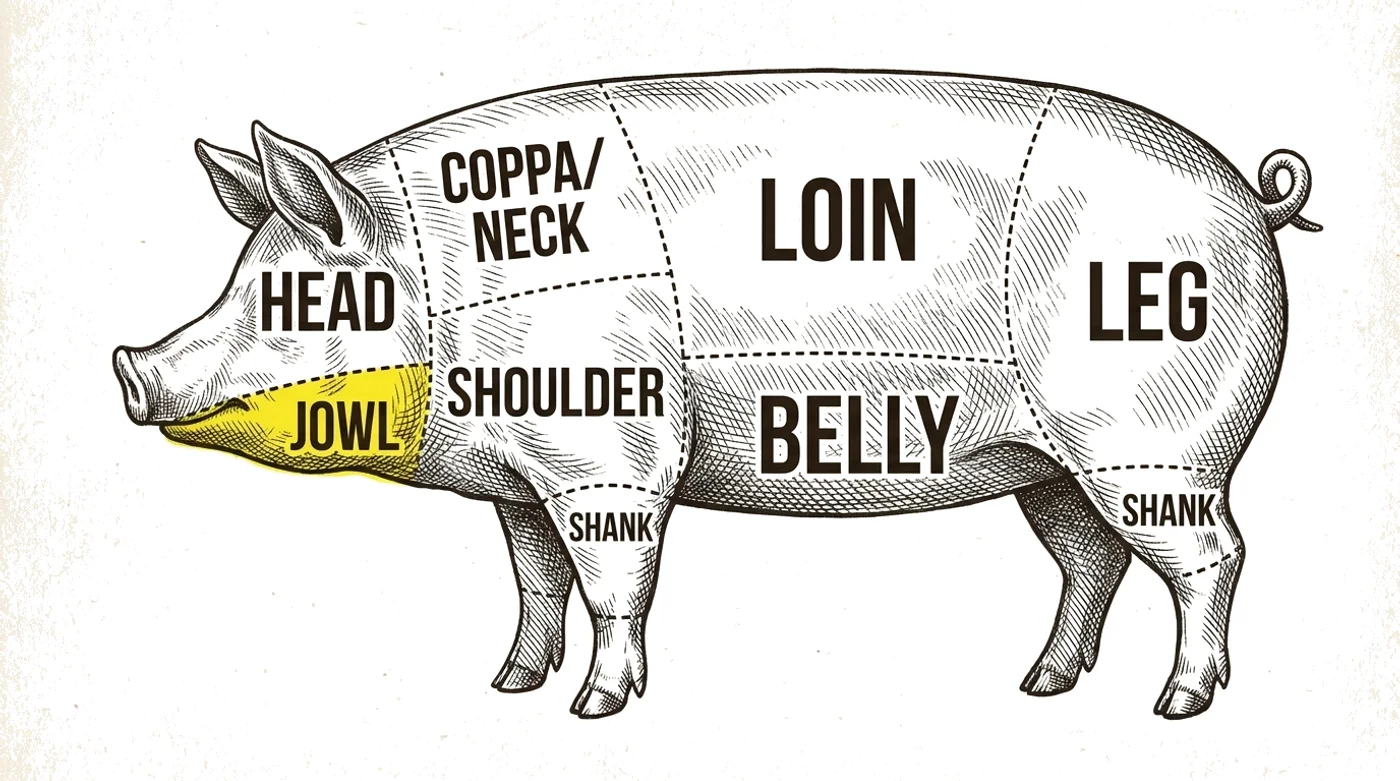
How to recognise it
A triangular or irregular jowl with a red paprika coating, broad white fat and dark cheek-muscle seams. The aroma is garlic, oregano and pimentón. A hard dry rim, wet or grey centre, rancid fat, sourness, insect damage or uncontrolled mould indicates an unsafe or uneven cure.
- Shape and size
- Flat jowl slab
- Lean colour
- Streaky pink
- Fat and marbling
- Rich fat with lean seams
- Casing
- None
- Surface bloom
- Pimenton-red surface
Origins and history
The papada is the pig's jowl, the fatty throat and cheek streaked with lean, long treated as a cook's cut rather than a prize. Across Spain it was preserved much as the loin was: rubbed with salt for a few days, then dressed in an adobo of garlic and pimenton and left to mature in cool, dry air. The paprika stains the surface a deep brick red and, together with the garlic, helps guard the outside of the piece as it dries. It belongs to the thrift of the matanza, the winter pig killing when nothing was wasted, and the finest examples come from the Iberian pig country around Salamanca. The jowl's dense muscle and firm fat made it suited to paprika-rich adobo. Rural households used it both as a cured slicing product and as a flavouring meat in stews. The jowl's alternating cheek muscle and soft fat made it valuable for both winter preservation and later cooking, especially where pimentón and garlic already defined the household adobo.
Name. Papada, the jowl or double chin; adobo, the marinade.
- Production today
- A home and regional preparation.
- Protection
- Unprotected.
- Tradition vs modern
- Traditional salt-and-adobo cure.
- Seasonality
- Winter matanza.
Compare with. Lardo di Colonnata
Serving and cultural significance
Slice thinly for a cured plate only after verified drying and water activity, or cut thicker pieces and cook them with beans, potatoes and greens. Slow heat renders the jowl fat and releases the pimentón without scorching it.
Recipe and cure
This is not a finished recipe. It is a window into how this meat is traditionally cured. Before you follow any process, please run it through one of our curing calculators, so the salt, cure and timings are right and safe for your own batch.
Make this — the measured Curesmith version →The cure below is the traditional reference. “Make this” opens the measured Curesmith home recipe, scaled to your batch.
Traditional or protected production
Papada en adobo is pork jowl seasoned with salt, pimentón, garlic, oregano and wine or vinegar, then held, dried or cooked according to the local style. The Atlas entry is defined as the dry-cured charcuterie form.
- Meat
- pork
- Cut
- jowl (papada), cleaned
- Salt (%)
- 5.25
- Curing salt
- Optional Cure #2
- Other agents
- sherry; adobo paste
- Fermented
- No
- Smoked
- No
- Target aW or weight loss
- firm, part-dried
- Temperature (°C)
- cool
- Humidity (%)
- 70 to 80
- Maturation
- cure, then adobo and a short dry
- Basis
- per 1000 g green meat
- Style
- Salt-cured, sherry and adobo coat
Ingredients
- coarse sea salt5.25% · 52.5 g/kg
- sugar1.75% · 17.5 g/kg
- fino/oloroso sherry5% · 50 g/kg
- Cure #2 (optional)0.3% · 3 g/kg
- adobo coat: kosher salt1.4% · 14 g/kg
- adobo coat: pimentón dulce1.5% · 15 g/kg
Method
- Clean and weigh the jowl.
- Cure in the salazon with a splash of sherry.
- Coat in the adobo paste.
- Dry briefly until firm.
Notes
- The jowl is very fatty, so watch for rancidity and keep it cool and dark.
- Two salt sources appear, the salazon and the adobo paste, so count total salt when balancing.
In the Codex
What this product teaches, and where to read more.
Temple. Roof, Water Activity