
Prosciutto di cinghiale
-, Central Apennines, Italy
Dark, lean and gamey, a robust wild boar ham of the Apennine hunting country.
Overview
Prosciutto di cinghiale is dark, lean and gamey, a robust wild boar ham of the apennine hunting country. A relatively small, dark-red ham with little fat and a pronounced game, juniper and herb aroma. It should be firm and evenly cured, not dry and black at the edge with a wet centre.
Where it's from
Climate. The wooded central Apennines, boar country.
Altitude. Apennine hills and forest
The cut
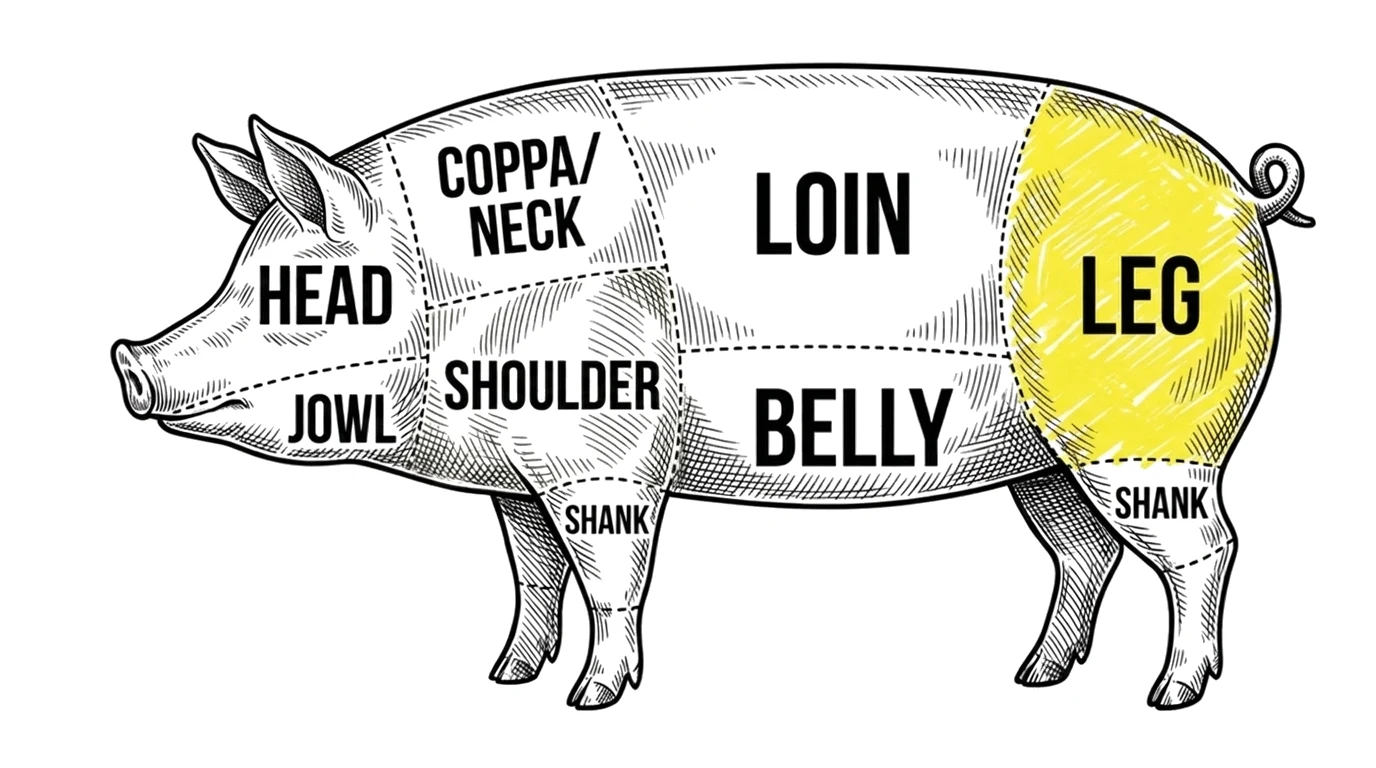
How to recognise it
A relatively small, dark-red ham with little fat and a pronounced game, juniper and herb aroma. It should be firm and evenly cured, not dry and black at the edge with a wet centre. Shape and size: Small dark leg. Lean colour: Very dark red. Fat and marbling: Lean, little fat. Casing or exterior: None. Surface: Cellar mould. The form is small dark leg. the lean is very dark red. the fat or marbling is lean, little fat. and the exterior uses none. A hard dry rim, wet grey centre, rancid fat, sourness or air beneath a casing indicates an uneven or contaminated cure.
- Shape and size
- Small dark leg
- Lean colour
- Very dark red
- Fat and marbling
- Lean, little fat
- Casing
- None
- Surface bloom
- Cellar mould
Origins and history
A wild boar ham of the central Apennines, cured in the manner of a small pork prosciutto but from leaner, darker, gamier meat. The boar's diet of acorns, roots and chestnuts gives a robust, aromatic ham, and its smaller legs cure faster than a domestic pig's. It is a speciality of the hunting country of Tuscany, Umbria and the Marche.
Wild boar has long been part of the hunting culture of the Apennines. Curing the hind leg applied familiar prosciutto techniques to darker, leaner game meat. Modern safety changes the traditional story: every carcass intended for raw or undercooked service must come through the required veterinary and Trichinella controls.
Name. Prosciutto, 'thoroughly dried'; cinghiale, 'wild boar'.
- Production today
- Small producers in central Italian hunting country.
- Protection
- Not EU-protected as a general name.
- Tradition vs modern
- Game-meat curing, herb-forward.
- Seasonality
- Tied to the boar-hunting season.
Compare with. Jamón Serrano
Serving and cultural significance
Sliced thin, robust and gamey, with sharp cheese. Fruit, chestnut bread and a modest red wine soften the game character, but strong smoke or heavy mustard can make the lean taste harsh. Thin slicing is important because the lean game muscle can otherwise seem tough and excessively intense.
Recipe and cure
This is not a finished recipe. It is a window into how this meat is traditionally cured. Before you follow any process, please run it through one of our curing calculators, so the salt, cure and timings are right and safe for your own batch.
Make this — the measured Curesmith version →The cure below is the traditional reference. “Make this” opens the measured Curesmith home recipe, scaled to your batch.
Traditional or protected production
Prosciutto di cinghiale is a generic cured wild-boar leg rather than a single protected product. Regional versions use salt, pepper, juniper, garlic and woodland herbs. The smaller, leaner leg dries faster than domestic pork and is vulnerable to excessive hardening.
The reference process can be summarised as follows: Traditional practice trims and dry salts a tested wild-boar leg, applies juniper and herbs and matures it in cool conditions. There is no generic EU specification, and legal game-inspection and parasite-testing rules take precedence.
Sea salt, juniper, black pepper, garlic and herbs, salt-box method; no fixed percentage.
- Meat
- wild boar
- Salt (%)
- traditional, no fixed %
- Curing salt
- Sea salt with juniper, pepper and herbs
- Fermented
- No
- Starter or mould
- Cellar mould
- Smoked
- No
- Target aW or weight loss
- ~ weight loss
- Temperature (°C)
- cold salting, then 12 to 15
- Humidity (%)
- 75 to 80
- Maturation
- a few months to a year
- Basis
- percentage of green meat weight
- Style
- Traditional dry salting (salt-box)
Method
- Salt and season by the traditional method and rest cold.
- Case or hang as the style requires.
- Age in the cellar air.
- Age to the target loss.
Notes
- A more efficient way of curing this product is using the EQ Method. No more than 2.5% salt to meat weight is required. To follow the EQ method, please use our whole-muscle EQ curing calculator to work out proper ratios and curing times.
In the Codex
What this product teaches, and where to read more.
Temple. Pillar, Meat Quality