
Prosciutto di Norcia
Norcia, Umbria, Italy
Robust and full-flavoured, firmer and more savoury than the plains hams, shaped by cold mountain air.
Overview
Prosciutto di Norcia is the high-Apennine ham of south-eastern Umbria. It is rounded and pear-shaped, compact in the slice and gently fragrant, with pepper used on the exposed surface. The ham's reputation is inseparable from Norcia's wider tradition of specialist pork butchers, the norcini.
Where it's from
Climate. The Valnerina mountains around Norcia in Umbria, cold and dry.
Altitude. Umbrian mountains, higher and colder
The cut
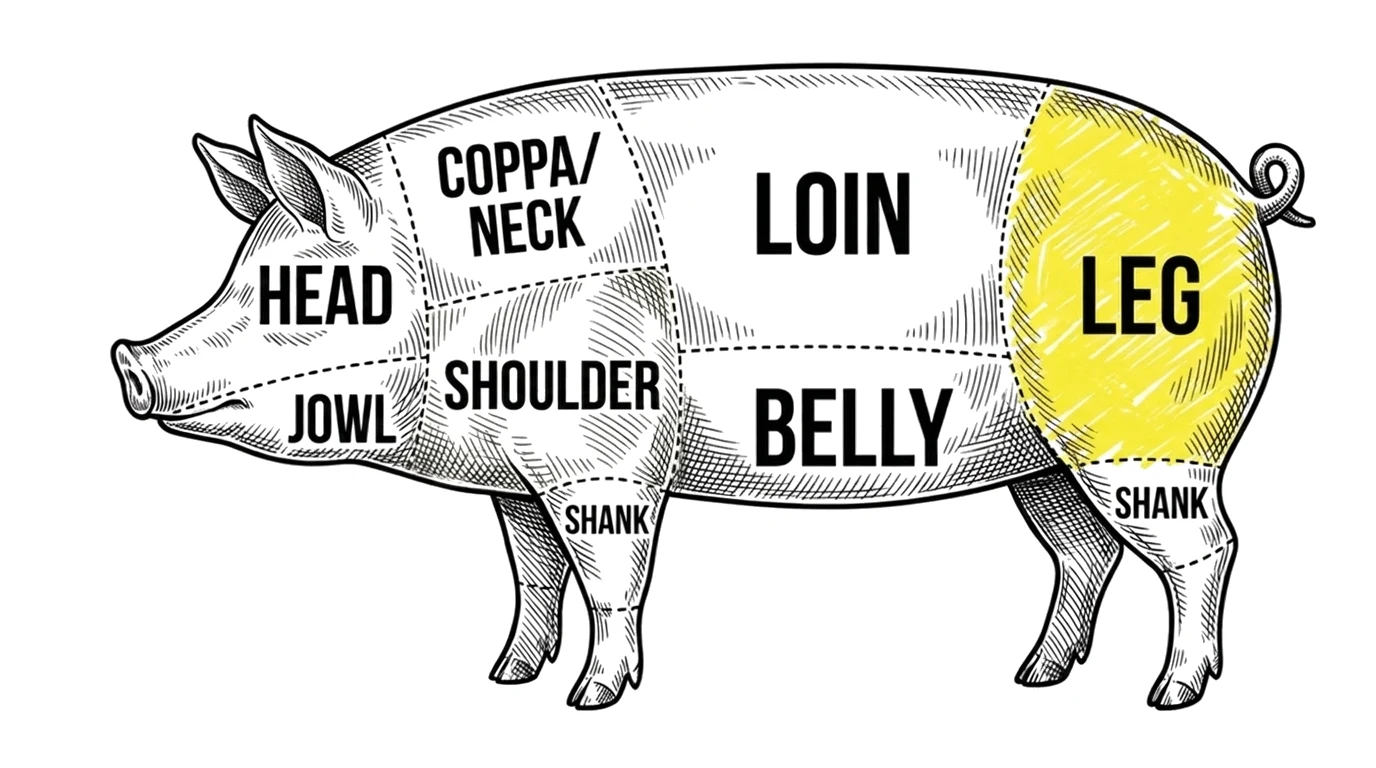
How to recognise it
The ham has a characteristic rounded pear shape and weighs at least the protected minimum. The slice is pink to red, compact and moderately marbled, with a savoury but not excessively salty taste. Pepper may be visible on the surface. The consortium brand and traceability seal identify the PGI product. Grey bone pockets, sourness or rancid fat are faults.
- Shape and size
- Large leg with the characteristic pointed pear trim
- Lean colour
- Deep red
- Fat and marbling
- White
- Casing
- None
- Surface bloom
- None
Origins and history
Norcia and neighbouring Preci developed a celebrated pork-butchery culture in a mountain economy where winter slaughter, salt and cold dry air made preservation essential. Men from the area travelled seasonally to Italian cities as specialist butchers, and the word norcino became a general term for a pork butcher or charcutier. Local accounts also connect the craft with the practical anatomical knowledge of monastic and lay schools around Preci, although the precise relationship is complex. Ham remained one of the most valuable outputs of the pig. The PGI production area is restricted to municipalities above 500 metres. Protection was obtained in the 1990s, and a later specification introduced stronger traceability, including a dated metal seal at the start of processing.
Name. Prosciutto, 'thoroughly dried'; Norcia itself gives Italian the word norcino, a pork butcher, and norcineria, pork butchery.
- Production today
- Consortium producers around Norcia.
- Protection
- IGP; the pointed 'pera' trim is a mark.
- Tradition vs modern
- Mountain-air ageing.
- Seasonality
- Year-round.
Compare with. Prosciutto Amatriciano
Serving and cultural significance
Slice thinly and serve with Umbrian bread, lentils, pecorino, figs or simple vegetables. It also belongs in antipasti with other norcineria products and works beside grilled mushrooms or bitter greens. Add it late to warm dishes so the lean remains tender rather than becoming salty and hard.
Recipe and cure
This is not a finished recipe. It is a window into how this meat is traditionally cured. Before you follow any process, please run it through one of our curing calculators, so the salt, cure and timings are right and safe for your own batch.
Curesmith home adaptation — not designation-compliant
Make this — the measured Curesmith version →The cure below is the traditional reference. “Make this” opens the measured Curesmith home recipe, scaled to your batch.
Traditional or protected production
PGI production uses qualifying pig legs and occurs in the high municipalities defined by the specification. The legs are trimmed, salted, rested, washed, dried and matured for at least twelve months. Pepper is traditionally applied to the exposed surface. Current controls require traceability from the beginning of processing through final branding.
Sea salt, salt-box method; no fixed percentage.
- Meat
- pork
- Salt (%)
- traditional, no fixed %
- Curing salt
- Sea salt only, no nitrate (per DOP)
- Fermented
- No
- Smoked
- No
- Target aW or weight loss
- ~28 to 30% weight loss
- Temperature (°C)
- cold salting, then 12 to 15
- Humidity (%)
- 70 to 80
- Maturation
- 12 months and up
- Basis
- percentage of green meat weight
- Style
- Traditional dry salting (salt-box)
Method
- Salt the leg by feel in the traditional method and rest cold so the salt draws through.
- Wash off the surface salt and begin the slow dry.
- Seal the exposed face with sugna once a crust forms.
- Age to the target weight loss, judging by weight and aroma.
Notes
- The official protected specification controls the named product. Any Curesmith EQ, starter-culture, curing-salt or home-scale adaptation is a separate method and must not be presented as designation-compliant.
- A more efficient way of curing this product is using the EQ Method. No more than 2.5% salt to meat weight is required. To follow the EQ method, please use our whole-muscle EQ curing calculator to work out proper ratios and curing times.
In the Codex
What this product teaches, and where to read more.
Temple. Roof, Microclimate