
Prosciutto Toscano
Tuscany (regional), Tuscany, Italy
Robust and savoury, with a pronounced pepper-and-herb aroma and a firm bite, made to stand up to plain bread.
Overview
Prosciutto Toscano is darker, leaner and more assertively seasoned than the sweet hams of Parma and San Daniele. Tuscan heavy-pig legs are salted with pepper, garlic and local aromatic herbs, producing a firm red slice designed for the region's famously unsalted bread.
Where it's from
Climate. The Tuscan hills, drier and warmer, suiting a saltier, herb-rubbed cure.
Altitude. Tuscan hills
The cut
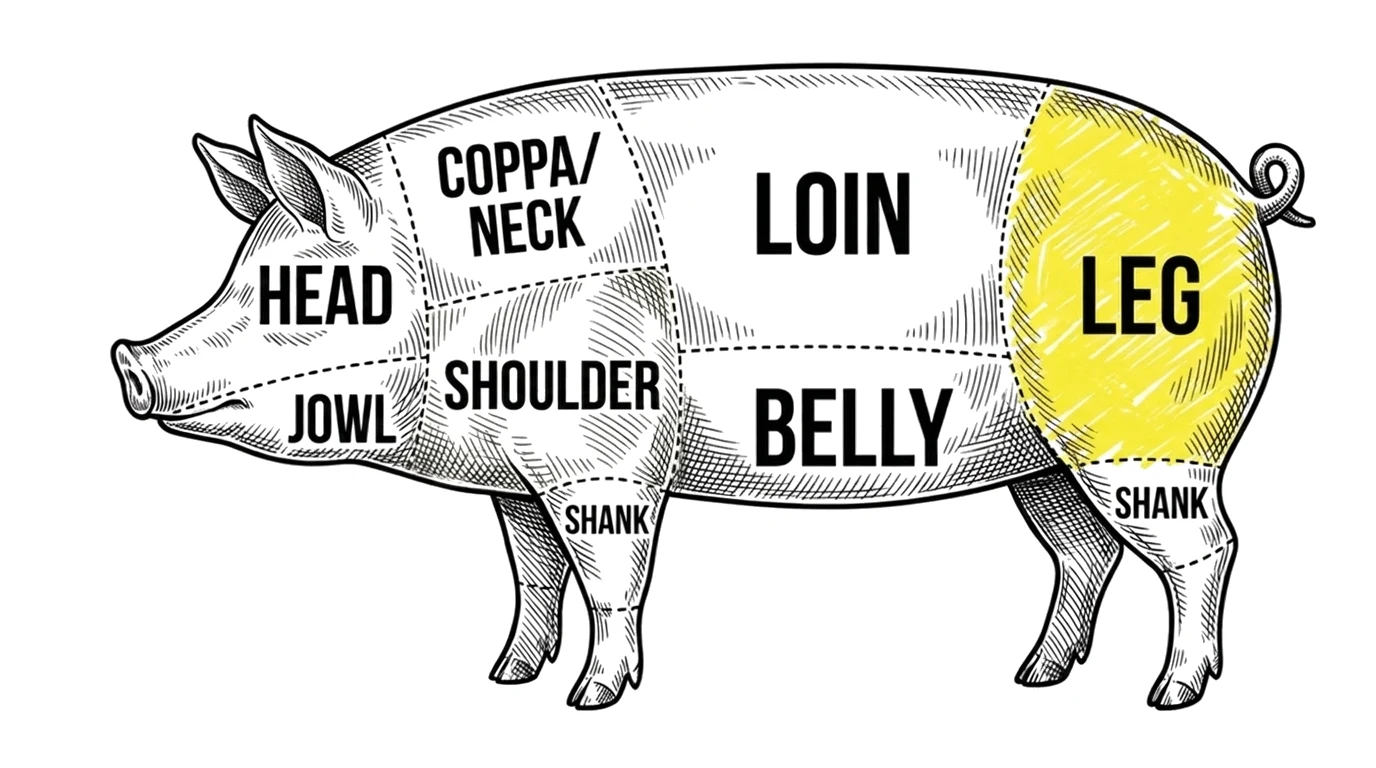
How to recognise it
The ham has a rounded shape and a dark seasoned exterior. The slice is crimson to dark red with relatively modest white fat and a compact texture. Pepper, garlic, juniper, rosemary and other herbs should be evident without tasting medicinal. The result is more savoury than Parma ham. Rancid fat, bitterness, excessive salt or a dry brown ring are defects.
- Shape and size
- Whole leg, robust, herb-flecked surface
- Lean colour
- Deep red
- Fat and marbling
- White
- Casing
- None
- Surface bloom
- None
Origins and history
Tuscan pig keeping reaches back to Etruscan and Roman agriculture, but the recognisable ham developed through farmhouse winter slaughter. Salt was valuable, pigs converted woodland and farm by-products into meat, and every family guarded its seasoning mixture. The contrast between savoury ham and pane sciocco, Tuscany's unsalted bread, became part of the regional table. Accounts often credit the Medici administration with regulating pork production and trade during the Renaissance; whether one decree created the modern ham is doubtful, but civic oversight confirms its economic importance. Producers formed the protection consortium in 1990, and Prosciutto Toscano received PDO recognition in 1996. The protected recipe preserves the use of pepper, garlic and native aromatic plants.
Name. Prosciutto, from the Latin perexsuctus, 'thoroughly dried'; Toscano for the region.
- Production today
- Consortium producers across Tuscany.
- Protection
- DOP; salt and a herb-pepper rub.
- Tradition vs modern
- The herb rub is the Tuscan signature kept under the DOP.
- Seasonality
- Year-round.
Compare with. Prosciutto di Parma
Serving and cultural significance
Serve thinly sliced with unsalted Tuscan bread, figs, melon, pecorino or white beans dressed with olive oil. The ham's seasoning is strong enough to stand beside bitter greens and grilled vegetables, but heavy mustard or smoke is unnecessary.
Recipe and cure
This is not a finished recipe. It is a window into how this meat is traditionally cured. Before you follow any process, please run it through one of our curing calculators, so the salt, cure and timings are right and safe for your own batch.
Curesmith home adaptation — not designation-compliant
Make this — the measured Curesmith version →The cure below is the traditional reference. “Make this” opens the measured Curesmith home recipe, scaled to your batch.
Traditional or protected production
PDO production uses fresh legs from qualifying Italian heavy pigs. The Tuscan processing area controls trimming, salting, seasoning and maturation. Salt is combined with pepper and a traditional blend that may include garlic, rosemary, juniper, myrtle or other permitted Tuscan aromatics. The protected ham matures for the required minimum before it is branded.
Sea salt with pepper, garlic and wild herbs (rosemary, sage, juniper), salt-box method; no fixed percentage.
- Meat
- pork
- Salt (%)
- traditional, no fixed %
- Curing salt
- Sea salt with a herb and pepper rub; no nitrate (per DOP)
- Fermented
- No
- Smoked
- No
- Target aW or weight loss
- ~28 to 30% weight loss
- Temperature (°C)
- cold salting, then 12 to 15
- Humidity (%)
- 70 to 80
- Maturation
- 12 to 18 months and up
- Basis
- percentage of green meat weight
- Style
- Traditional dry salting (salt-box)
Method
- Salt the leg by feel in the traditional method and rest cold so the salt draws through.
- Wash off the surface salt and begin the slow dry.
- Seal the exposed face with sugna once a crust forms.
- Age to the target weight loss, judging by weight and aroma.
Notes
- The official protected specification controls the named product. Any Curesmith EQ, starter-culture, curing-salt or home-scale adaptation is a separate method and must not be presented as designation-compliant.
- A more efficient way of curing this product is using the EQ Method. No more than 2.5% salt to meat weight is required. To follow the EQ method, please use our whole-muscle EQ curing calculator to work out proper ratios and curing times.
In the Codex
What this product teaches, and where to read more.
Temple. Foundation, Time