
Skerpikjøt
Also known as skerpikjot, ræst kjøt (semi-dried stage)
Torshavn, Faroe Islands, Faroe Islands
Overview
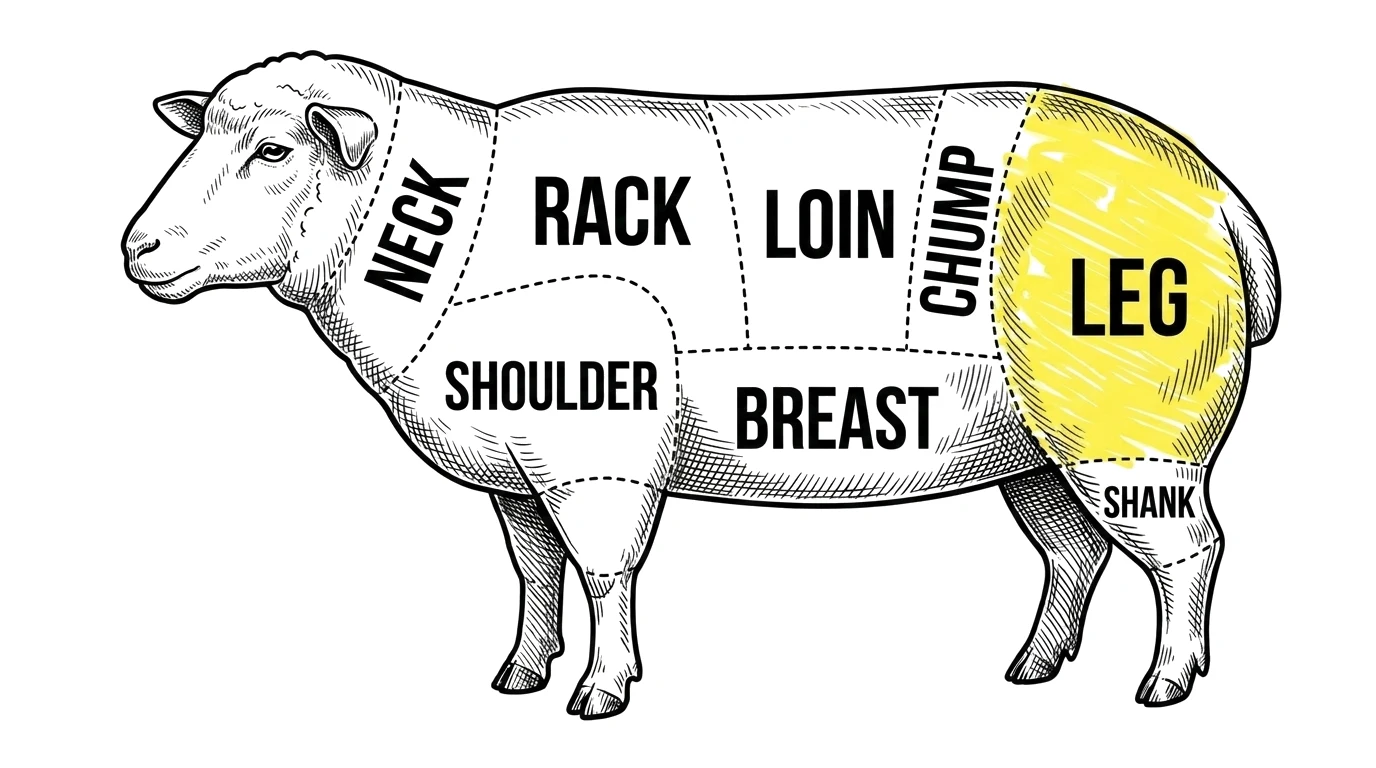
Skerpikjøt is a dark, dense mutton leg with a powerful aged, cheesy and fermented aroma. the flavour is highly distinctive and not comparable to an ordinary salted dried lamb leg. A dark, dense mutton leg with a powerful aged, cheesy and fermented aroma. The flavour is highly distinctive and not comparable to an ordinary salted dried lamb leg. The Codex treats it as a complete production system, not merely a familiar name. Raw material, cut or particle size, casing, smoke, fermentation, cooking and maturation all contribute to the identity. The current status is Traditional Faroese climate-specific product : no EU GI. The protected or traditional reference and the Curesmith home method remain separate.
Where it's from
Climate. Cold, humid, salt-laden Atlantic wind; the defining agent of the cure.
The cut
How to recognise it
A dark, dense mutton leg with a powerful aged, cheesy and fermented aroma. The flavour is highly distinctive and not comparable to an ordinary salted dried lamb leg. A hard dry rim, wet grey centre, rancid fat, sourness, insect damage or uncontrolled mould indicates a failed process.
Origins and history
The Faroe Islands had sheep, strong wind and cool maritime weather, but little timber for smoking and historically limited access to salt. Families therefore hung mutton legs and saddles in a slatted hjallur after the autumn slaughter. Wind, temperature, humidity and resident microorganisms moved the meat through recognised stages: visnaður as the surface began to dry, ræstur as fermentation produced its characteristic aroma, and finally skerpikjøt or the still drier turrur stage. The process could not be reduced to a calendar because each island, shed and season behaved differently. This household knowledge turned a difficult climate into a preservation system and remains central to Faroese identity, but it is not safely reproduced by simply hanging unsalted mutton in another country.
Serving and cultural significance
Traditional Skerpikjøt is sliced very thinly and eaten with rye bread, potatoes or other simple foods. Its blue-cheese-like aroma is part of the experience. A controlled adaptation should be served only after its safety endpoints are verified.
Recipe and cure
This is not a finished recipe. It is a window into how this meat is traditionally cured. Before you follow any process, run it through one of our curing calculators so the salt, cure and timings are right and safe for your own batch.
Make this — the measured Curesmith version →The cure below is the traditional reference. “Make this” opens the measured Curesmith home recipe, scaled to your batch.
Traditional or protected production
Traditional Skerpikjøt is made without salt or smoke. Faroese mutton legs or saddles are hung after the autumn slaughter in a slatted hjallur, where wind, cool maritime temperatures, humidity and an established local microbial ecology drive fermentation and drying. Families assess the meat through recognised stages rather than a fixed universal timetable. This climate-dependent household system is not equivalent to ordinary chamber drying in another country.
- Meat
- mutton or lamb
- Cut
- whole leg
- Salt (%)
- little or none (traditional)
- Curing salt
- none
- Other agents
- none; the wind and native flora do the work
- Fermented
- Yes
- Starter or mould
- wild surface and internal flora
- Smoked
- No
- Target aW or weight loss
- heavy loss over months of drying
- Temperature (°C)
- cold maritime, above freezing
- Humidity (%)
- high but constantly moving air
- Maturation
- from a few months (ræst, semi-dried) to a year or more (fully skerpikjøt)
- Basis
- open-air wind drying
- Style
- hung unsalted in a slatted drying shed (hjallur) exposed to the wind
Ingredients
- mutton or lamb leg
Notes
- Highly unusual: cured with little or no salt, relying entirely on a cold, humid, constantly windy maritime climate.
- This is climate-specific and not a method to copy elsewhere without those exact conditions.
- The ræst stage is semi-dried; full skerpikjøt is dried much longer.
Safety. This traditional low-salt, wind-only method depends on a very specific cold, humid, windy climate and is not safe to reproduce without it. Treat it as heritage description, not a home method.
In the Codex
What this product teaches, and where to read more.
Temple. Roof, Microclimate