
Sobrasada de Mallorca
so-brah-SAH-dah
Mallorca, Balearic Islands, Spain
Soft, rich and paprika-warm, the Spanish cousin of 'nduja, classic with honey.
Overview
Sobrasada de Mallorca is a soft raw-cured sausage of pork, fat, salt, pepper and pimentón. Its orange-red paste remains spreadable after maturation, and its flavour is sweeter and rounder than a dry chorizo. The protected product is inseparable from Mallorca's pig slaughter and paprika tradition.
Where it's from
Climate. Mallorca's mild, humid island climate.
Altitude. Balearic island
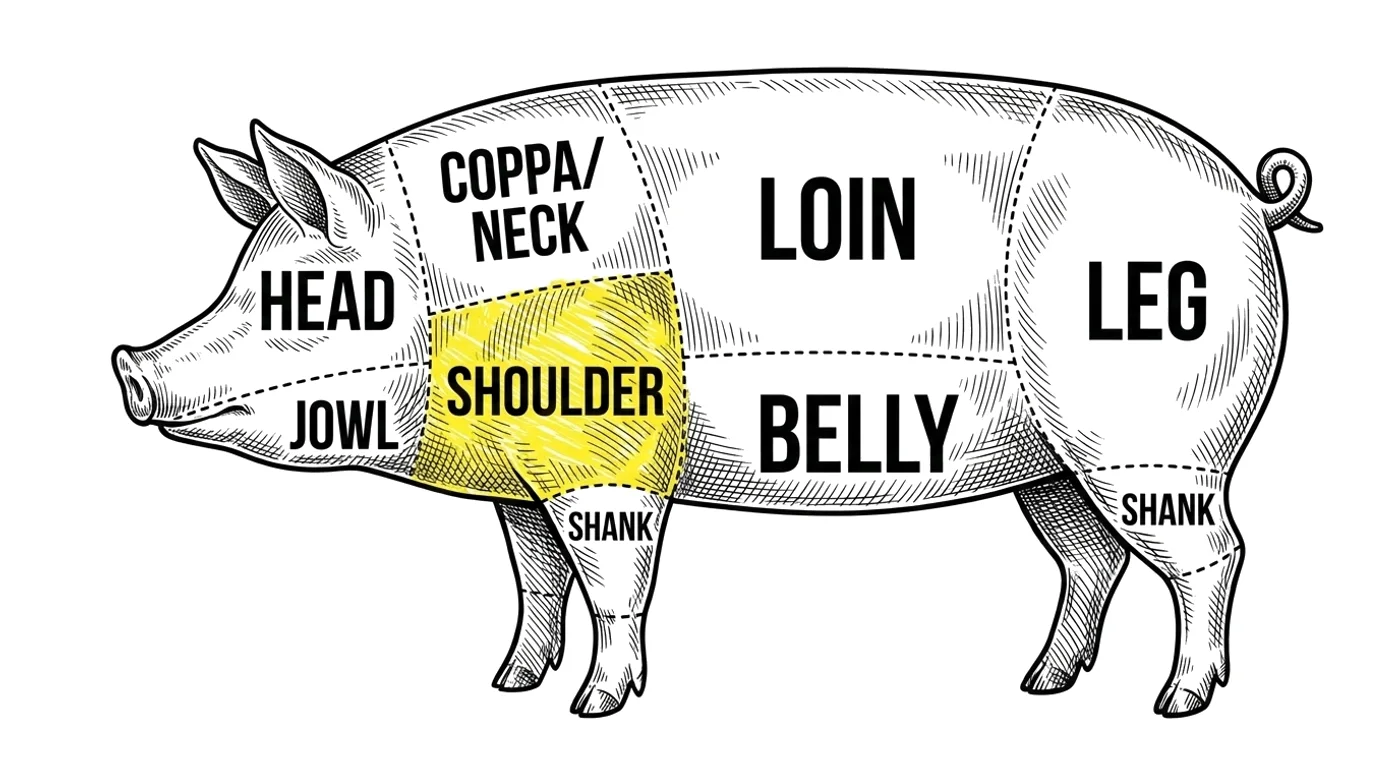
The cut
How to recognise it
The paste is orange-red to deep brick red, with a smooth spreadable texture and visible fine fat. The casing may be slender, horseshoe-shaped or very large according to the traditional presentation. Pimentón, sweet pork and pepper should be clear without rancidity or harsh acidity. Oil separation, grey pockets, gas or uncontrolled mould are defects.
- Shape and size
- Soft, spreadable, deep orange-red in a casing
- Lean colour
- Homogeneous red-orange paste
- Fat and marbling
- High, fully blended
- Casing
- Pork casing, 40 to 100 mm
- Surface bloom
- Possible
Origins and history
Mallorca inherited the Mediterranean practice of preserving chopped pork in casing, but early sobrasada was not the red product known today. The sausage's modern identity developed after peppers from the Americas became established in European cooking and pimentón entered the Mallorcan formula, particularly from the seventeenth and eighteenth centuries onward. The annual matança was a major household event, and sobrasada allowed meat and fat to be kept in several casing sizes for different lengths of maturation. Families ate younger pieces first and reserved larger ones for later in the year. The black Mallorcan pig supplied a particularly valued version. Regulation and producer organisation eventually led to PGI protection, which distinguishes Sobrasada de Mallorca and the separately identified black-pig product.
Name. Likely from the Catalan/Italian sobrassada, linked to pounding or mincing the meat.
- Production today
- Mallorcan producers under the IGP.
- Protection
- IGP (Sobrasada de Mallorca), with a black-pig payes variant.
- Tradition vs modern
- Made across the Balearics in local styles; the Mallorca version is protected.
- Seasonality
- Traditionally tied to the winter matances.
Compare with. 'Nduja di Spilinga
Serving and cultural significance
Spread sobrasada on bread or toast, warm it briefly until the fat glistens, or pair it with honey, cheese and eggs. It is also used in pastries, sauces, rice and stuffed vegetables. The sweet-hot combination with local honey is one of the island's classic presentations.
Recipe and cure
This is not a finished recipe. It is a window into how this meat is traditionally cured. Before you follow any process, please run it through one of our curing calculators, so the salt, cure and timings are right and safe for your own batch.
Curesmith home adaptation — not designation-compliant
Make this — the measured Curesmith version →The cure below is the traditional reference. “Make this” opens the measured Curesmith home recipe, scaled to your batch.
Traditional or protected production
PGI Sobrasada de Mallorca is made from pork meat and fat with salt, pepper and pimentón, then stuffed into approved casings and matured. The protected specification controls the Mallorcan place of processing, permitted ingredients, product forms and analytical characteristics. Sobrasada de Mallorca de Cerdo Negro carries additional raw-material requirements.
- Meat
- pork (Mallorcan black pig in the finest)
- Cut
- minced pork and fat
- Salt (%)
- 2.2
- Curing salt
- Cure #2
- Other agents
- pimenton, salt, pepper
- Fermented
- Yes
- Target pH
- 4.9
- Starter or mould
- Possible
- Smoked
- No
- Target aW or weight loss
- kept soft, limited drying
- Temperature (°C)
- ferment then cool cure 12 to 15
- Humidity (%)
- 75 to 85
- Maturation
- a few months
- Basis
- per 1000 g green meat
- Style
- Traditional fermented, kept soft and spreadable
Ingredients
- lean pork (base)100% · 1000 g/kg
- pork belly71.05% · 710 g/kg
- back fat92.11% · 921 g/kg
- black pepper0.2% · 2 g/kg
- pimenton, sweet6% · 60 g/kg
- thyme, rubbed0.2% · 2 g/kg
- oregano, rubbed0.2% · 2 g/kg
Method
- Finely mince fatty pork and blend with pimenton and salt to green weight.
- Stuff into casing.
- Ferment gently to the target pH.
- Cure cool, kept soft rather than dried hard.
Notes
- The official protected specification controls the named product. Any Curesmith EQ, starter-culture, curing-salt or home-scale adaptation is a separate method and must not be presented as designation-compliant.
- This traditional recipe uses no nitrite. For safety we recommend adding Cure #2: in a low-oxygen, slow-dried product nitrite is the specific guard against Clostridium botulinum, while salt, acidity and drying control Salmonella, E. coli, Listeria and Staphylococcus.
- Recipe reconciled to the fuller traditional cure, with the starter culture, curing salt and the complete spicing recorded as ingredients.
Safety. A soft, spreadable product carries more risk than a hard-dried one. A reliable ferment to pH and cold storage matter here. Verify before serving.
In the Codex
What this product teaches, and where to read more.
Temple. Roof, Water Activity