
Strolghino
Bassa Parmense, Emilia-Romagna, Italy
Thin, soft and sweet, eaten young, made from the trimmings of culatello.
Overview
Strolghino is thin, soft and sweet, eaten young, made from the trimmings of culatello. A narrow sausage with a soft pink-red slice, fine white fat and a sweet, delicate flavour. It should not be hard or sharply sour.
Where it's from
Climate. The Bassa Parmense along the Po, culatello country.
Altitude. Po river plain
The cut
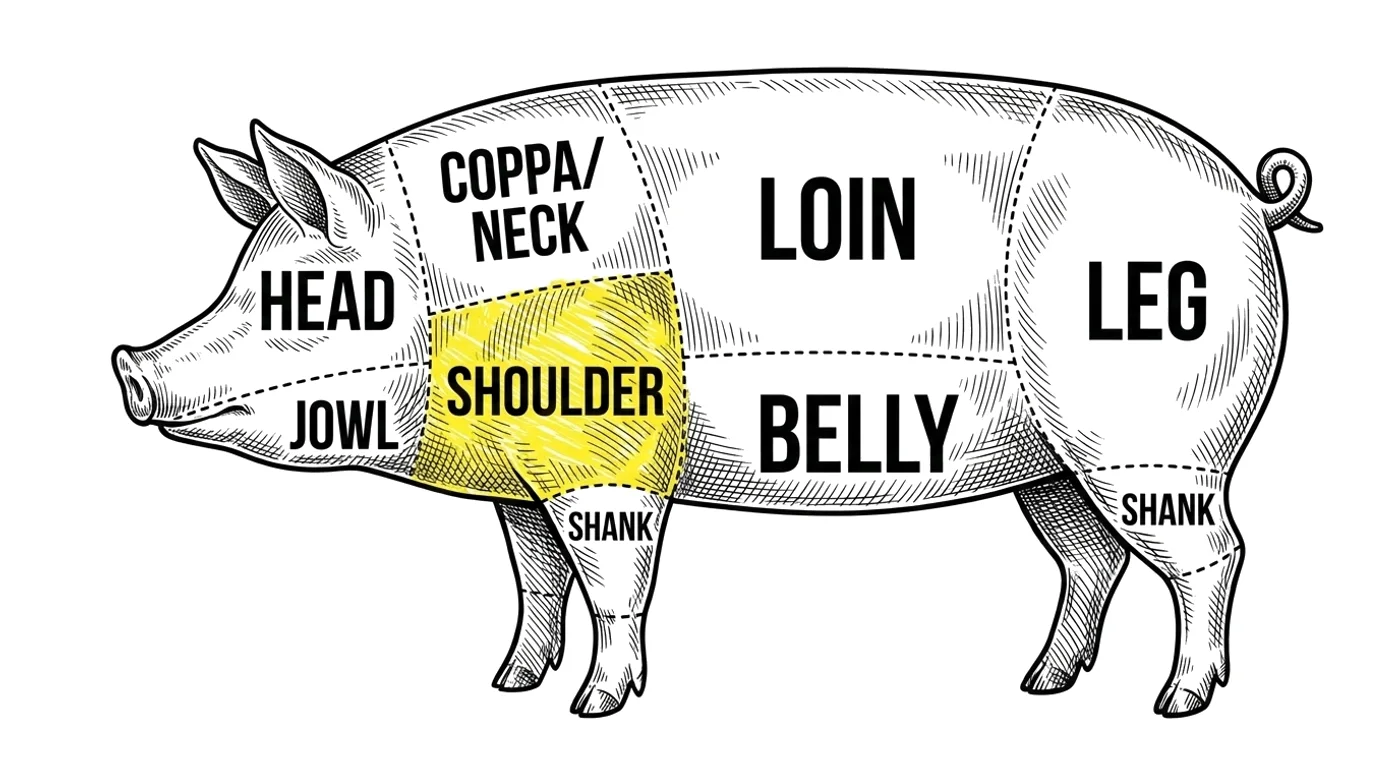
How to recognise it
A narrow sausage with a soft pink-red slice, fine white fat and a sweet, delicate flavour. It should not be hard or sharply sour. The young sausage should be tender and sweet, never wet, gassy, sharply sour or dry like an old salami.
- Shape and size
- Thin, long, soft
- Lean colour
- Rosy red
- Fat and marbling
- Fine
- Casing
- Natural hog casing, 29 to 32 mm
- Surface bloom
- Light
Origins and history
This thin, sweet salame is the thrifty companion to culatello. It is made from the lean trimmings pared away when a pork leg is shaped into that famous cured ham, so none of the prized meat is wasted. Its name comes from a dialect word for a fortune teller, because tasting the fast-curing young sausage was once used to foretell how the slow-ageing culatello beside it would turn out. It belongs to the misty lowlands along the great river where culatello is king, and it is eaten within weeks rather than months.
The name is connected with the dialect word for a fortune teller. By tasting the quick-maturing Strolghino, the maker was said to predict how the much slower Culatello would develop. The verified production area is Bassa Parmense and Po lowlands, Emilia-Romagna, Italy. Stories and etymologies are retained when they help explain the tradition, but legends are not used as evidence for the modern specification.
Name. Strolghino, from a dialect word for a fortune-teller, said to foretell how the culatello will turn out.
- Production today
- Producers of the Bassa Parmense.
- Protection
- Not EU-protected as a general name.
- Tradition vs modern
- Eaten young and soft, not aged hard.
- Seasonality
- Best fresh, soon after making.
Compare with. Culatello di Zibello, Salame Felino
Serving and cultural significance
Serve the young sausage in slightly thicker slices than a hard salami, with soft bread, Parmigiano Reggiano and Lambrusco. Its sweet, tender character is best within a few weeks. Keep it refrigerated when the finished water activity has not been validated for stable storage.
Recipe and cure
This is not a finished recipe. It is a window into how this meat is traditionally cured. Before you follow any process, please run it through one of our curing calculators, so the salt, cure and timings are right and safe for your own batch.
Make this — the measured Curesmith version →The cure below is the traditional reference. “Make this” opens the measured Curesmith home recipe, scaled to your batch.
Traditional or protected production
Strolghino is a thin, tender salame made from lean trimmings produced while shaping Culatello. It is eaten young, commonly after roughly two to four weeks, and should remain softer and sweeter than a fully dried salame.
- Meat
- pork
- Salt (%)
- 2.5
- Curing salt
- Not included in the base recipe below
- Fermented
- Yes
- Target pH
- 4.9
- Starter or mould
- Natural
- Smoked
- No
- Target aW or weight loss
- kept softer, limited drying
- Temperature (°C)
- ferment 22 to 24, then dry 13 to 15
- Humidity (%)
- ferment ~90, then 75 to 80
- Maturation
- 1 to 2 weeks, eaten young
- Basis
- per 1000 g green meat
- Style
- Traditional fermented and dried, kept soft
Ingredients
- Lean pork leg trimmings (base)100% · 1000 g/kg
- Pork back fat25% · 250 g/kg
- White pepper0.2% · 2 g/kg
- Dextrose0.2% · 2 g/kg
Method
- Mince or hand-cut pork and fat and mix with all ingredients to green meat weight.
- Stuff into casing.
- Ferment to the target pH.
- Dry to the target point, kept soft.
Notes
- This traditional recipe uses no nitrite. For safety we recommend adding Cure #2: in a low-oxygen, slow-dried product nitrite is the specific guard against Clostridium botulinum, while salt, acidity and drying control Salmonella, E. coli, Listeria and Staphylococcus.
In the Codex
What this product teaches, and where to read more.
Temple. Roof, Water Activity