
Vallée d'Aoste Jambon de Bosses
Saint-Rhemy-en-Bosses, Valle d'Aosta, Italy
Aromatic and herb-scented, with a deep, savoury lean and a distinctive note of Alpine hay and juniper.
Overview
Jambon de Bosses is a high-Alpine ham matured around 1,600 metres near the Great St Bernard Pass. Salt, juniper, thyme, sage and mountain aromatics give the ham a more herbal character than the plain hams of the Po valley, while cold dry air supports a very long cure.
Where it's from
Climate. Saint-Rhemy-en-Bosses high in the Aosta Valley, thin, cold Alpine air.
Altitude. High Alps, around 1600 m
The cut
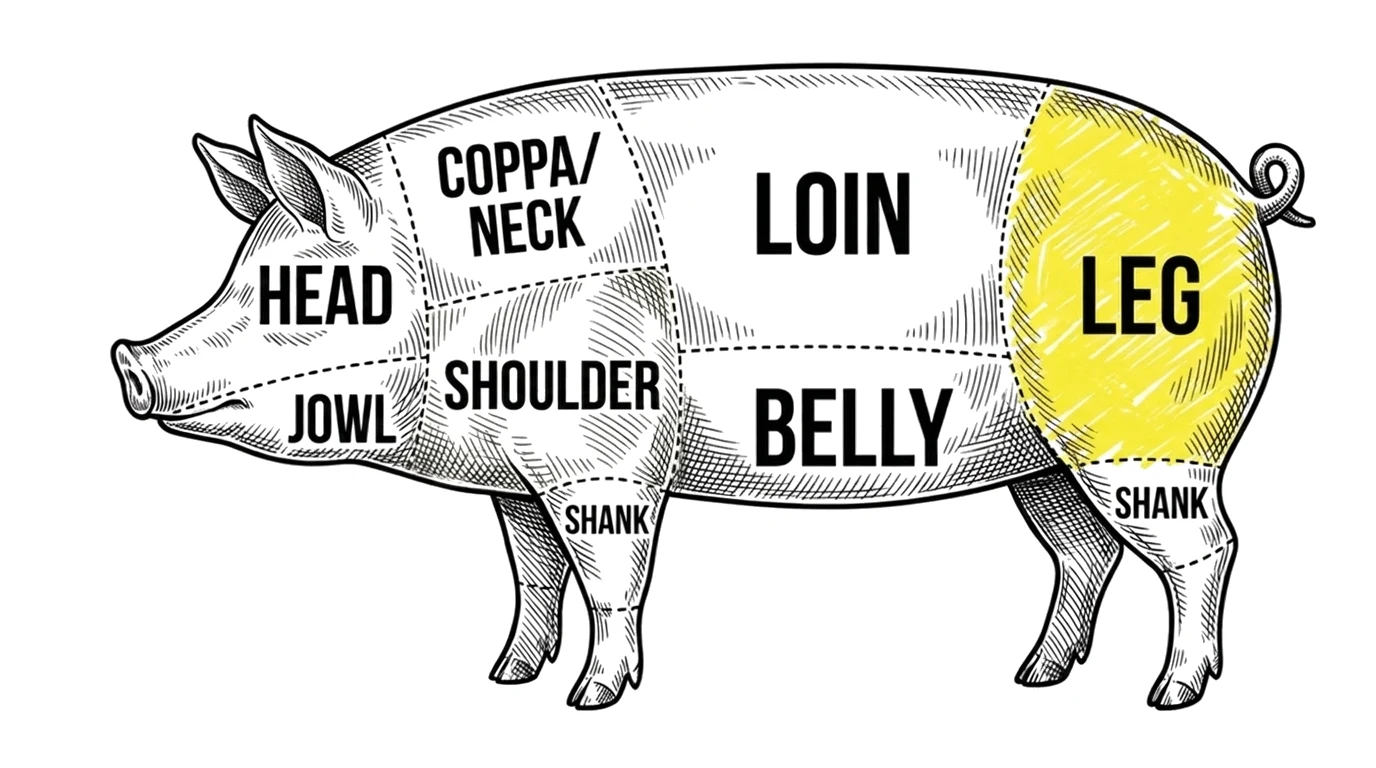
How to recognise it
The whole ham is compact and often slightly irregular, with a dark seasoned exterior. The slice is wine-red to dark red with firm white fat and a pronounced but elegant aroma of juniper, thyme and mountain herbs. It should be compact yet tender. Mustiness, damp hay odour, rancid fat, sourness or a sticky bone area are defects.
- Shape and size
- Whole leg, herb-rubbed, pressed
- Lean colour
- Deep red
- Fat and marbling
- White
- Casing
- None
- Surface bloom
- None
Origins and history
Saint-Rhémy-en-Bosses stood on one of the principal routes across the western Alps. Travellers, merchants, pilgrims and soldiers moved through the Great St Bernard Pass, and the hospice accounts provide a rare documentary anchor: in 1397 they mention tybias porci, pig legs produced in the area. A durable ham was valuable both to local households and to people crossing the mountains. The craft survived in a small community whose altitude, dry air and winter cold made long ageing possible. Herbs gathered from the valley became part of the local flavour, and some traditions include maturation on hay. PDO protection in 1996 recognised an unusually precise relationship between one Alpine municipality, its pass culture and a seasoned whole ham.
Name. Jambon is French for ham, reflecting the bilingual Valle d'Aosta; Bosses names the hamlet where it is made.
- Production today
- Very small production in the single village.
- Protection
- DOP; herb-rubbed, altitude-aged.
- Tradition vs modern
- Traditional altitude and herb curing.
- Seasonality
- Year-round.
Compare with. Jambon de Savoie
Serving and cultural significance
Slice thinly and serve with rye bread, butter, chestnuts, honey, Fontina and Alpine wine. A small plate with pickled vegetables or apples also works well. The herb profile is already complex, so simple accompaniments show the ham best and allow the juniper and thyme to remain clear.
Recipe and cure
This is not a finished recipe. It is a window into how this meat is traditionally cured. Before you follow any process, please run it through one of our curing calculators, so the salt, cure and timings are right and safe for your own batch.
Curesmith home adaptation — not designation-compliant
Make this — the measured Curesmith version →The cure below is the traditional reference. “Make this” opens the measured Curesmith home recipe, scaled to your batch.
Traditional or protected production
PDO production takes place in Saint-Rhémy-en-Bosses. Selected pork legs are trimmed, dry salted and seasoned with the protected mountain spice profile, then matured in the high-altitude climate for the required period. Traditional operations may include boning, tying and contact with hay according to the specification and producer practice.
Sea salt with mountain herbs (juniper, thyme, sage, garlic), salt-box method; no fixed percentage.
- Meat
- pork
- Salt (%)
- traditional, no fixed %
- Curing salt
- Sea salt with Alpine herbs; no nitrate (per DOP)
- Fermented
- No
- Smoked
- No
- Target aW or weight loss
- ~28 to 30% weight loss
- Temperature (°C)
- cold salting, then 12 to 15
- Humidity (%)
- 70 to 80
- Maturation
- 12 months and up
- Basis
- percentage of green meat weight
- Style
- Traditional dry salting (salt-box)
Method
- Salt the leg by feel in the traditional method and rest cold so the salt draws through.
- Wash off the surface salt and begin the slow dry.
- Seal the exposed face with sugna once a crust forms.
- Age to the target weight loss, judging by weight and aroma.
Notes
- The official protected specification controls the named product. Any Curesmith EQ, starter-culture, curing-salt or home-scale adaptation is a separate method and must not be presented as designation-compliant.
- A more efficient way of curing this product is using the EQ Method. No more than 2.5% salt to meat weight is required. To follow the EQ method, please use our whole-muscle EQ curing calculator to work out proper ratios and curing times.
In the Codex
What this product teaches, and where to read more.
Temple. Roof, Microclimate