
Jambon de Vendée
Vendee, Pays de la Loire, France
Aromatic and lightly sweet, distinguished by its eau-de-vie and spice marinade.
Overview
Jambon de Vendée is a boneless ham rubbed with salt, spirits and warm spice, then pressed between boards into a compact flat shape. It is neither smoked nor aged like a large mountain ham. Thin slices may be eaten raw, while thicker slices are traditionally grilled lightly.
Where it's from
Climate. The Atlantic Vendee in western France.
Altitude. Atlantic coastal plain
The cut
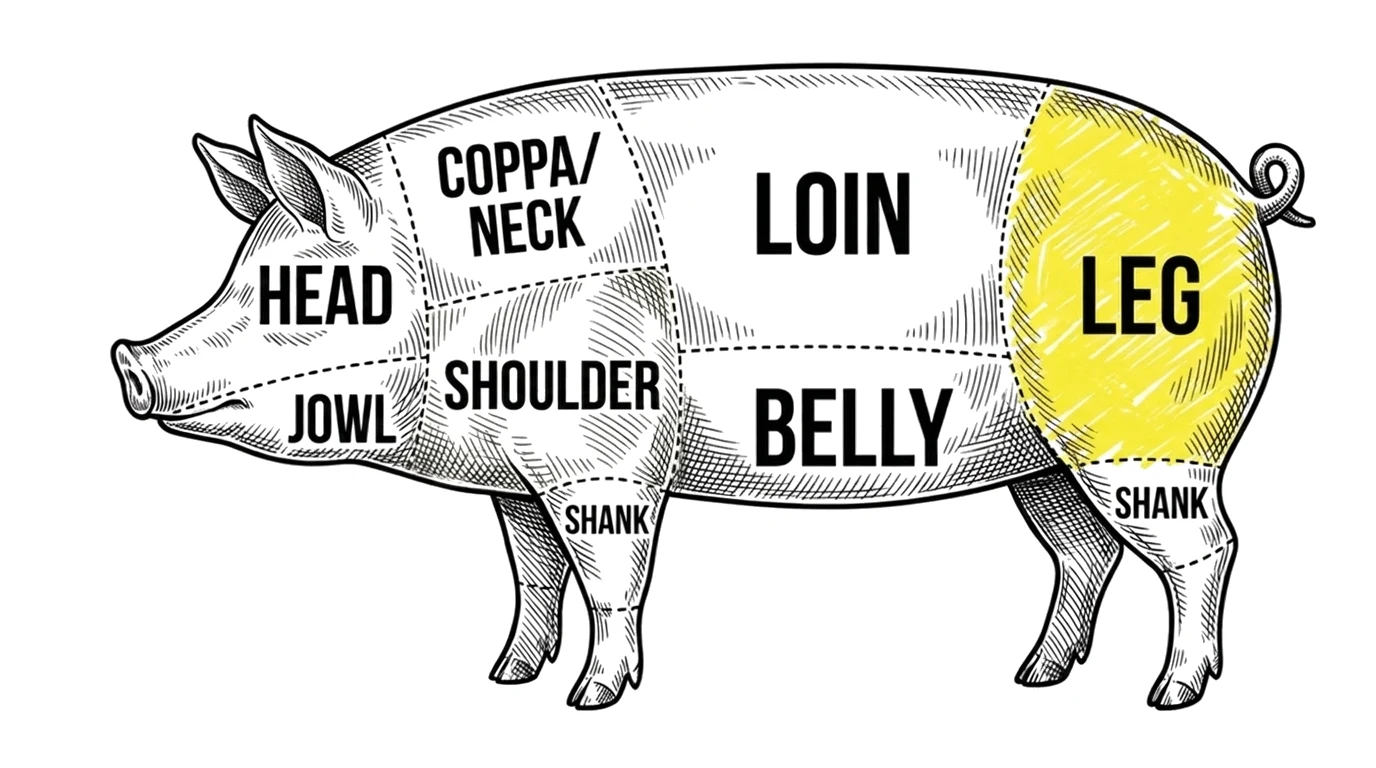
How to recognise it
The whole piece is flat and compact rather than leg-shaped. The slice is red-pink with fine fat and a clear aroma of spirits and spice. Smoke should be absent. The texture is tender enough for raw slicing but substantial enough for grilling. Sourness, wet grey meat, rancidity or a harsh raw alcohol smell is defective.
- Shape and size
- Boned, tied ham
- Lean colour
- Deep red
- Fat and marbling
- White
- Casing
- None
- Surface bloom
- Possible
Origins and history
Vendée's coastal and bocage farms preserved pork after winter slaughter in a region influenced by Atlantic moisture. Boning reduced the mass of the leg and allowed salt, eau-de-vie and spices to penetrate more evenly. Pressing between boards created the characteristic flat form and supported a relatively short drying process. Cinnamon, thyme, bay and pepper reflect the western French pantry and make the ham unusually aromatic. Families could slice the finished piece raw or grill thicker pieces, giving one cure two culinary lives. Commercial makers later standardised the boning, seasoning and pressing process, and PGI protection secured a product that differs fundamentally from long-aged bone-in jambon sec.
Name. Jambon, ham; Vendee the department.
- Production today
- Producers in the Vendee.
- Protection
- IGP.
- Tradition vs modern
- The brandy-and-spice marinade is the signature.
- Seasonality
- Year-round.
Serving and cultural significance
Cut very thin slices for cold service with bread and butter, or grill thicker slices briefly and serve with mogettes, the white beans of Vendée. Apples, mustard and dry cider also suit the spice profile.
Recipe and cure
This is not a finished recipe. It is a window into how this meat is traditionally cured. Before you follow any process, please run it through one of our curing calculators, so the salt, cure and timings are right and safe for your own batch.
Curesmith home adaptation — not designation-compliant
Make this — the measured Curesmith version →The cure below is the traditional reference. “Make this” opens the measured Curesmith home recipe, scaled to your batch.
Traditional or protected production
The PGI specifies boning, sea salting, the permitted aromatic treatment, prolonged pressing between boards and controlled drying. The product is not smoked. Both raw thin-slice and lightly grilled service belong to its regional use.
Sea salt, spices and a little eau-de-vie (brandy), rubbed and matured; no fixed percentage.
- Meat
- pork
- Salt (%)
- traditional, no fixed %
- Curing salt
- Sea salt with a brandy-and-spice marinade
- Fermented
- No
- Starter or mould
- Natural cellar mould possible
- Smoked
- No
- Target aW or weight loss
- ~ weight loss
- Temperature (°C)
- cold salting, then 10 to 15
- Humidity (%)
- 70 to 80
- Maturation
- a few weeks to months
- Basis
- percentage of green meat weight
- Style
- Traditional dry salting (salt-box)
Method
- Salt and season the cut by the traditional method and rest cold so the salt draws through.
- Wash or brush off surface salt and begin the slow dry.
- Case or hang as the style requires.
- Age to the target loss, judging by weight.
Notes
- The official protected specification controls the named product. Any Curesmith EQ, starter-culture, curing-salt or home-scale adaptation is a separate method and must not be presented as designation-compliant.
- A more efficient way of curing this product is using the EQ Method. No more than 2.5% salt to meat weight is required. To follow the EQ method, please use our whole-muscle EQ curing calculator to work out proper ratios and curing times.
In the Codex
What this product teaches, and where to read more.
Temple. Foundation, Time