
Jamón de Serón
Seron (Almeria), Andalusia, Spain
Balanced and savoury, a clean mountain-cured white-pig ham.
Overview
Jamón de Serón is a white-pig mountain ham from the dry interior of Almería. Sea salt, altitude, large day-and-night temperature changes and long natural maturation produce a clean red slice with mild salinity and sweet fat. It belongs to a small curing town rather than the broad generic category of Serrano ham.
Where it's from
Climate. The cold, dry Sierra de los Filabres of Almeria.
Altitude. Sierra de los Filabres, high
The cut
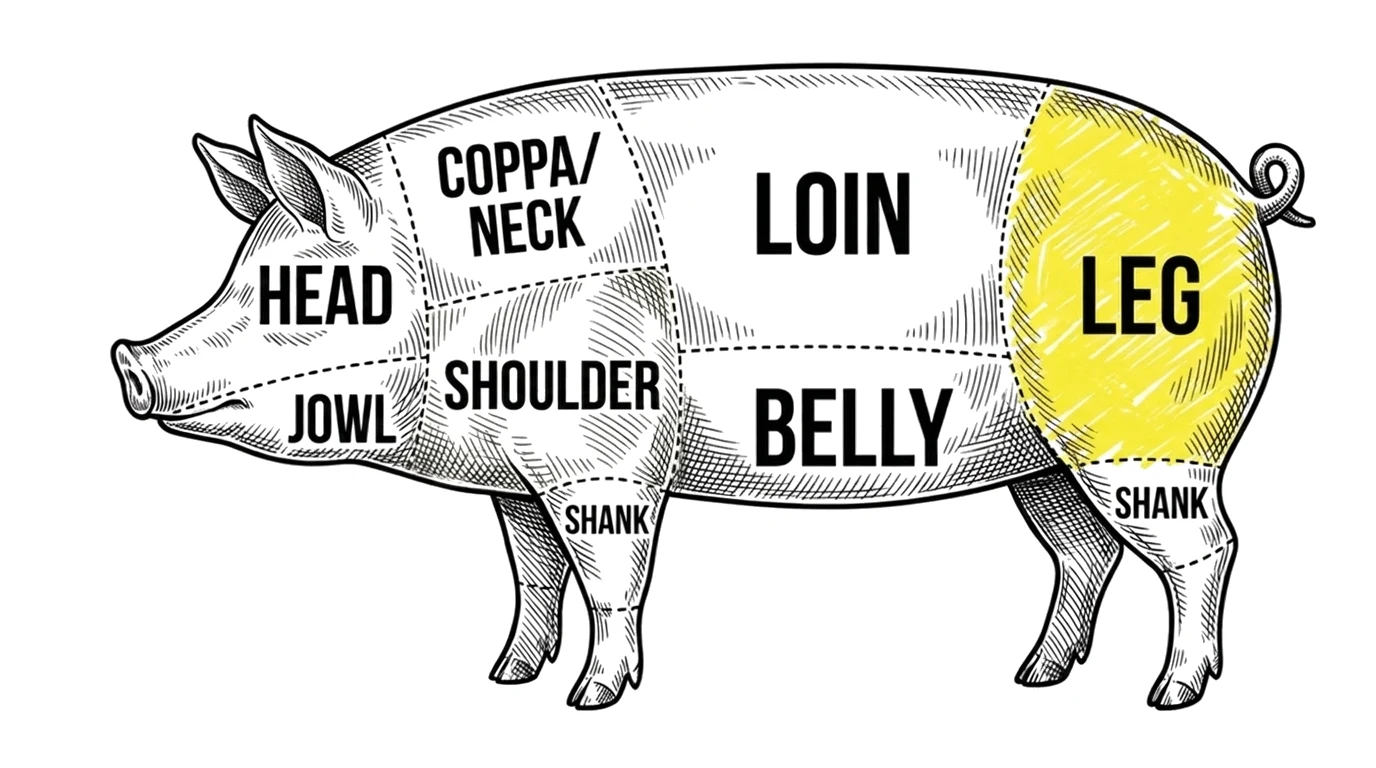
How to recognise it
The whole ham is elongated and neatly trimmed, with a clean rind and a red to dark-pink slice edged by white or cream fat. Aroma should be sweet, cured and free of smoke. The lean is firm but not brittle. Sharp salt, rancid yellow fat, sourness, a hard outer ring or a sticky bone pocket are faults.
- Shape and size
- White-pig leg
- Lean colour
- Rosy red
- Fat and marbling
- White
- Casing
- None
- Surface bloom
- Possible
Origins and history
Serón stands high in the Sierra de los Filabres, where cold winters, dry summers and moving mountain air made pork curing practical despite the province's southern latitude. Household slaughter supplied hams for winter and for trade with nearby mining and agricultural districts. During the nineteenth and twentieth centuries specialist drying houses turned that domestic skill into a local industry, using open windows and seasonal air rather than smoke to manage maturation. The ham became an important part of Serón's identity as other mountain industries declined. European PGI recognition secured the town's name and protected the complete salting, resting, drying and ageing relationship with the Almería highlands.
Name. Jamon, ham; Seron names the town.
- Production today
- Producers in the Seron area.
- Protection
- IGP; white pigs, altitude-cured.
- Tradition vs modern
- Altitude and clean air, no additives.
- Seasonality
- Year-round.
Compare with. Jamón de Trevélez
Serving and cultural significance
Carve the ham into thin slices and serve it cool rather than refrigerator-cold with bread, tomato, almonds, olives or mild Andalusian cheese. Small trimmings can flavour eggs, beans and vegetables, but the best central slices should be served simply so the dry mountain cure remains clear.
Recipe and cure
This is not a finished recipe. It is a window into how this meat is traditionally cured. Before you follow any process, please run it through one of our curing calculators, so the salt, cure and timings are right and safe for your own batch.
Curesmith home adaptation — not designation-compliant
Make this — the measured Curesmith version →The cure below is the traditional reference. “Make this” opens the measured Curesmith home recipe, scaled to your batch.
Traditional or protected production
The PGI specification controls the qualifying pork leg, salting, post-salting, drying and maturation within the recognised production area. The protected character comes from Serón's dry mountain climate and established curing practice. It must not be presented as merely a Serrano-style ham made anywhere.
Sea salt only, salt-box method; no fixed percentage.
- Meat
- white pig
- Cut
- whole hind leg, bone in
- Salt (%)
- traditional, no fixed %
- Curing salt
- Sea salt only (white-pig ham)
- Fermented
- No
- Starter or mould
- Natural cellar mould possible
- Smoked
- No
- Target aW or weight loss
- ~ weight loss
- Temperature (°C)
- cold salting, then rising through the cellar
- Humidity (%)
- 60 to 80
- Maturation
- 14 to 24 months
- Basis
- percentage of green meat weight
- Style
- Traditional dry salting (salt-box)
Method
- Salt the leg cold in sea salt, roughly a day per kilo, then brush off.
- Rest cold so the salt equalises through the leg.
- Move to the cellar and age, letting the temperature rise through the warmer months.
- Age to the target loss, judging by feel and weight.
Notes
- The official protected specification controls the named product. Any Curesmith EQ, starter-culture, curing-salt or home-scale adaptation is a separate method and must not be presented as designation-compliant.
- A more efficient way of curing this product is using the EQ Method. No more than 2.5% salt to meat weight is required. To follow the EQ method, please use our whole-muscle EQ curing calculator to work out proper ratios and curing times.
In the Codex
What this product teaches, and where to read more.
Temple. Roof, Microclimate