
Presunto de Barrancos
Barrancos, Alentejo, Portugal
Portugal's PDO black-pig ham, dried not smoked, close kin to Spanish Extremadura hams.
Overview
Presunto de Barrancos is portugal's pdo black-pig ham, dried not smoked, close kin to spanish extremadura hams. A long, pointed black-pig ham with crimson marbled lean, soft aromatic fat and no smoke aroma. The fat should soften readily at room temperature. The Codex treats the product as a complete curing or cooking system, not simply a famous name. Raw material, cut or particle size, casing, smoke, fermentation, heat treatment and maturation all contribute to the result. The current legal or quality status is DOP / PDO : Presunto de Barrancos / Paleta de Barrancos. The source tradition and the Curesmith home method are kept separate.
Where it's from
Climate. Barrancos, on the Alentejo border with Spain; hot, dry summers.
Altitude. Baixo Alentejo plains
The cut
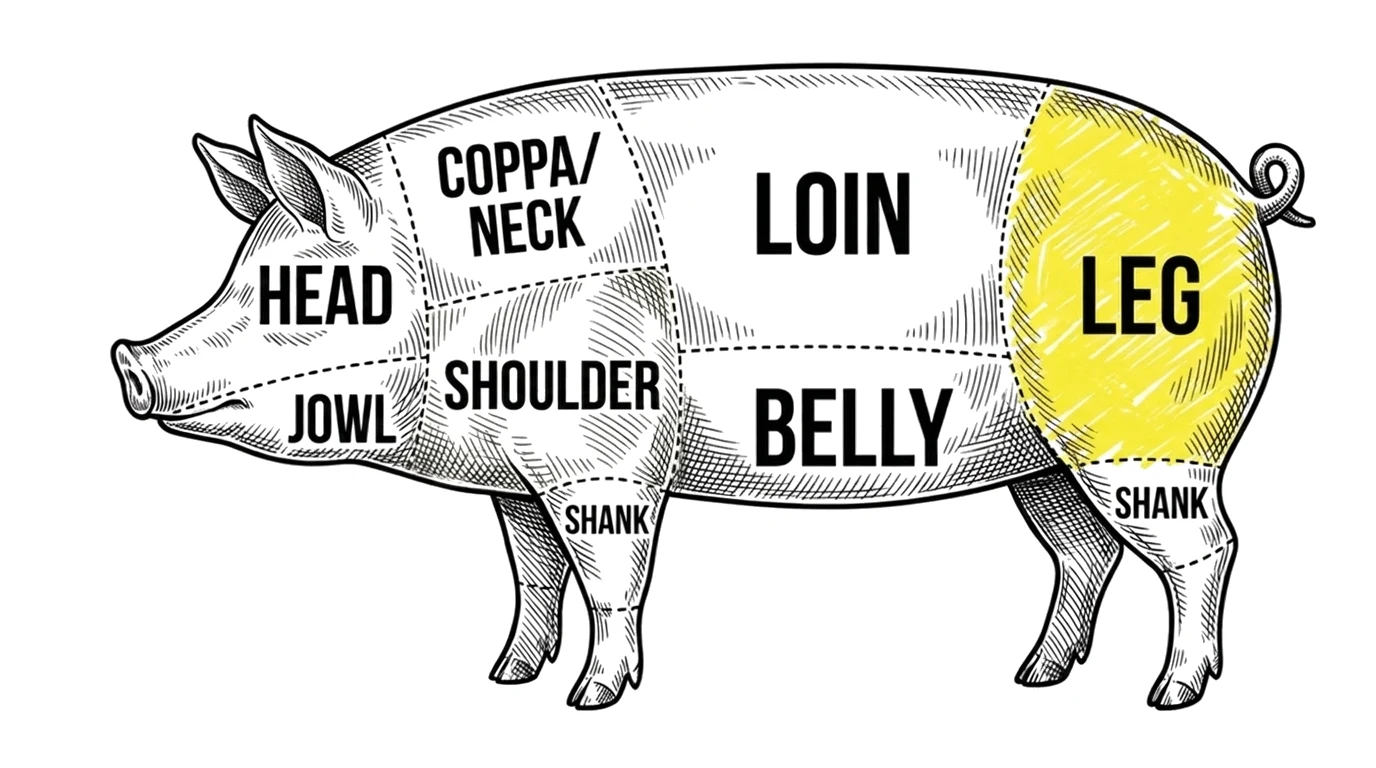
How to recognise it
A long, pointed black-pig ham with crimson marbled lean, soft aromatic fat and no smoke aroma. The fat should soften readily at room temperature. A hard outer ring, wet grey centre, rancid fat, sourness or air beneath casing indicates an uneven cure.
- Shape and size
- Whole bone-in leg
- Lean colour
- Pink to purple-red
- Fat and marbling
- Ivory, acorn-fed
- Casing
- None
- Surface bloom
- Possible
Origins and history
Portugal's most prestigious ham and one of only two to hold a PDO, made in the small border village of Barrancos in the Baixo Alentejo from acorn-fed Alentejana black pigs. Unusually for Portugal it is dried rather than smoked, a legacy of the village's deep Castilian ties that make it closer to the black-pig hams of Spanish Extremadura than to the smoked hams of the Portuguese north. It is salted, rested cold, then cured slowly for twelve to twenty-four months. Barrancos lies against the Spanish border and shares the montado oak landscape and black-pig culture of western Iberia. Unlike many northern Portuguese hams, Barrancos is dried rather than smoked, reflecting its close connection with neighbouring Extremadura. Legends and commercial origin stories are identified as such rather than used as proof of the current specification. The official Portuguese description confirms that both Presunto and Paleta are made from Alentejana pigs, cured in Barrancos and specifically not smoked.
Name. Presunto, from Latin persunctus; Barrancos the border village.
- Production today
- Small production in Barrancos.
- Protection
- DOP/PDO, registered 1996, as Presunto de Barrancos / Paleta de Barrancos.
- Tradition vs modern
- Dried, not smoked, from Alentejana black pigs.
- Seasonality
- Traditionally winter-salted.
Compare with. Jabugo, Presunto de Barroso
Serving and cultural significance
Sliced very thin, like a fine jamon. Retain the PDO status, Alentejana-breed requirement and the defining no-smoke rule. Keep the protected salt-only layer separate from the home cure. it shows how place, material and process create identity. The reader can compare authenticity, legal status and practical home safety without confusing them. Carve small translucent slices, including the soft fat, and serve with plain bread, olives or dry Alentejo wine.
Recipe and cure
This is not a finished recipe. It is a window into how this meat is traditionally cured. Before you follow any process, please run it through one of our curing calculators, so the salt, cure and timings are right and safe for your own batch.
Curesmith home adaptation — not designation-compliant
Make this — the measured Curesmith version →The cure below is the traditional reference. “Make this” opens the measured Curesmith home recipe, scaled to your batch.
Traditional or protected production
Presunto de Barrancos PDO is an unsmoked ham from adult Alentejana-breed pigs. It is naturally salted, dried and matured in Barrancos, retains the foot and is sold whole, in pieces or sliced. The shoulder is protected under the same denomination.
Sea salt only (unsmoked). Salt-box method; no fixed percentage.
- Meat
- Iberian pig
- Salt (%)
- traditional, no fixed %
- Curing salt
- Sea salt only (unsmoked).
- Fermented
- No
- Starter or mould
- Possible
- Smoked
- No
- Target aW or weight loss
- ~ weight loss
- Temperature (°C)
- cold salting, then 10 to 15
- Humidity (%)
- 70 to 80
- Maturation
- 12 to 24 months
- Basis
- percentage of green meat weight
- Style
- Traditional dry salting (salt-box)
Method
- Salt the leg by the traditional method and rest cold.
- Brush off surface salt and rub with the spice mix where used.
- Air-dry in cool, humid air.
- Age to the target loss.
Notes
- The official protected specification controls the named product. Any Curesmith EQ, starter-culture, curing-salt or home-scale adaptation is a separate method and must not be presented as designation-compliant.
- A more efficient way of curing this product is using the EQ Method. No more than 2.5% salt to meat weight is required. To follow the EQ method, please use our whole-muscle EQ curing calculator to work out proper ratios and curing times.
In the Codex
What this product teaches, and where to read more.
Temple. Foundation, Time