
Capocollo di Calabria
Calabria (regional), Calabria, Italy
Marbled and warm, sweet with a gentle chilli note, cured in Calabria's dry southern air.
Overview
Capocollo di Calabria is a whole pork-neck cure, marbled with soft fat and seasoned with pepper or Calabrian chilli. It is cased and tied rather than minced, allowing the sweet neck muscle and regional seasoning to remain distinct.
Where it's from
Climate. Calabria, warm and dry.
Altitude. Calabrian hills
The cut
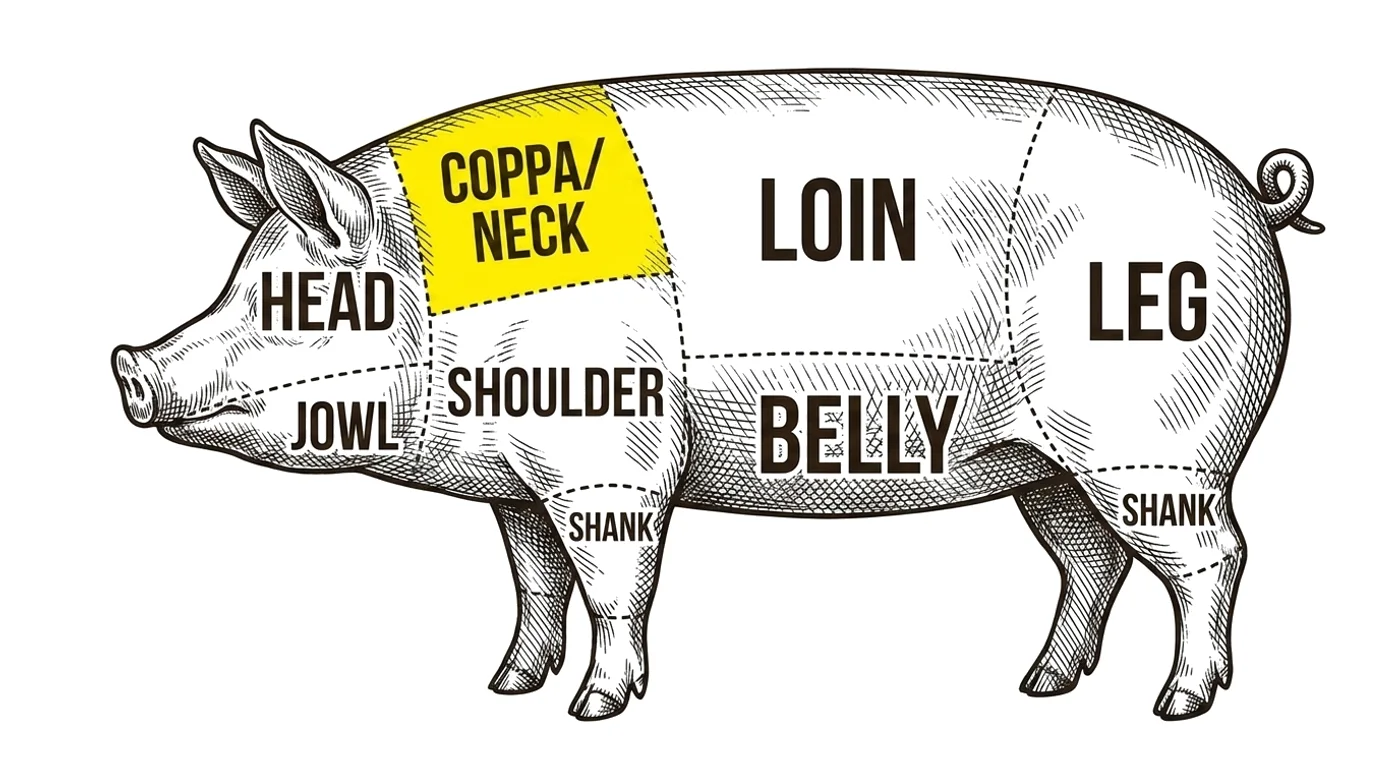
How to recognise it
The whole piece is cylindrical and firmly tied, with a red slice crossed by broad irregular seams of white fat. Pepper, chilli and wine may be evident, but smoke is not the defining note. The lean should remain tender and evenly cured. Grey centre meat, dry brown edges, rancid fat, trapped air beneath the casing or sour odour indicate failure.
- Shape and size
- Cased neck muscle, red-tinged
- Lean colour
- Deep red
- Fat and marbling
- Marbled
- Casing
- Natural casing
- Surface bloom
- Possible
Origins and history
Calabrian households divided the slaughtered pig according to how each cut could best survive the year. The marbled neck was too valuable to mince into ordinary sausage and compact enough to cure as a whole piece. Salt, wine and local pepper or chilli gave the meat a regional signature, while casing and tight tying protected the surface during maturation. The word capocollo describes the anatomical position between head and shoulder and is related to names such as coppa and capicola used elsewhere in Italy and abroad. Calabria's version became one of four protected regional salumi registered together, preserving a farmhouse method that combines whole-muscle curing with the strong seasoning associated with the south.
Name. Capocollo, 'head-neck', for the cut it is made from.
- Production today
- Consortium producers in Calabria.
- Protection
- DOP.
- Tradition vs modern
- Traditional chilli seasoning.
- Seasonality
- Year-round.
Compare with. Coppa di Parma, Coppa de Corse / Coppa de Corse – Coppa di Corsica
Serving and cultural significance
Cut it thinly enough for the marbling to soften and serve with bread, aged sheep cheese, olives, preserved vegetables or figs. A chilli-seasoned capocollo pairs well with mild cheese and simple bread, while pepper-led versions can take a stronger red wine.
Recipe and cure
This is not a finished recipe. It is a window into how this meat is traditionally cured. Before you follow any process, please run it through one of our curing calculators, so the salt, cure and timings are right and safe for your own batch.
Curesmith home adaptation — not designation-compliant
Make this — the measured Curesmith version →The cure below is the traditional reference. “Make this” opens the measured Curesmith home recipe, scaled to your batch.
Traditional or protected production
Capocollo di Calabria is made from the pork neck or upper collar, dry salted and seasoned in Calabria. Pepper or chilli may be used, after which the muscle is cased, tied and matured until the internal marbling, colour and texture meet the protected profile.
- Meat
- pork
- Salt (%)
- 3
- Curing salt
- Salt with a little Cure #2, traditionally
- Fermented
- No
- Starter or mould
- Light natural mould possible
- Smoked
- No
- Target aW or weight loss
- ~30% weight loss
- Temperature (°C)
- 12 to 15
- Humidity (%)
- 75 to 80
- Maturation
- 2 to 3 months and up
- Basis
- percentage of green meat weight
- Style
- Traditional dry salting, cased
Ingredients
- sea salt3% · 30 g/kg
- Calabrian chilli1.5% · 15 g/kg
- black pepper0.3% · 3 g/kg
- dry red wine1.5% · 15 g/kg
Method
- Rub the muscle with salt and seasoning and rest cold.
- Rinse and rest so the salt equalises.
- Case, tie and net.
- Dry and age to the target loss.
Notes
- The official protected specification controls the named product. Any Curesmith EQ, starter-culture, curing-salt or home-scale adaptation is a separate method and must not be presented as designation-compliant.
- A more efficient way of curing this product is using the EQ Method. No more than 2.5% salt to meat weight is required. To follow the EQ method, please use our whole-muscle EQ curing calculator to work out proper ratios and curing times.
In the Codex
What this product teaches, and where to read more.
Temple. Pillar, Meat Quality