
Coppa di Parma
KOP-pah dee PAR-mah
Also known as capocollo
Parma and neighbouring provinces, Emilia-Romagna, Italy
Dark, sweet and richly marbled, from a muscle that works hard in life.
Overview
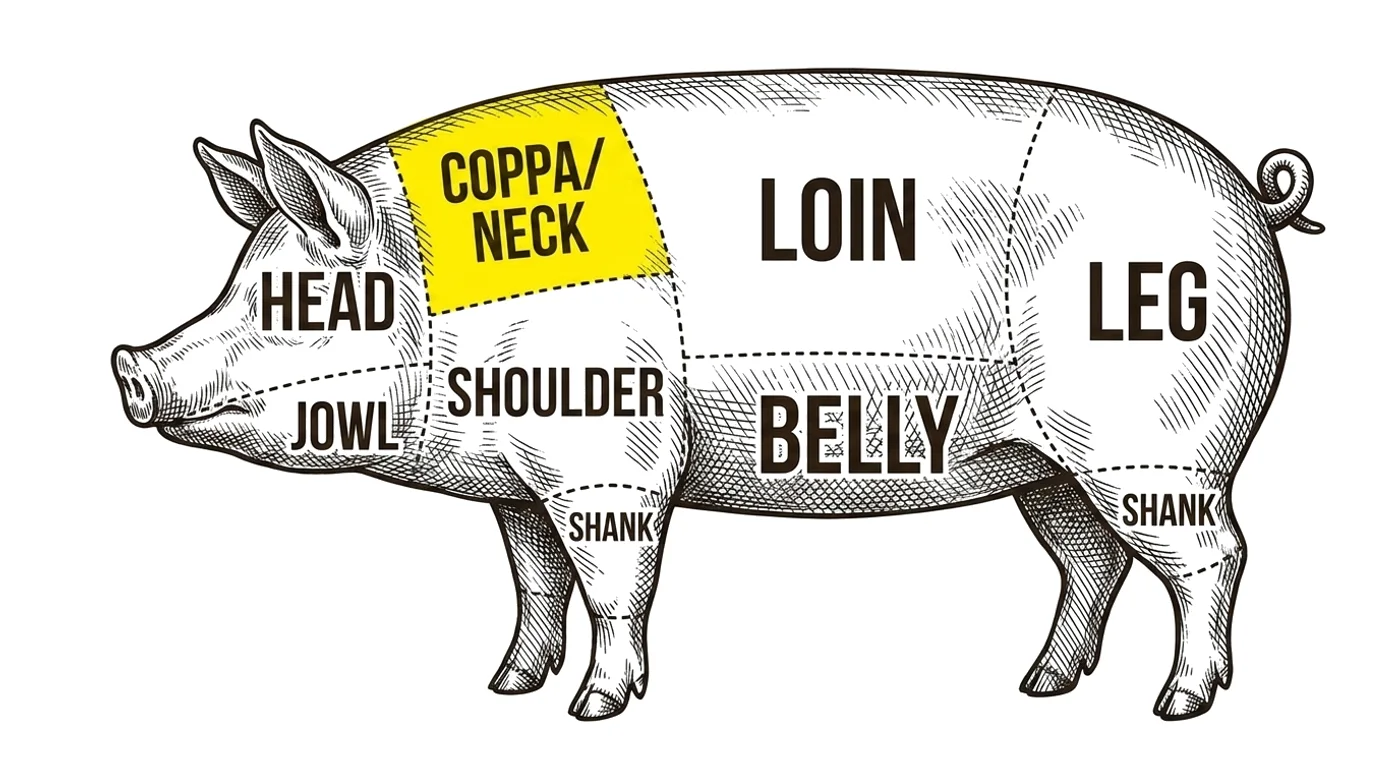
Coppa di Parma is a whole pork-neck muscle cured in casing and tied into a compact cylinder. The shoulder end of the neck gives alternating red lean and white fat, producing a sweet, tender salume with pepper, wine and warm spice rather than smoke.
Where it's from
Climate. The Parma plain and neighbouring provinces of Emilia.
Altitude. Po plain
The cut
How to recognise it
The whole coppa is cylindrical, firmly tied or netted and enclosed in natural or permitted casing. The cut surface has deep red muscle divided by broad white seams of fat. Texture should be tender and cohesive, with sweet pork, pepper and mild spice. Grease smear, a hard outer ring, wet grey centre, rancid fat or an acidic aroma are faults.
- Shape and size
- Cylindrical, tied, sliced into marbled rounds
- Lean colour
- Deep red
- Fat and marbling
- Well-marbled intramuscular fat
- Casing
- Natural casing, tied
- Surface bloom
- Light natural mould possible
Origins and history
The Parma area developed an unusually complete pork-curing culture around heavy pigs, cereal farming and cheese whey. Neck muscles were too valuable and well marbled to disappear into sausage, so butchers salted and cased them as whole pieces. Written references to coppa in the region appear from the seventeenth century, and records from the nineteenth century show growing local commerce. The name spread through Parma, Piacenza and neighbouring plains, where cool winters and specialist cellars supported slow curing. Coppa di Parma gained PGI registration in 2011. The protected area is broader than the province itself, reflecting an established production zone rather than a single-town origin.
Name. Coppa refers to the nape or neck of the pig; capocollo means 'head-neck'.
- Production today
- Producers across Parma and neighbouring provinces under the IGP.
- Protection
- IGP; note the separate Coppa Piacentina DOP nearby.
- Tradition vs modern
- Widely made across Italy in local styles; the IGP fixes the Parma version.
- Seasonality
- Made year-round.
Compare with. Capocollo di Calabria, Coppa de Corse / Coppa de Corse – Coppa di Corsica
Serving and cultural significance
Slice Coppa di Parma thinly but not transparently, allowing the marbling to soften on the plate. Serve with bread, pickled vegetables, Parmigiano Reggiano, melon or mild sparkling wine. It also works in sandwiches where its fat can temper bitter leaves or sharp mustard.
Recipe and cure
This is not a finished recipe. It is a window into how this meat is traditionally cured. Before you follow any process, please run it through one of our curing calculators, so the salt, cure and timings are right and safe for your own batch.
Curesmith home adaptation — not designation-compliant
Make this — the measured Curesmith version →The cure below is the traditional reference. “Make this” opens the measured Curesmith home recipe, scaled to your batch.
Traditional or protected production
PGI production uses the cervical muscle group from qualifying pigs. The meat is trimmed, salted and seasoned, rested, cased and tied, then matured for the protected minimum period. Pepper and permitted aromatics support the meat without turning the product into a heavily spiced capocollo. Current specifications and control systems regulate raw material and traceability across the protected production chain.
- Meat
- pork
- Cut
- neck and shoulder muscle (capocollo), cased and tied
- Salt (%)
- 3
- Curing salt
- Salt with a little nitrate or Cure #2, traditionally
- Other agents
- salt, pepper, spices
- Fermented
- No
- Starter or mould
- Light natural mould possible
- Smoked
- No
- Target aW or weight loss
- ~30% weight loss
- Temperature (°C)
- 12 to 15
- Humidity (%)
- 75 to 80
- Maturation
- 2 to 3 months and up
- Basis
- percentage of green meat weight
- Style
- Traditional dry salting, cased
Ingredients
- sea salt3% · 30 g/kg
- black pepper0.4% · 4 g/kg
- nutmeg0.05% · 0.5 g/kg
- clove0.03% · 0.3 g/kg
- dry white wine1.5% · 15 g/kg
Method
- Rub the neck muscle with salt and spices and rest cold.
- Rinse, add the wine and rest again.
- Case, tie and net into a firm cylinder.
- Dry and age to the target loss.
Notes
- The official protected specification controls the named product. Any Curesmith EQ, starter-culture, curing-salt or home-scale adaptation is a separate method and must not be presented as designation-compliant.
- A more efficient way of curing this product is using the EQ Method. No more than 2.5% salt to meat weight is required. To follow the EQ method, please use our whole-muscle EQ curing calculator to work out proper ratios and curing times.
Safety. Well-marbled whole muscle. Judge by weight loss. Verify before serving.
In the Codex
What this product teaches, and where to read more.
Temple. Pillar, Meat Quality